
Best feeling ever - a cold shower on burnt skin.
First few days were all rain. Last two days I fried myself to try and make up for it.
New few days are going to suck.
So any animals?
Herp poor but wildlife rich. More to come soon...
BH
Monday, March 7, 2011

Sunday, March 6, 2011
Field Gear: Cameras
I finally got around to photographing some of the gear that I take in the field. I always enjoy seeing and knowing what other people use. The amount of individual variation is remarkable, and the passion people feel for certain items is even more so. This list is by no means all inclusive, and I will tailor my stuff depending on times of the year, location, and my goals.
Camera
I shoot Nikon. I'm not going to get all crazy and rant and rave about Nikon, while bashing the other systems. I chose Nikon a few years back based on what I felt was the best camera in my price point at the time. I paid careful attention to look to some of my future aspirations, and I still have yet to "outgrow" my camera. I felt Nikon had some of the best options for artificial lighting, and as you will see I rely heavily on this in my photography. My body does most of all I need it to do. If my photography is found lacking, it is due to my own errors, or some of my glass.

The Nikon 55-200 is a great cheap lens in the right situations. If you have plenty of available light, are able to use a f8-14, and the middle of its range (70- 150?) it performs remarkably well for a lens of its price point. When really pushed or stretched to its limits though...
I my opinion, my Nikon system really shines in it's lighting. I utilize a number of different techniques - natural lighting hand-held, tripod, on camera flash, on camera flash firing a hand help SB900 and my D200 or SB900 wirelessly firing the Nikon R1 are just a few. In macro, the lighting is key.
A couple examples of my D200 wireless firing a handheld SB900.
And the SB900 firing the R1 system, my favorite, once I get over the 3 eye highlights.

And some wide angle shots using the Sigma 10-20 and the Nikon D200

When using a tripod, I sport the Kirk Mighty Low-Boy. It gets completely flat and is compact, perfect for herp shooting. It is heavy though, and I don't always carry it in the pack.
Point and shoot cameras still have a place. Some of my favorite shots have been taken with my old point and shoot Pentax. I take crappy pictures all the time with both rigs, but I find I can obtain a higher percentage of keepers in less time and effort using the Nikon system.
For Hawaii I will be taking my wife's Panasonic Lumix DMC TS1, an all purpose little point and shoot with underwater capabilities. Although it only goes about 10 feet underwater, the newer model TS2 is rated to 33 feet underwater. I will be using this while snorkeling in Hawaii and hope to show off some images, crappy or otherwise.
Anyway, I will try and discuss other odds and ends in my pack, my night lighting, binocs and snake wrangling tools. So whats in your pack?
BH
 |
| My pack and most of its usual components. |
I shoot Nikon. I'm not going to get all crazy and rant and rave about Nikon, while bashing the other systems. I chose Nikon a few years back based on what I felt was the best camera in my price point at the time. I paid careful attention to look to some of my future aspirations, and I still have yet to "outgrow" my camera. I felt Nikon had some of the best options for artificial lighting, and as you will see I rely heavily on this in my photography. My body does most of all I need it to do. If my photography is found lacking, it is due to my own errors, or some of my glass.

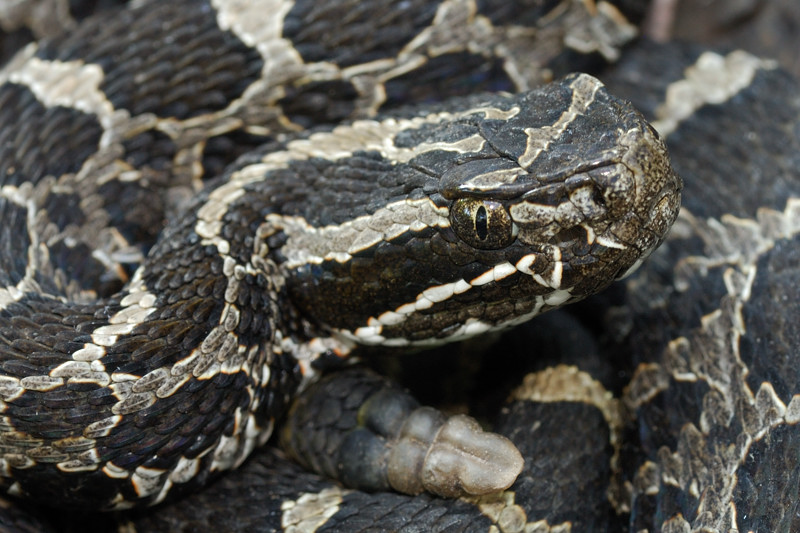 | |||
| Eastern Massasauga Rattlesnake Sistrurus catenatus, Nikon D200, Tamron 90mm, natural lighting |
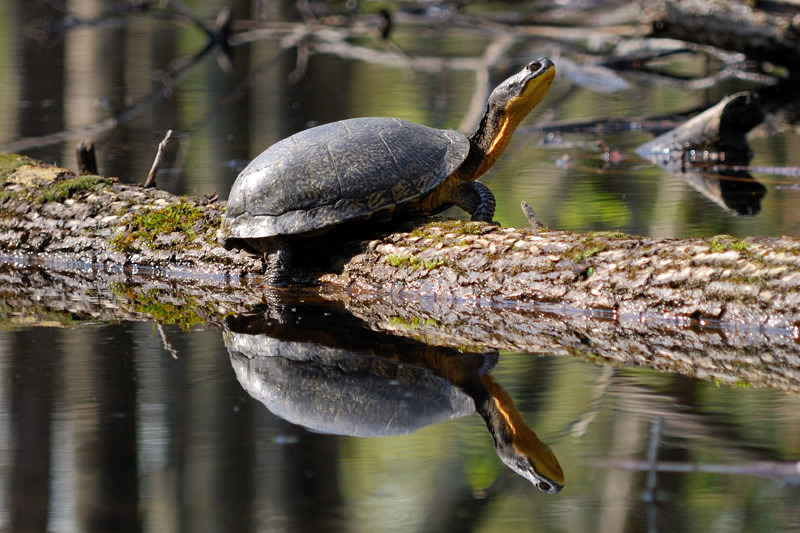 | |
| Blandings Turtle Emydoidea blandingii, Nikon D200, Nikon 55-200mm, natural lighting and fill flash |
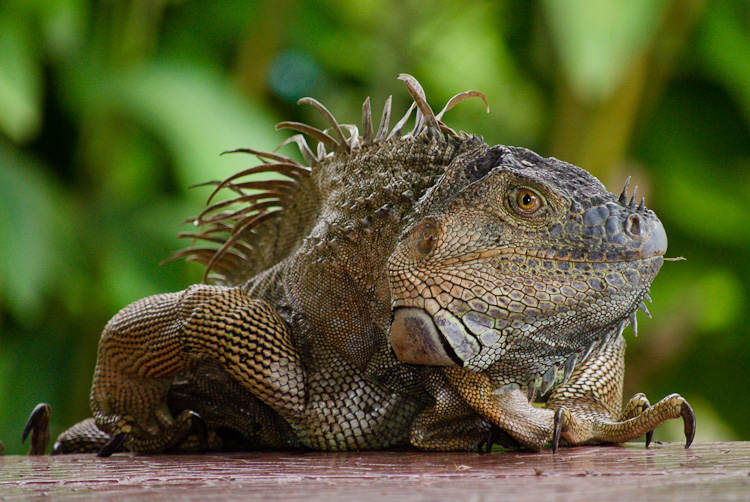 |
| Iguana iguana, Nikon D200, Nikon 55-200, natural lighting and fill flash |
The Nikon 55-200 is a great cheap lens in the right situations. If you have plenty of available light, are able to use a f8-14, and the middle of its range (70- 150?) it performs remarkably well for a lens of its price point. When really pushed or stretched to its limits though...
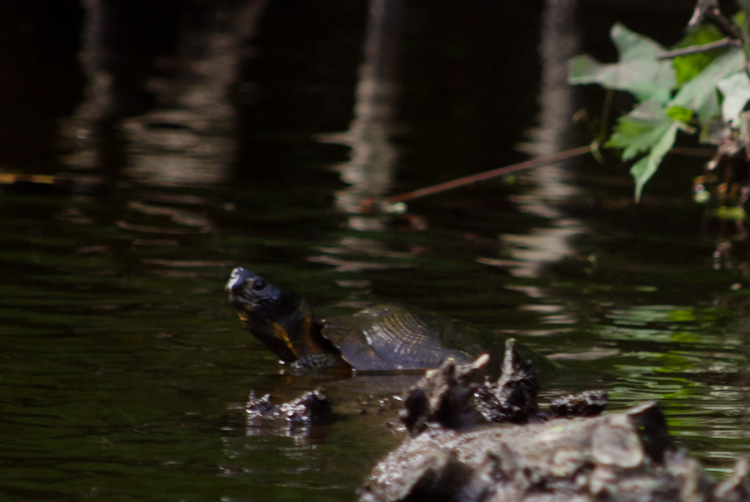 |
| Wood Turtle, Glyptemys insculpta, Nikon D200, Nikon 55-200mm, poor light, hastily shot |
I my opinion, my Nikon system really shines in it's lighting. I utilize a number of different techniques - natural lighting hand-held, tripod, on camera flash, on camera flash firing a hand help SB900 and my D200 or SB900 wirelessly firing the Nikon R1 are just a few. In macro, the lighting is key.
A couple examples of my D200 wireless firing a handheld SB900.
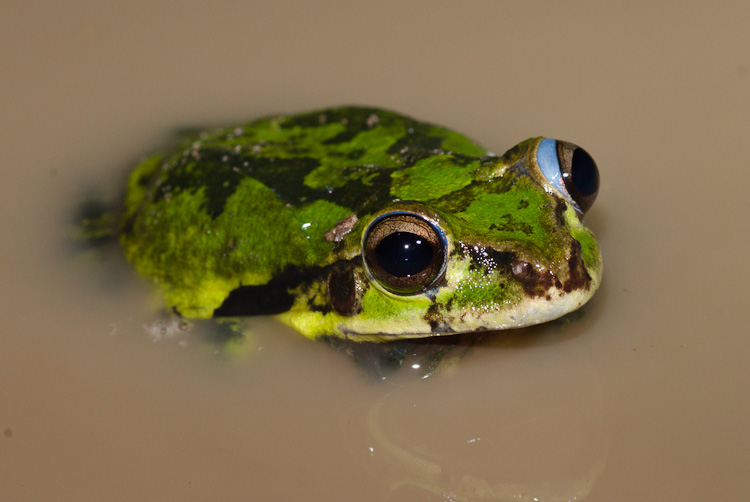 |
| Smilisca baudini |
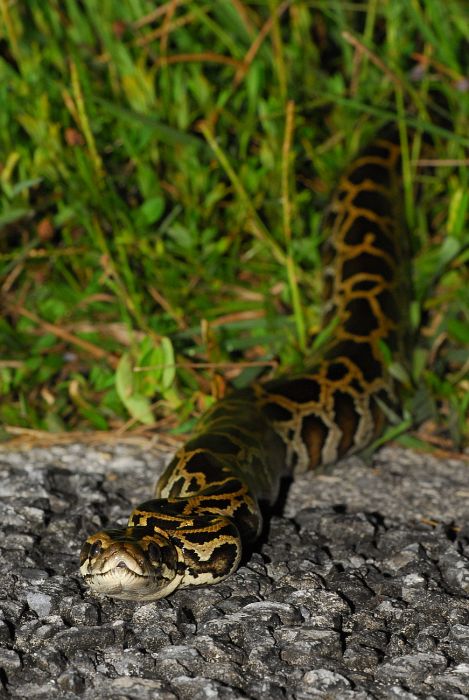 |
| Everglades National Park, Burmese Python Python morulus, shot at night |
And the SB900 firing the R1 system, my favorite, once I get over the 3 eye highlights.

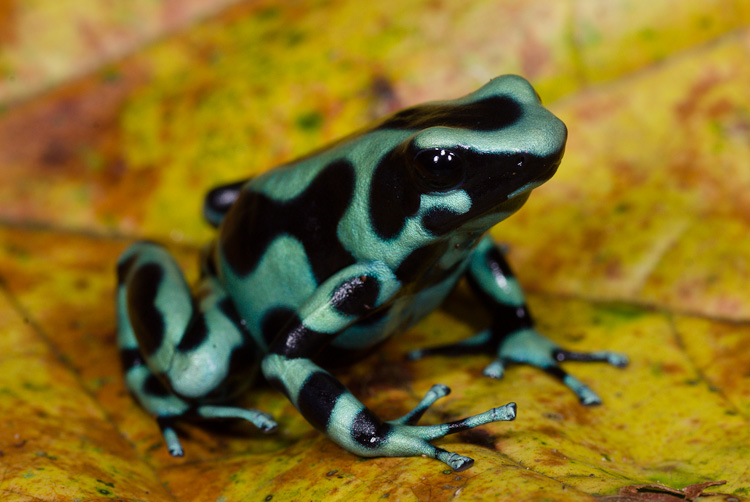 |
| Dendrobates auratus, Nikon D200, Tamron 90, Nikon SB900, Nikon R1 |
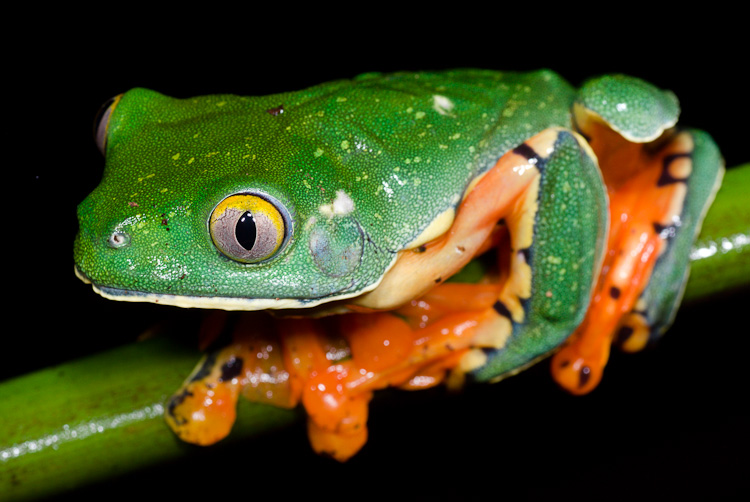 |
| Cruziohyla calcarifer, Nikon D200, Tamron 90, SB900, Nikon R1 |
And some wide angle shots using the Sigma 10-20 and the Nikon D200
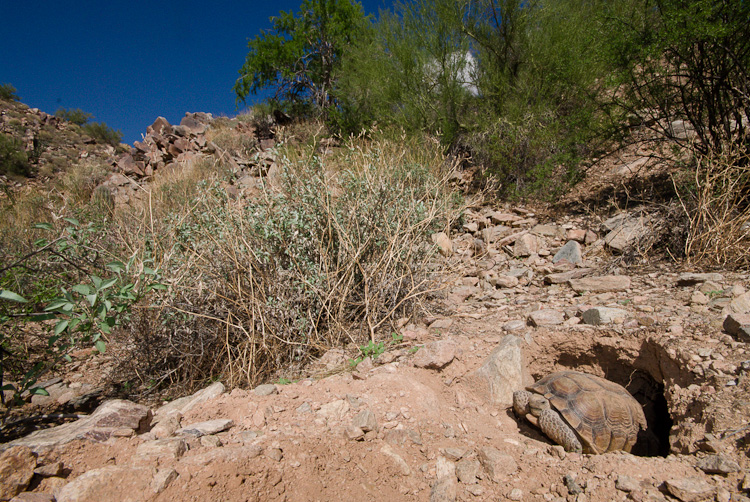 |
| Gopherus agassizii, Nikon D200, Sigma 10-20 |
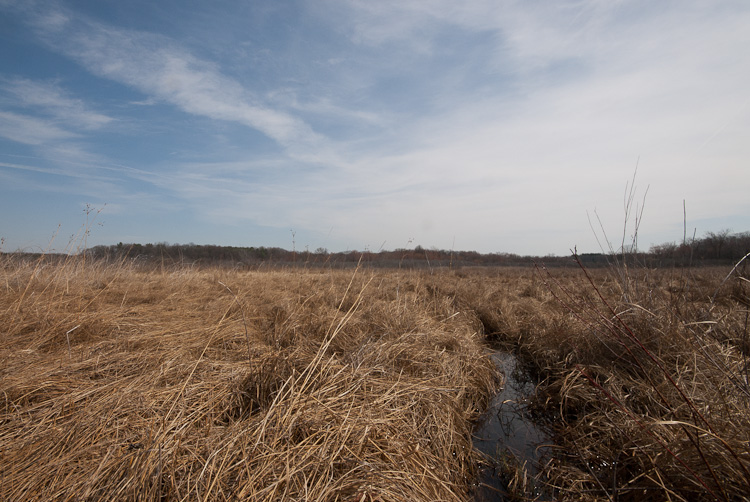
When using a tripod, I sport the Kirk Mighty Low-Boy. It gets completely flat and is compact, perfect for herp shooting. It is heavy though, and I don't always carry it in the pack.
 |
| The Mighty Low-Boy and some other things we will discuss another day. |
For Hawaii I will be taking my wife's Panasonic Lumix DMC TS1, an all purpose little point and shoot with underwater capabilities. Although it only goes about 10 feet underwater, the newer model TS2 is rated to 33 feet underwater. I will be using this while snorkeling in Hawaii and hope to show off some images, crappy or otherwise.
Anyway, I will try and discuss other odds and ends in my pack, my night lighting, binocs and snake wrangling tools. So whats in your pack?
BH
Wednesday, March 2, 2011
Game of Thrones...
Gonna be sweet.
I have been rewatching HBO's the wire recently - what a masterpiece. HBO knows how to make great TV. If the amount of advertising and hype HBO is putting into this project is any indication of their dedication, this will be huge. The trailers themselves are extremely impressive and I can't wait for this to drop on Apr 17th.
Now if only GRRM would finish the next book...
BH
I have been rewatching HBO's the wire recently - what a masterpiece. HBO knows how to make great TV. If the amount of advertising and hype HBO is putting into this project is any indication of their dedication, this will be huge. The trailers themselves are extremely impressive and I can't wait for this to drop on Apr 17th.
Now if only GRRM would finish the next book...
BH
Tuesday, March 1, 2011
Roadcruising Riffs: 8 and 9
I am currently somewhere across western US on my way to the island paradise of Hawaii for a month. Unfortunately I will most likely miss the spring amphibian migrations, and Hawaii isn't exactly a herp mecca, but I hope to procure some images along the way. In the mean time, enjoy some tunage.
Scott Weiland over the years.
Stone Temple Pilots - Sex Type Thing (young Scott)
And Scott post-cocaine. Kids, hugs not drugs.
Yes, that is the same person.
BH
Scott Weiland over the years.
Stone Temple Pilots - Sex Type Thing (young Scott)
And Scott post-cocaine. Kids, hugs not drugs.
Yes, that is the same person.
BH
Monday, February 28, 2011
Winter Tasks: 3
Scout and prepare for next season.
I have been fairly lazy at this the past few years, but winter provides and opportune time to prepare for the upcoming season. When you pay your dues during the winter, there are often immediate and direct results.
I use this time of the year to read and conduct research, communicate with other herpers/wildlife agencies, scout areas via google earth, and then on foot. When scouting on foot, the lack of leaves and vegetation makes it much easier to spot springs, rock outcroppings, old structures/junk piles and prospective vernal pools. I also use this time to lay tin, boards and other cover objects, such as carpet.
I was hoping to hit up a junk yard prior to leaving for Hawaii and obtaining some cover objects. Unfortunately, we got another foot of snow and I didn't feel like lugging tin in snowshoes. I will try to take some pictures of the process when I do get some out there.
Happy herping,
BH
I have been fairly lazy at this the past few years, but winter provides and opportune time to prepare for the upcoming season. When you pay your dues during the winter, there are often immediate and direct results.
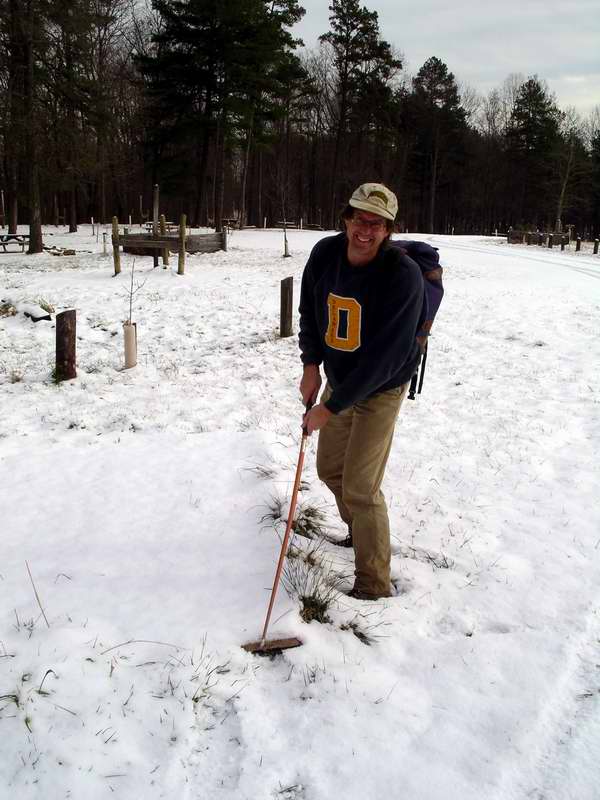 |
| Carl - paying some dues. |
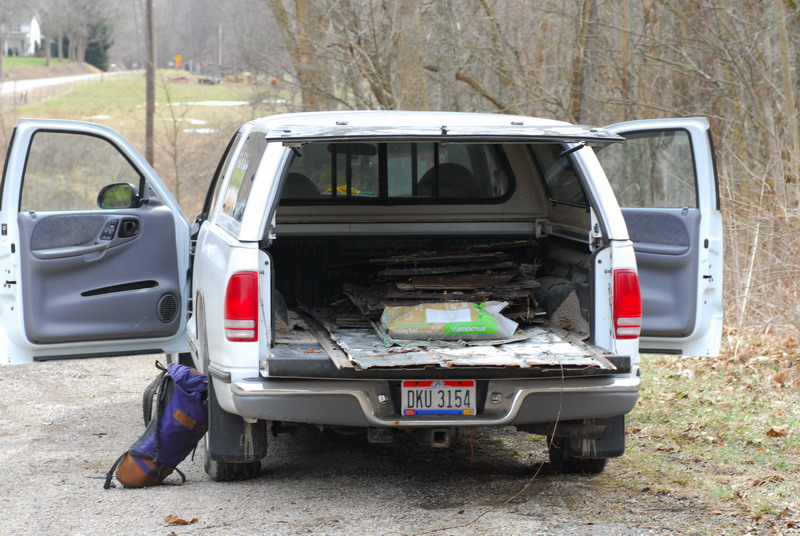 | ||
| Laying tin (RIP truck) |
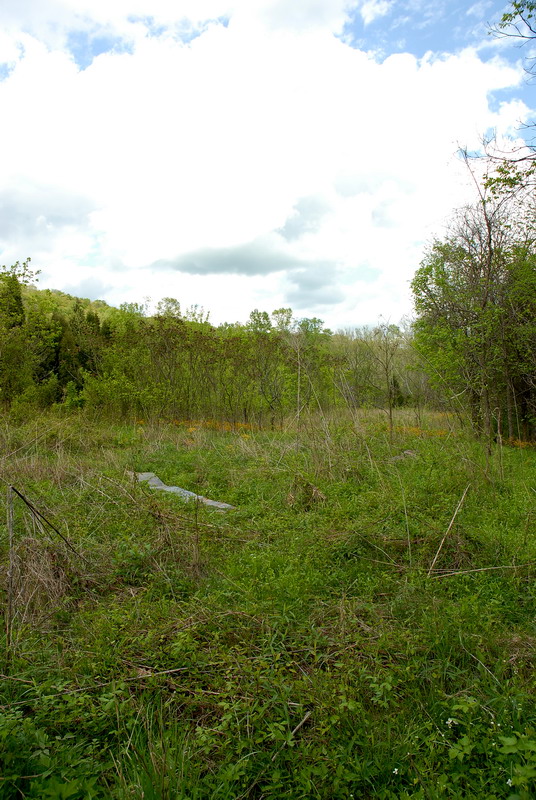 | ||
| Fruits of labor... |
Happy herping,
BH
Friday, February 25, 2011
Winter Tasks: 2
2. Keeping records
Record keeping is important for a many reasons. First of all, your memory is only going to get worse, and it is easy to forget old outtings. Second, there is much to learn from your previous work, which can greatly help you in your future searches. Third, your data is important and should be made available to people who can use it.
I really should be better about keeping more acurate data (temperature, moon, wind, etc) but I find if I focus on too much, I just don't do it. I record date, time, GPS location, and try to photograph every animal I see. If it was found on the road, I will put AOR or DOR in (active on road, dead on road) in my data. When pertinent I will also record any interesting or notable comments about the find. I also try to include people who were present for the find as well.
Most of this data sits around all year, and then I try to get it all entered in the winter. Just tonight I finshed my data for 2010. It wasn't my best year, but it was memorable as they all are. Mainly, I was super busy, and just didn't get in the field as much as years past. This year was a good year for trips though, and I logged entries in 4 other states as well as Costa Rica.
When keeping data, try to stay simple. If you make it too complicated, you just want do it. This is different for everyone, but try and find what works for you.
When traveling out of state, I utilize www.naherp.com.
Everyone should check it out. I have links posted to it on my blog as well as my website. It is an online entry form, and you can upload pictures. It is easy to view your entries on maps and search the entries of others. The site has been up since 2006, and was started by a dedicated group of herpers to try and decreased the rift between academic and amateur herpetologists. So far, there are 1284 users and 61900 entries from all across North America. Data is visible only to the state and county level, and you can limit this more if you wish. Researchers may search the database for data, and you can vote on whether you agree to release your data for certain projects. The site is simple, easy to use and very convenient. I recommend it highly.
I have logged 138 entries on the NAFHA site. 36 of these were logged in 2010. A fairly slow year for my out of state outings. I did log herps from FL, AZ, and PA on the site, but I didn't take as big of trips this year compared to 2009 (Texas, AZ, CA). Hopefully, 2011 will be a banner year. I am going to be in the relative herp poor Hawaii the whole month of March, but am already planning big out of state trips in May and July of this year.
For my "home" states, I use a database logging system programed by friend and fellow herper Carl Brune. It might not be as user friendly, and takes a little tech savy to get running, but I love it. It is much easier to search and query your data compared to the NAFHA/NAHERP site.
I have been keeping Ohio data since 2004, and Michigan data since 2008. The best feature is the maps that can be generated...
Ohio 2004, my first real herping season. 154 records (I plotted only townships I saw at least one animal, as opposed to plotting a dot for each specific animal)

2005 121 records
2006 398 records
2007 250 records
2008 140 records
2009 12 records
2010 18 records (total of 1096)
My map for all through 2010.

Pretty cool stuff. You should see the map with dots for each animal...
Michigan
2008 52 records
2009 145 records
2010 110 records
2008

Through 2010 (308 records)

This process also helps you set some goals. My MI goals for the year...
1. Oakland County massasaugas at new locals
2. SE Michigan spotted turtle
3. Wood turtle from a new river system
4. MI spotted salamander
5. MI newt (?!??!)
6. 200 + record year
(reaching 300 or 400 is possible in Ohio, but I expect to be difficult in MI due to the much shorter field season and much lower diversity. I just don't see the same numbers of animals I did in Ohio)
7. Lay tin.
8. MI box turtle
For Ohio.
1. Herp with Carl and Brian a couple solid days this spring.
2. 50 records
3. Get one of the last remaining animals I have yet to see that occur in Ohio. The ones I have left to see are short-headed garter snake (tried in 2006, 2010), Copperbellied watersnake (tried in 2007), Ouachita Map turtle (tried in 2006) and southern leopard frog.
So, how do you keep records and what are your goals for the field season?
BH
Record keeping is important for a many reasons. First of all, your memory is only going to get worse, and it is easy to forget old outtings. Second, there is much to learn from your previous work, which can greatly help you in your future searches. Third, your data is important and should be made available to people who can use it.
I really should be better about keeping more acurate data (temperature, moon, wind, etc) but I find if I focus on too much, I just don't do it. I record date, time, GPS location, and try to photograph every animal I see. If it was found on the road, I will put AOR or DOR in (active on road, dead on road) in my data. When pertinent I will also record any interesting or notable comments about the find. I also try to include people who were present for the find as well.
Most of this data sits around all year, and then I try to get it all entered in the winter. Just tonight I finshed my data for 2010. It wasn't my best year, but it was memorable as they all are. Mainly, I was super busy, and just didn't get in the field as much as years past. This year was a good year for trips though, and I logged entries in 4 other states as well as Costa Rica.
When keeping data, try to stay simple. If you make it too complicated, you just want do it. This is different for everyone, but try and find what works for you.
When traveling out of state, I utilize www.naherp.com.
Everyone should check it out. I have links posted to it on my blog as well as my website. It is an online entry form, and you can upload pictures. It is easy to view your entries on maps and search the entries of others. The site has been up since 2006, and was started by a dedicated group of herpers to try and decreased the rift between academic and amateur herpetologists. So far, there are 1284 users and 61900 entries from all across North America. Data is visible only to the state and county level, and you can limit this more if you wish. Researchers may search the database for data, and you can vote on whether you agree to release your data for certain projects. The site is simple, easy to use and very convenient. I recommend it highly.
I have logged 138 entries on the NAFHA site. 36 of these were logged in 2010. A fairly slow year for my out of state outings. I did log herps from FL, AZ, and PA on the site, but I didn't take as big of trips this year compared to 2009 (Texas, AZ, CA). Hopefully, 2011 will be a banner year. I am going to be in the relative herp poor Hawaii the whole month of March, but am already planning big out of state trips in May and July of this year.
For my "home" states, I use a database logging system programed by friend and fellow herper Carl Brune. It might not be as user friendly, and takes a little tech savy to get running, but I love it. It is much easier to search and query your data compared to the NAFHA/NAHERP site.
I have been keeping Ohio data since 2004, and Michigan data since 2008. The best feature is the maps that can be generated...
Ohio 2004, my first real herping season. 154 records (I plotted only townships I saw at least one animal, as opposed to plotting a dot for each specific animal)

2005 121 records
2006 398 records
2007 250 records
2008 140 records
2009 12 records
2010 18 records (total of 1096)
My map for all through 2010.

Pretty cool stuff. You should see the map with dots for each animal...
Michigan
2008 52 records
2009 145 records
2010 110 records
2008

Through 2010 (308 records)

This process also helps you set some goals. My MI goals for the year...
1. Oakland County massasaugas at new locals
2. SE Michigan spotted turtle
3. Wood turtle from a new river system
4. MI spotted salamander
5. MI newt (?!??!)
6. 200 + record year
(reaching 300 or 400 is possible in Ohio, but I expect to be difficult in MI due to the much shorter field season and much lower diversity. I just don't see the same numbers of animals I did in Ohio)
7. Lay tin.
8. MI box turtle
For Ohio.
1. Herp with Carl and Brian a couple solid days this spring.
2. 50 records
3. Get one of the last remaining animals I have yet to see that occur in Ohio. The ones I have left to see are short-headed garter snake (tried in 2006, 2010), Copperbellied watersnake (tried in 2007), Ouachita Map turtle (tried in 2006) and southern leopard frog.
So, how do you keep records and what are your goals for the field season?
BH
Wednesday, February 23, 2011
Winter Tasks: 1
1. Spend much needed time with family and actually work on the "honey-do" list
This is self explanatory, but a very important winter function. Inevitably, during the active field season, I end up digging myself into a very deep, expansive, and possibly never ending hole. I avoid doing various household tasks to hit the field. I skip out on spending time with my wife to go on day/weekend trips. I bail last minute on dinner plans due to storms and favorable conditions. The list goes on and on. By the end of March (yes, less than 1 month in the season), my name is mud.
So winter is wife time. I do things. I put in my time and I pay my dues. In fact, I do things happily, with a smile on face. I go to plays, the mall, and any function our friends might be putting together. In fact, I actually invite people over to our place as well. I get active and stay visible. I buy flowers. We go on trips to cities. This usually works to some extent. A major draw back to this plan is that when you disappear in the spring your absence is definitely noted. There might be some truth to "setting your bar low" and just never doing anything. Hate to raise expectations too high in the offseason...
There are measures one can take to help with damage control during the field season. "We" got dogs. Now when I herp, I am taking the dogs for "much needed exercise". Ha, what a sneaky trick. When friends are planning summer events, I always push and offer to plan the canoe brew trip or a nice camping trip. Then I am able to make sure we visit rivers and areas of the state where chances for "accidental" encounters are high. I also purchase dog park passes to the local parks with the best fauna. When my wife wants to "go to the dog park" but not go to a park and herp with the dogs, everyone wins.
This has worked alright for me in the past. They tricks usually can't work miracles but they buy me some good grace. All in all, I am extremely lucky. Molly gives me space and time and pursue my own hobbies and interests. I pay my dues when I can though because you never know when that 11pm spring storm will roll through.
BH
This is self explanatory, but a very important winter function. Inevitably, during the active field season, I end up digging myself into a very deep, expansive, and possibly never ending hole. I avoid doing various household tasks to hit the field. I skip out on spending time with my wife to go on day/weekend trips. I bail last minute on dinner plans due to storms and favorable conditions. The list goes on and on. By the end of March (yes, less than 1 month in the season), my name is mud.
So winter is wife time. I do things. I put in my time and I pay my dues. In fact, I do things happily, with a smile on face. I go to plays, the mall, and any function our friends might be putting together. In fact, I actually invite people over to our place as well. I get active and stay visible. I buy flowers. We go on trips to cities. This usually works to some extent. A major draw back to this plan is that when you disappear in the spring your absence is definitely noted. There might be some truth to "setting your bar low" and just never doing anything. Hate to raise expectations too high in the offseason...
There are measures one can take to help with damage control during the field season. "We" got dogs. Now when I herp, I am taking the dogs for "much needed exercise". Ha, what a sneaky trick. When friends are planning summer events, I always push and offer to plan the canoe brew trip or a nice camping trip. Then I am able to make sure we visit rivers and areas of the state where chances for "accidental" encounters are high. I also purchase dog park passes to the local parks with the best fauna. When my wife wants to "go to the dog park" but not go to a park and herp with the dogs, everyone wins.
This has worked alright for me in the past. They tricks usually can't work miracles but they buy me some good grace. All in all, I am extremely lucky. Molly gives me space and time and pursue my own hobbies and interests. I pay my dues when I can though because you never know when that 11pm spring storm will roll through.
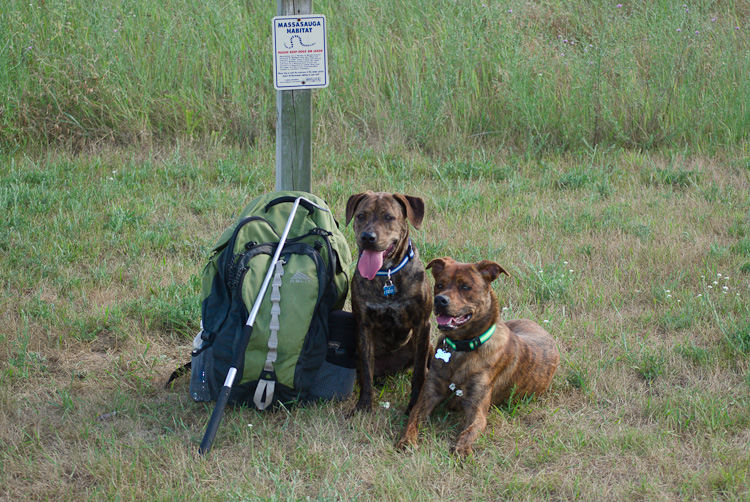 |
| Dog Exercise |
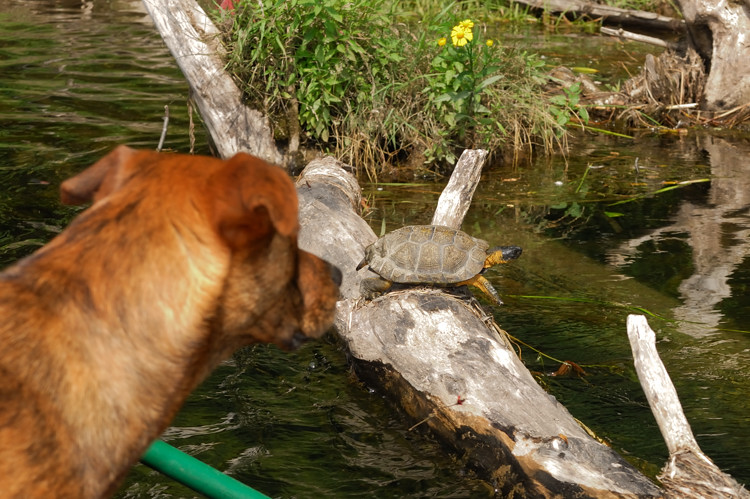 |
| Brew Trip |
 |
| Fall Camping (too cold to herp) |
 | ||
| Cutting the xmas tree |
BH
Subscribe to:
Posts (Atom)


