Buckeye Herps Blog

A photographic journal of the reptiles and amphibians of Ohio, Michigan and other places interesting wildlife call home.
Showing posts with label venomous snakes. Show all posts

Tuesday, September 27, 2011

Massasauga Rattlesnakes in Niles, Michigan - Maybe, but not this one!

The Niles Daily Star, the local newspaper for Niles, Michigan, just reported a story of a rattlesnake being found on the property of one of the rural residents of the area.  The story is full of wonderful information regarding the Eastern  Massasauga Rattlesnake, Sistrurus catenatus, and the snake has not been killed and will most likely be released back to where it was found.   These are all great things, except the snake is really an Eastern Hognose Snake, Heterodon platirhinos.  Please read the article that I have linked.  I hope they don't mind if I share their picture as well?

http://www.nilesstar.com/2011/09/26/rattlers-in-niles/

 Niles Daily Star Photo/Katie Rohman

Hognose snakes are often confused for massasauga rattlesnakes as they can have similar size and patterns.  Although this picture hides the best characteristics with a blurry head and a wood chip over the tail, it is clearly a hognose snake.  Massasaugas are typically very young at this size, and have an overall thinner body.  The have a well defined neck that tapers down after the head, unlike the "neckless" hognose.  Young massasauagas also typically have much more black/white/grey coloration at this age with stark contrast.  The tans and creams of this snake would not be seen in massasaugas.  If you look closely at the blurry head, you can make out the blunt, short head and upturned nose of a hognose snake.  Hognoses are toad specialists and live in sandy environments where they can dig around for their prety.
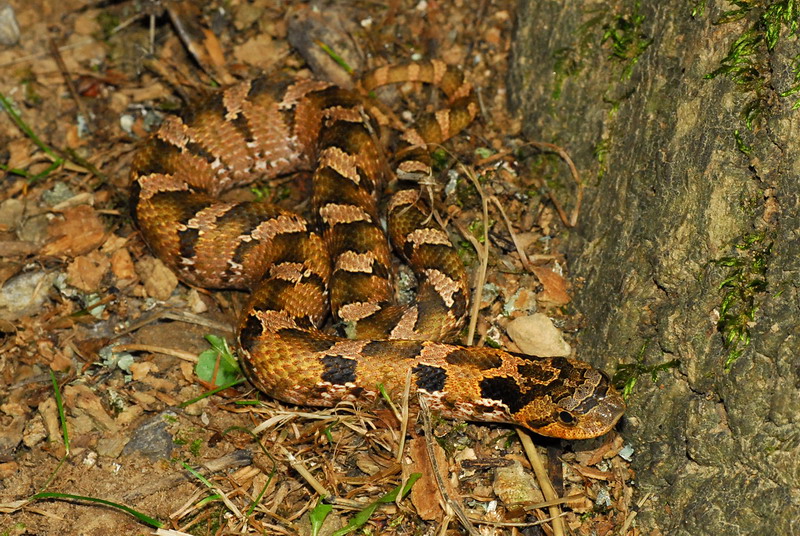
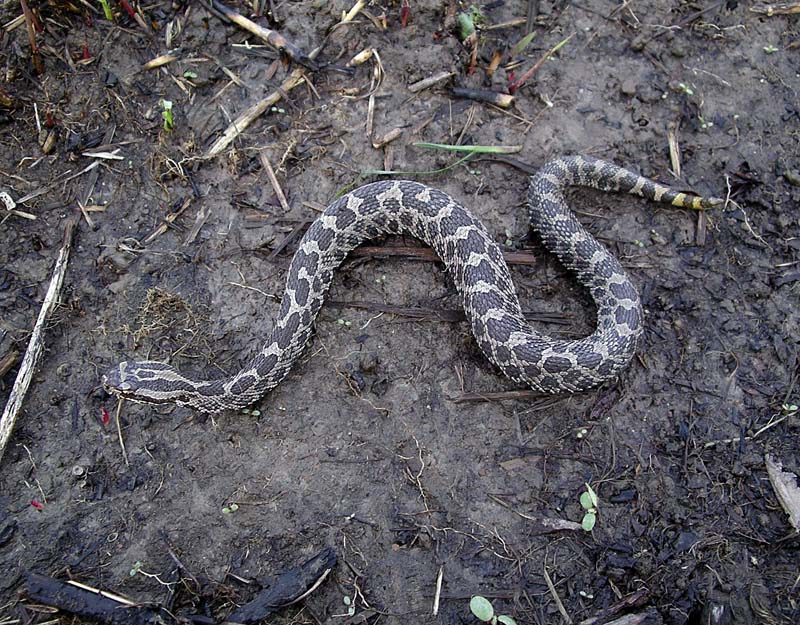
This midsized hognose from a few years ago looks similar to the snake from Niles.

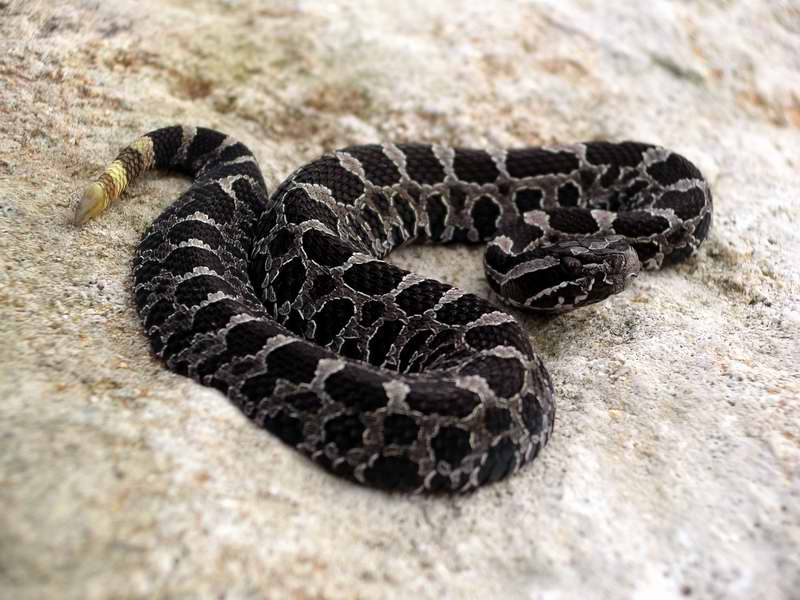
This is a young eastern massasuaga rattlesnake - note the yellow tail, one segment button of the rattle, contrasting tones and narrow neck.

Hognose snakes are completely not harmless to humans and will sometimes even put on a great display of "playing dead", rolling on their backs, and laying still with their tongues hanging out.
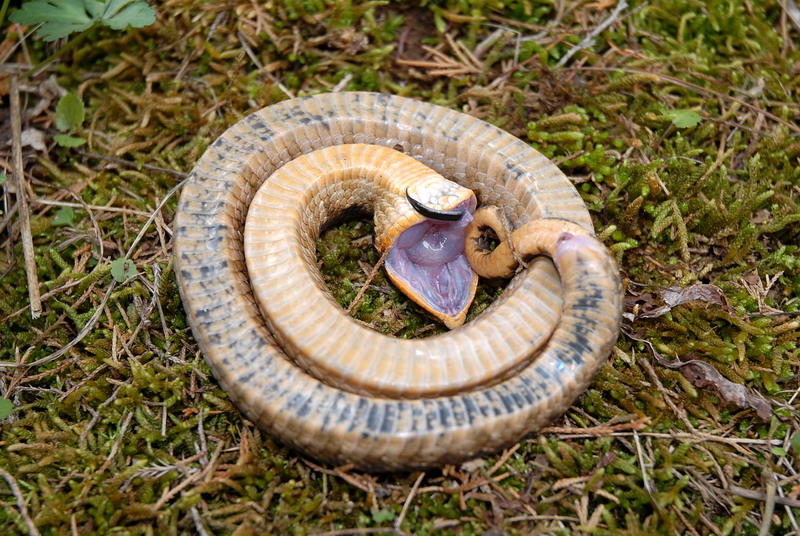

They will often flatten their heads out, hiss and strike with a closed mouth.  This garners a few other common names from locals such as, "puff adder", "spreading adder", "hissing adder" and "cobras".
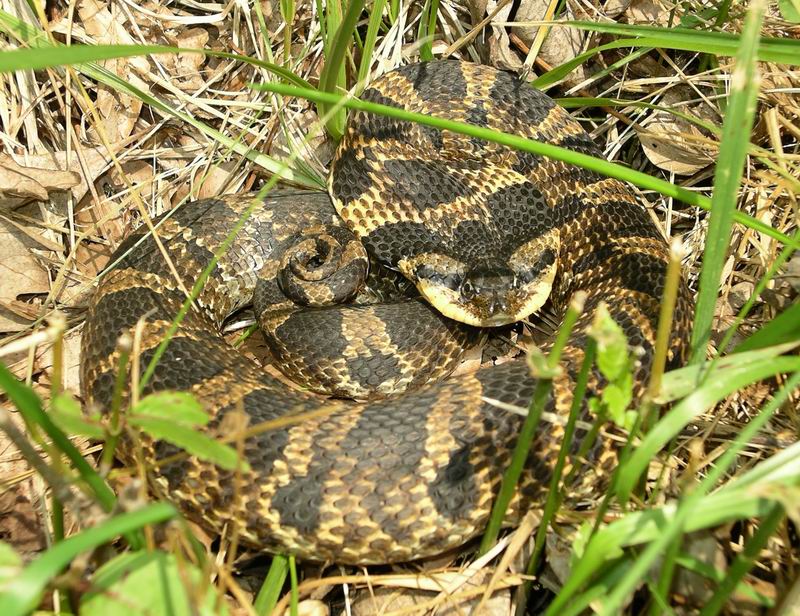

Either way, the snake is really cool.  I commend Ms. Bowles for cherishing Michigan's wildlife and dealing with it in a responsible way.  She has helped raised awareness of two of Michigan's periled snakes!  These animals can be hard to tell apart, and whenever in doubt if the snake is venomous, it is best to err on the side of caution and keep a safe distance.  For more information on telling apart Michigan's venomous and nonvenomous snakes, please visit - Michigan Snake Identification - Venomous or Not?

Rattlers in Niles? | The Niles Star

By Katie Rohman
Published 10:28pm Monday, September 26, 2011A rural Niles resident has captured an unusual but once common native to Michigan wetlands.
Marjorie Bowles, of 925 Anderson Rd., found an Eastern massasauga rattlesnake Wednesday in a side yard during an excavation project. A worker helped Bowles move the snake — just a baby at shorter than a foot long — into a large plastic tub with water in it. She then contacted the Michigan Department of Natural Resources.
“It’s not dangerous, (but) you don’t want to play with it,” Bowles said.
Bowles, who lives with her husband John near a swampy area by Pine Lake, off M-60, said she has only seen garter snakes on her property, and had to research what kind of snake it was.
“This is a new one by me,” she said.
Bowles said she was concerned someone would kill the snake, and wants the public aware of the species and its declining population. She said she hopes to release the snake back into its habitat, but was awaiting a call back from the DNR at press time.
According to the DNR, massasaugas are classified as “of special concern,” are protected by the State of Michigan and are a candidate for federal listing. They live in the entire Lower Peninsula, and were once common but their populations are declining due to the loss of wetland habitat and human harassment.
Massasaugas are slow-moving, but may bite if threatened, and can grow to 18 to 30 inches long. They have thick bodies with gray, grayish-brown or brown coloring. The young snakes have yellow buttons, or “rattles,” at the tip of their tails. The adult rattles are grayish yellow and resemble corn kernels.
If bitten by a massasauga, the DNR advises seeking medical attention immediately. The snakes are venomous, but possess the least toxic venom of any rattlesnake in the U.S.
If a massasauga is spotted, the DNR recommends not picking it up, using caution and submitting the sighting to www.dnr.state.mi.us/wildlife/pubs/massasauga_obsreport.asp.

Thursday, September 22, 2011

Ohio Snake Identification - Venomous or Not?

I am contacted by many people each year asking for help to identify snakes they find in their yard.  Many are just curious as to what animals call their yard home, or what they saw while camping.  I would be lying if I didn't mention that most just really want to know if they are in danger and often adopt the approach of "shovel first, questions later".  Is it "poisonous" or venomous is more often than not top of the list of questions they ask.  My hope is that this will address some of those questions and help provide a place for others to ask their questions and contact me more easily if needed.

If you don't care if it is venomous, still feel free to leave comments or contact me as directed below.  You may look at the pictures under the Reptiles tab to try and figure out what snake you have seen.

Ohio Venomous Snakes

Ohio has three species of venomous snake.  That is three species out of the twenty five snake species that call Ohio home.  They are the eastern massasauga rattlesnake (Sistrurus catenatus), the northern copperhead (Agkistrodon contortix) and the timber rattlesnake (Crotalus horridus).  Unfortunately, due to habitat loss, road mortality and persecution, both the timber rattlesnake and massasauaga rattlesnake are listed as state endangered species and can only be found in very specific locations in the state.  It is highly unlikely that most Ohioans will ever encounter these animals.

Here are some general rules for identification when you are looking at a snake in front of you.  These rules only apply to Ohio and snakes that can be found in the wild.


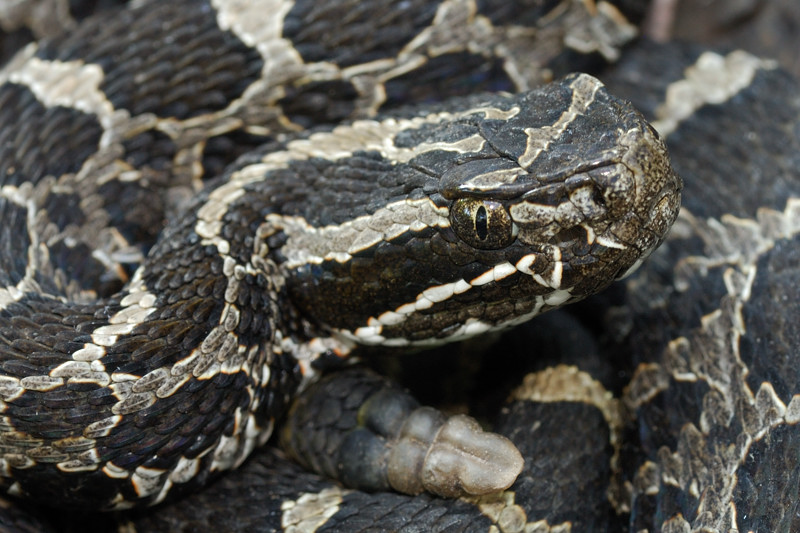
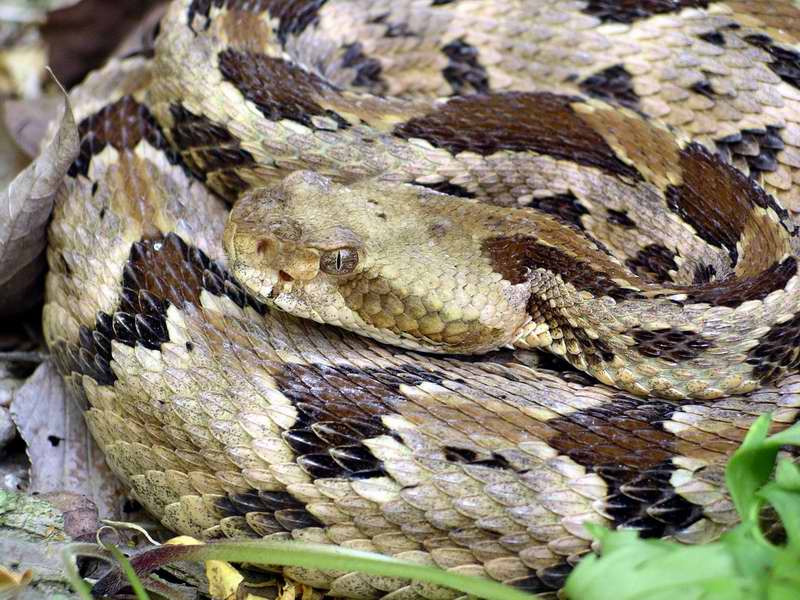
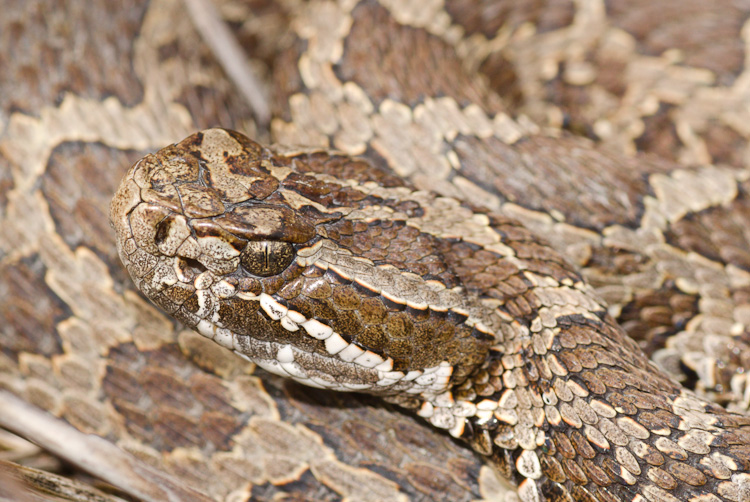
1. Vertical pupil vs round pupil - All of Ohio's venomous snakes have vertical, cat-like, pupils.  Ohio's nonvenomous snakes do not.  Again, outside of Ohio, there are snakes that do not follow these rules.  Here are pictures of all three of Ohio's venomous snakes that clearly depict the vertical pupil.

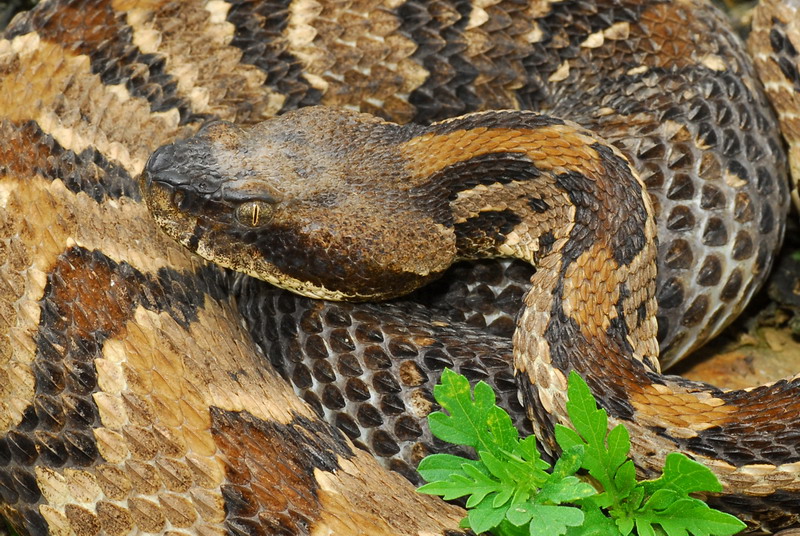
Timber Rattlesnake

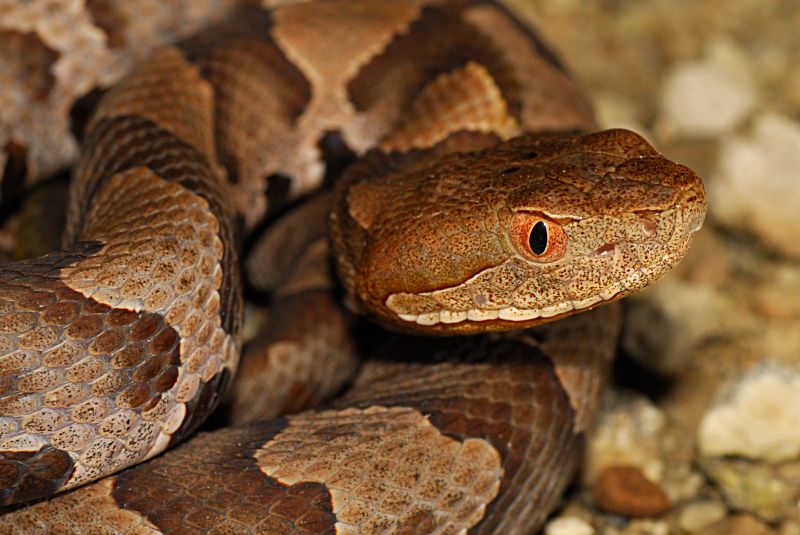
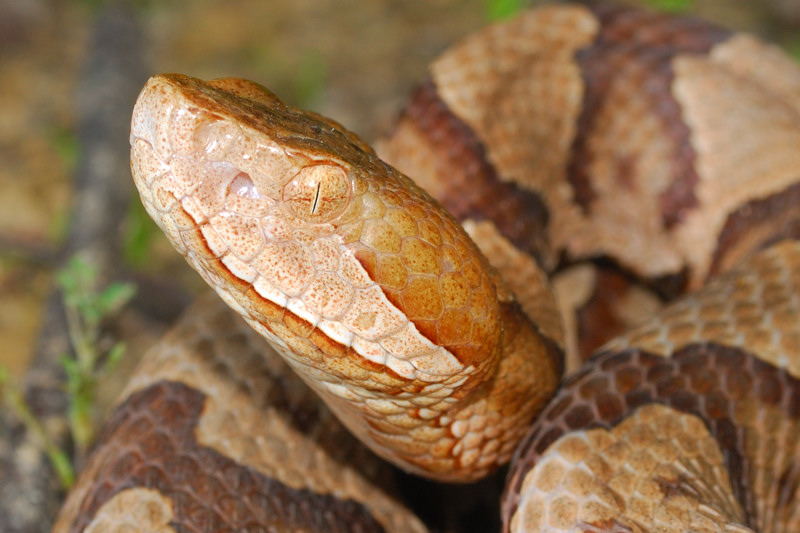
Copperhead

Massasauga Rattlesnake
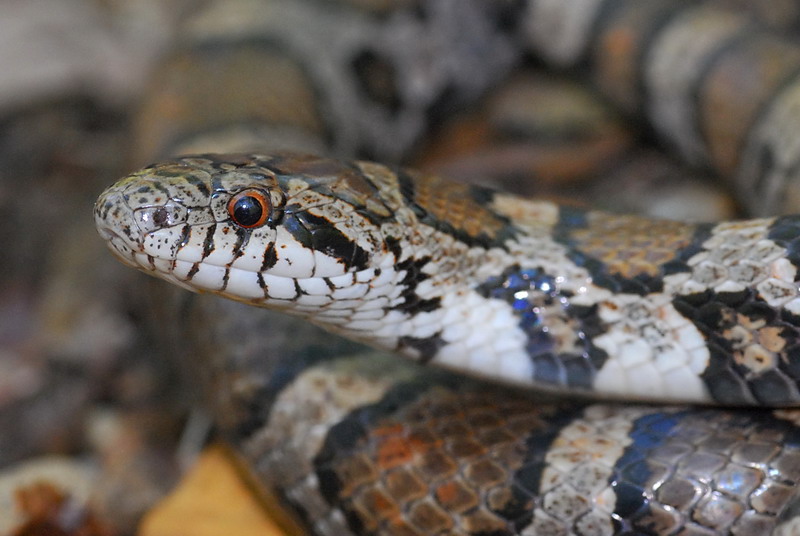
And a nonvenomous snake, the eastern milksnake.  This snake is commonly confused for a copperhead or massasauga rattlesnake.


2.  Presence of a facial pit - All of Ohio's venomous snakes are pitvipers.  They have a heat-seeking pit that helps them localize their prey.  The are ambush predators, and will sit and wait for a small rodent to run by, sometimes at night, and their pits help them hunt.  Ohio's nonvenomous snakes do not have these heat-seeking pits.

Timber Rattlesnake - pit is easily visible to the left and below the eye, just like in the above drawing.
Massasauga Rattlesnake
Copperhead
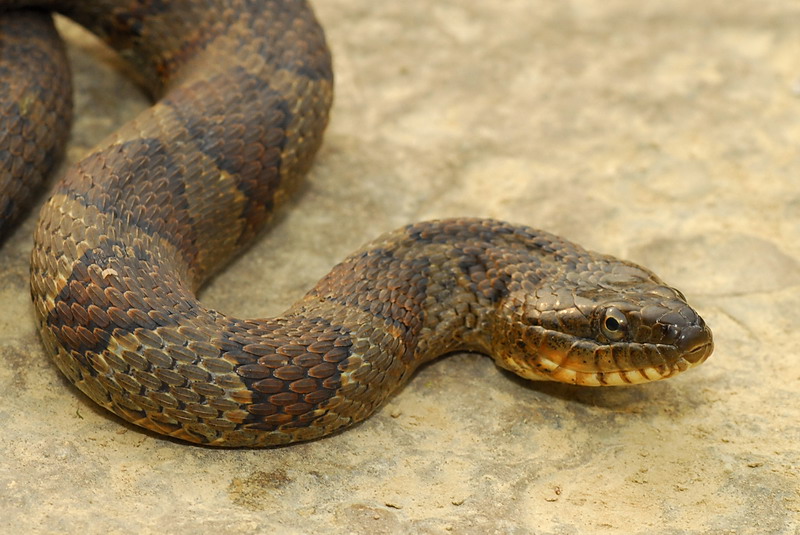
Northern Watersnake, nonvenomous - note the lack of a vertical pupil or pit.  These are often confused for copperheads.

3. Divided anal plate and double tail ventral scales after the cloaca vs single anal plate and tail ventral scales after the cloaca. In normal terms, the nonvenomous snakes have a split or divided scale that covers their cloaca.  The cloaca is the opening (butt) of the snake where feces (poop) is excreted.  The scales after the anal scale will also be divided or doubled. Venomous snakes of Ohio have a single anal scale and single scales after.  I will obtain pictures of anal scales soon, but please refer to the above figure.

4. Presence of rattle - Two of Ohio's three venomous snakes are rattlesnakes and have a rattle that produces a loud noise.  I will be sure to record one soon as well for you to listen to.  This is not as easy as it seems, as most other nonvenomous snakes will rattle their tails in leaves to mimic the rattling sound.  Also, their copperhead will also rattle it's tail, although it does not have a rattle.  Finally, young rattlesnakes just have one segment of rattle, or a button, and their tails will not make noise.  If you see a rattle, or hear a rattle, it is best to just walk away.

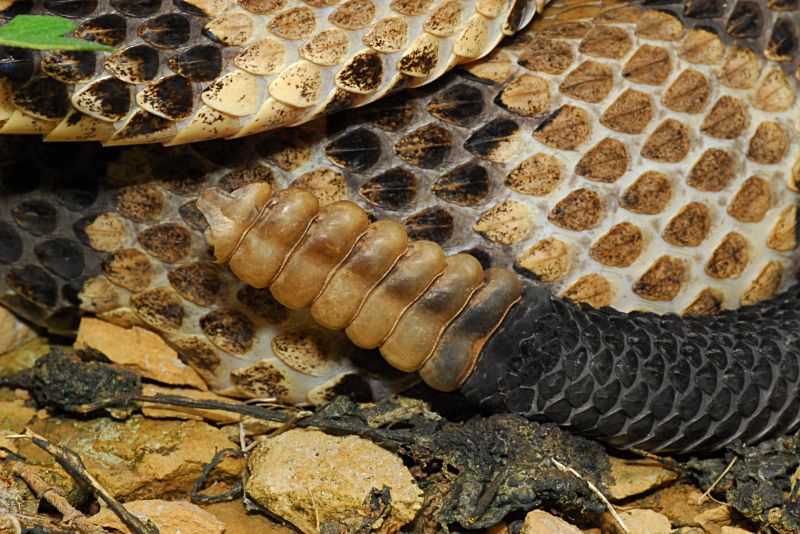
Timber Rattlesnake rattle
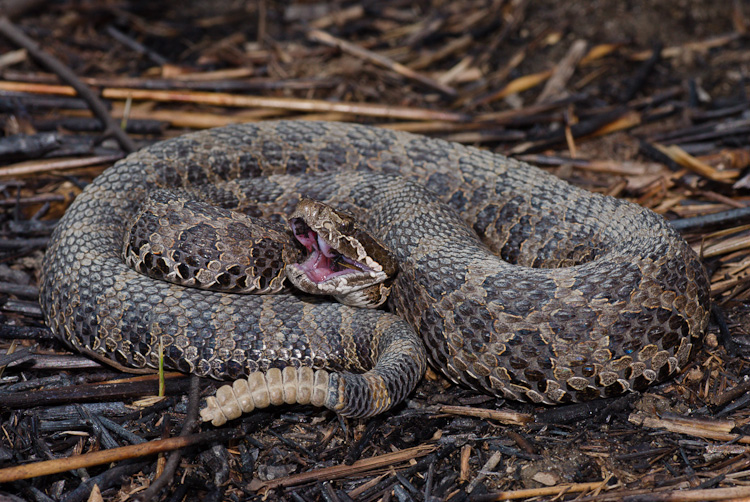
Massasauga Rattlesnake, with large rattle, saying "Stay Away"
Massasauga Rattlesnake, neonate or baby, with single button
 5.  Triangular head vs Rounded head - It is true venomous snakes often will have a triangular head.  Many nonvenomous snakes will flatten their neck and change their shape slightly to look more triangular.

Timber Rattlesnake - displaying the triangular head shape
Northern Watersnake with a fairly triangular head
Eastern Hognose Snake showing a triangular head
Remember, most of these snakes have specific habitat preferences and needs.  They are not found all over the state.  Just because a snake lives in Ohio, does not mean it lives in your area as well.  If you draw a line from Cincinnati to Cleveland, a very general rule is that Massasauga Rattlesnakes occur sporadically in the NW half of the state, while Timber Rattlesnakes and Copperheads occur only in the rocky, hilly region in the SE half of the state.

Now, you are probably reading this and saying "BuckeyeHerper, you are crazy if I am ever going to be close enough to a snake to look it in the eye, or lift it's tail to check the butt."  I agree completely, but I do not feel this is a reason to kill the snake. If you aren't sure, just keep a safe distance and leave the snake alone.  Luckily snakes are not as aggressive as people typically think they are.  They will run more often than not.  If they do happen to stand their ground, you can very easily walk away or around them without any worry.  If you are comfortable, everyone has a digital camera or cell phone these days, and it is easy to take a quick picture from a safe distance.  You can then compare your picture with pictures on this and other websites, or email it to me or others for assistance.

Again, if you aren't sure, just keep your distance.  These snakes are very rarely encountered, and chances are you have just found one of the more common nonvenomous snakes.  Despite what you might have heard, Ohio also does not have any cottonmouth, or water moccasins.  The closest populations are hundreds of miles away.

If you have any further questions, or want to share pictures or stories, please feel free to leave a comment below or email me at foltjr AT gmail.com .

Sunday, September 18, 2011

Michigan Snake Identification - Venomous or Not?

I am contacted by many people each year asking for help to identify snakes they find in their yard.  Many are just curious as to what animals call their yard home, or what they saw while camping.  I would be lying if I didn't mention that most just really want to know if they are in danger and often adopt the approach of "shovel first, questions later".  Is it "poisonous" or venomous is more often than not top of the list of questions they ask.  My hope is that this will address some of those questions and help provide a place for others to ask their questions and contact me more easily if needed.

If you don't care if it is venomous, still feel free to leave comments or contact me as directed below.  You may look at the pictures under the Reptiles tab to try and figure out what snake you have seen.

Michigan Venomous Snakes

Michigan only has one species of venomous snake.  That is one species out of the eighteen snake species that call Michigan home.  It is the eastern massasauga rattlesnake (Sistrurus catenatus).  Unfortunately, due to habitat loss, road mortality and persecution, the massasauaga rattlesnake is listed as a species of special concern and can only be found in very specific locations in the state.  These snakes are small, and very secretive.  It is highly unlikely that most Michiganders will ever encounter these animals.  They are also not present at all in the Upper Peninsula. 

Here are some general rules for identification when you are looking at a snake in front of you.  These rules only apply to Michigan and snakes that can be found in the wild.


1. Vertical pupil vs round pupil - Massasauga Rattlesnakes have vertical, cat-like, pupils.  Michigan's nonvenomous snakes do not.  Again, outside of Michigan, there are snakes that do not follow these rules.

Massasauga Rattlesnake
And a nonvenomous snake, the eastern milksnake.  This snake is commonly confused for a massasauga rattlesnake.


2.  Presence of a facial pit - The Massasauga Rattlesnake is a pitviper.  They have a heat-seeking pit that helps them localize their prey.  The are ambush predators, and will sit and wait for a small rodent to run by, sometimes at night, and their pits help them hunt.  Michigan's nonvenomous snakes do not have these heat-seeking pits.

Massasauga Rattlesnake

Northern Watersnake, nonvenomous - note the lack of a vertical pupil or pit
3. Divided anal plate and double tail ventral scales after the cloaca vs single anal plate and tail ventral scales after the cloaca. In normal terms, the nonvenomous snakes have a split or divided scale that covers their cloaca.  The cloaca is the opening (butt) of the snake where feces (poop) is excreted.  The scales after the anal scale will also be divided or doubled. Venomous snakes of Michigan have a single anal scale and single scales after.  I will obtain pictures of anal scales soon, but please refer to the above figure.

4. Presence of rattle - The Massasauga Rattlesnake has a rattle that produces a loud noise.  I will be sure to record one soon as well for you to listen to.  This trait is not as easy as it seems, as most other nonvenomous snakes will rattle their tails in leaves to mimic the rattling sound.  Also, young rattlesnakes just have one segment of rattle, or a button, and their tails will not make noise.  If you see a rattle, or hear a rattle, it is best to just walk away.

Massasauga Rattlesnake, with large rattle, saying "Stay Away"
Massasauga Rattlesnake, neonate or baby, with single button
 5.  Triangular head vs Rounded head - It is true venomous snakes often will have a triangular head.  Many nonvenomous snakes will flatten their neck and change their shape slightly to look more triangular.


Northern Watersnake with a fairly triangular head
Eastern Hognose Snake showing a triangular head
Remember, massasauga rattlesnakes have specific habitat preferences and needs.  They are not found all over the state.  They are small, secretive snakes, typically associated with wetland areas, swamps, bogs and fens.

Now, you are probably reading this and saying "BuckeyeHerper, you are crazy if I am ever going to be close enough to a snake to look it in the eye, or lift it's tail to check the butt."  I agree completely, but I do not feel this is a reason to kill the snake. If you aren't sure, just keep a safe distance and leave the snake alone.  Luckily snakes are not as aggressive as people typically think they are.  They will run more often than not.  If they do happen to stand their ground, you can very easily walk away or around them without any worry.  If you are comfortable, everyone has a digital camera or cell phone these days, and it is easy to take a quick picture from a safe distance.  You can then compare your picture with pictures on this and other websites, or email it to me or others for assistance.

Again, if you aren't sure, just keep your distance.  These snakes are very rarely encountered, and chances are you have just found one of the more common nonvenomous snakes.  Despite what you might have heard,Michigan also does not have any cottonmouth, water moccasins or copperheads.

If you have any further questions, or want to share pictures or stories, please feel free to leave a comment below or email me at foltjr AT gmail.com .