Buckeye Herps Blog

A photographic journal of the reptiles and amphibians of Ohio, Michigan and other places interesting wildlife call home.
Showing posts with label UW photography. Show all posts

Monday, March 3, 2014

Island Living - Bimini, Bahamas Part II

Bimini Part IBimini Part IIBimini Part III.

Today was the big day.


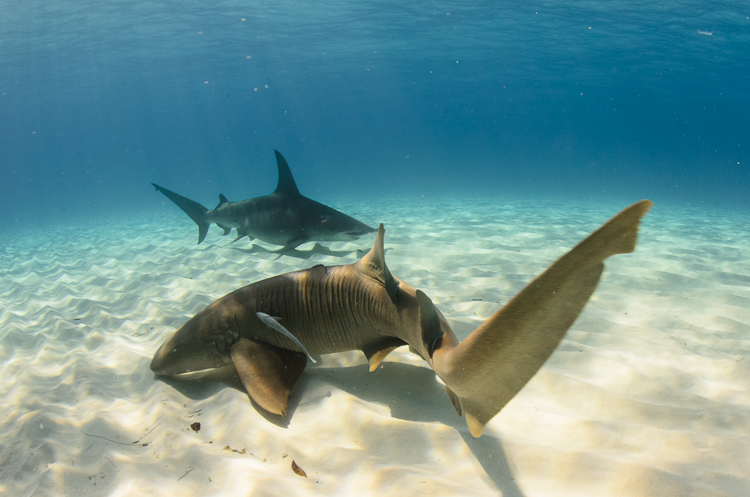
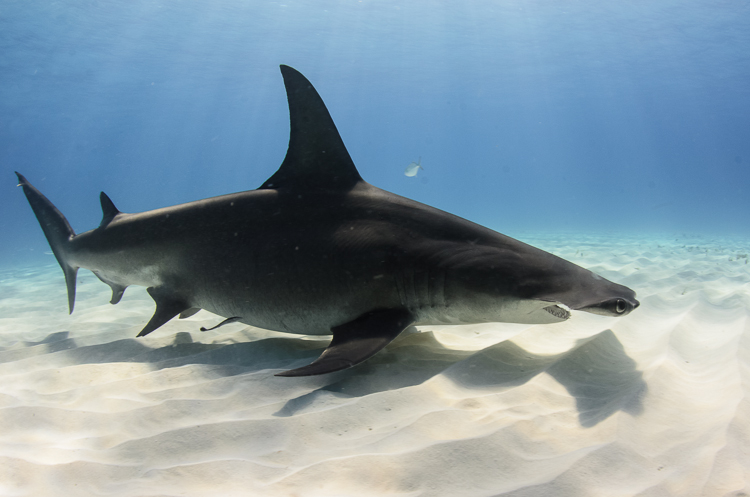
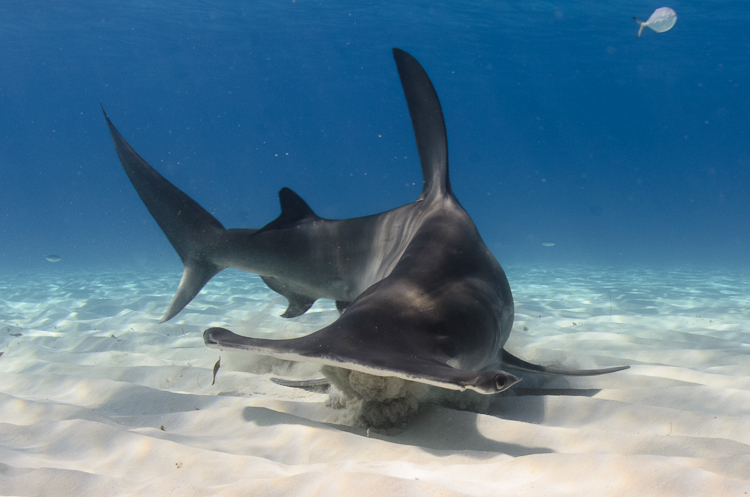
Nurse Shark Ginglymostoma cirratum and Great Hammerhead Shark Sphyrna mokarran
I had been trying to photographing this nurse shark in the sand flats when I noticed the looming shape in the background. The game was on! Technically, not a great shot by any means, but I just love it.


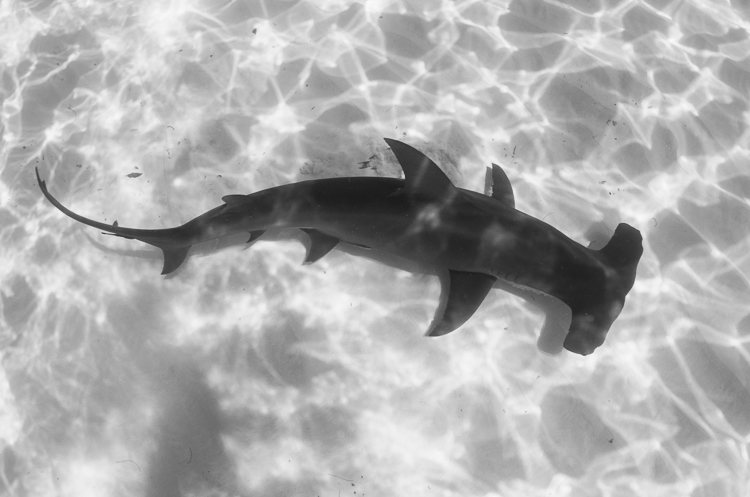
I wish I could have spent all day with the hammers. My limited bottom time just didn't cut it. Looking back I realize this is ridiculous, and I should be extremely thankful to even get a second long glimpse of this regal and magnificent fish. As it was, I got to hang out and get multiple looks. It was hard to convince myself to take a few passes to just focus on the shark and the moment, and to leave the camera pointed down, but it was worth the imprint in my memory of the grace of the shark cruising underwater.

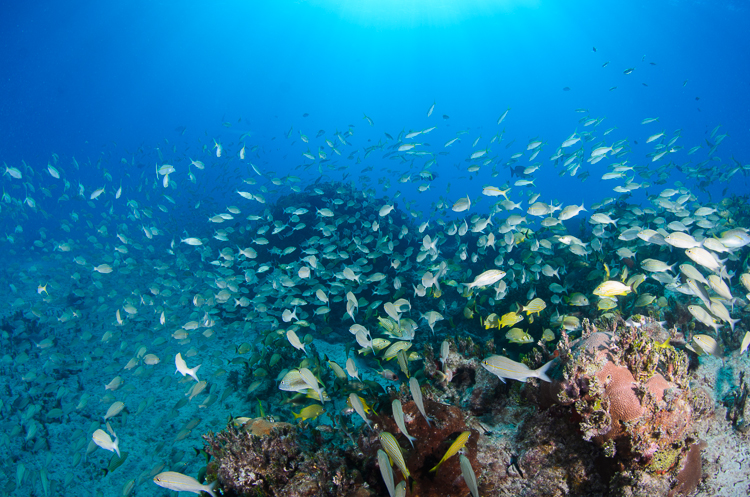
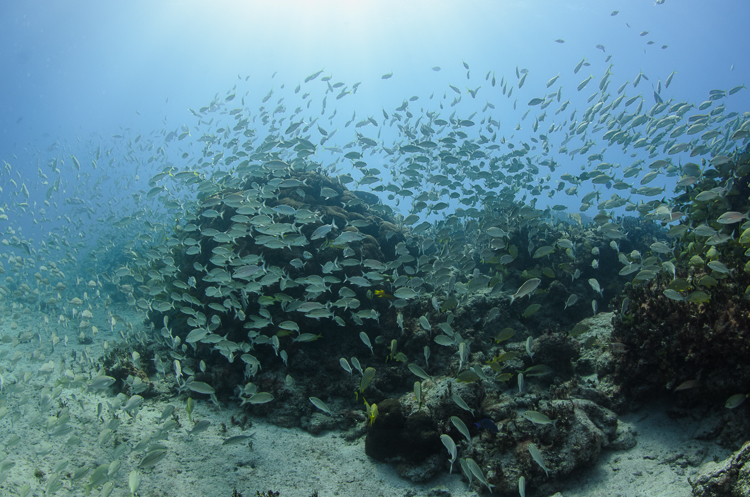
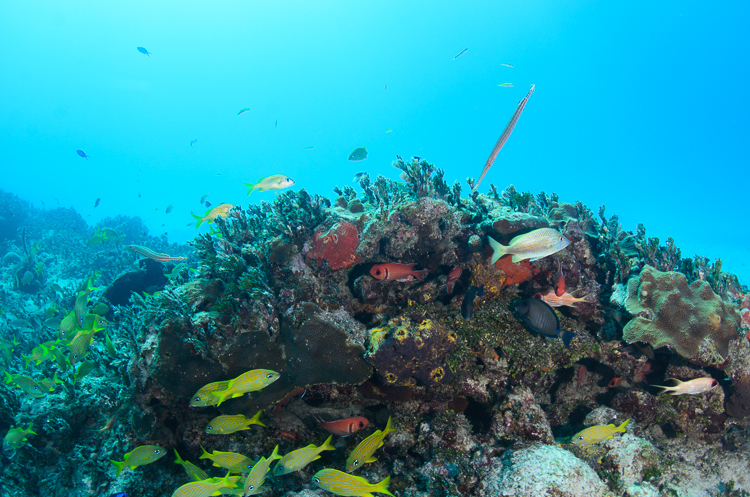
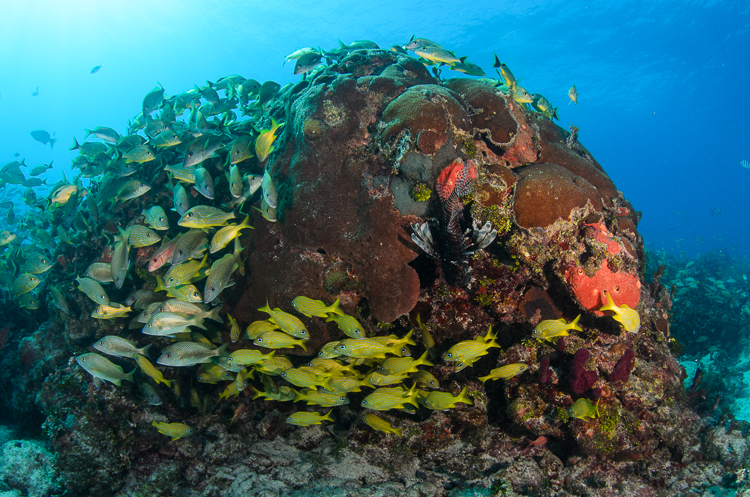
The next dive was much less eventful, but I had my WA lens loaded, and I enjoyed trying to photograph the large schools of fish on the shallow reef. Since returning, I have really gotten a kick out of trying to ID all the fish that were photographed in the picture. It has proved difficult, but rewarding and my fish identification skills should be much improved on future dives.

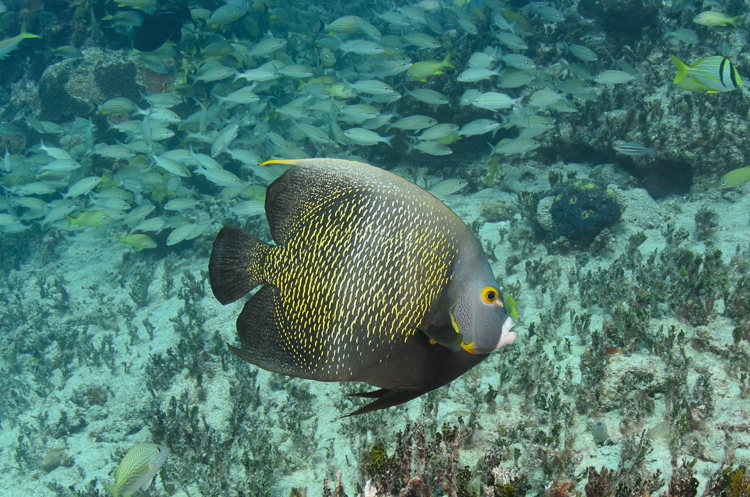
French Angelfish Pomacanthus paru, Porkfish Anisotremus virginicus (top right with vertical black bars), White Grunts Haemulon plumierii, French Grunts Haemulon flavolineatum, Black Durgon Melichthys niger (top left), Bluestriped Grunts Haemulon sciurus, Yellowtail Snapper Ocyurus chrysurus (top left), Tomtate Haemulon aurolineatum
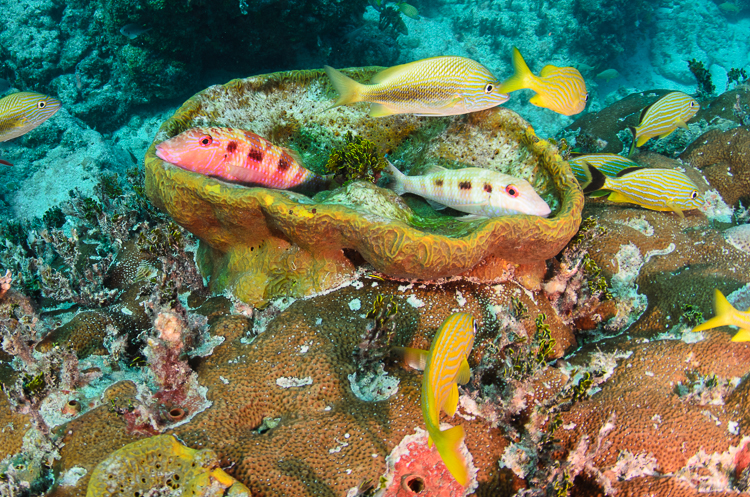
Spotted Goatfish Pseudupeneus maculatus, Bluestriped Grunts Haemulon sciurus, French Grunts Haemulon flavolineatum, White Grunts Haemulon plumierii

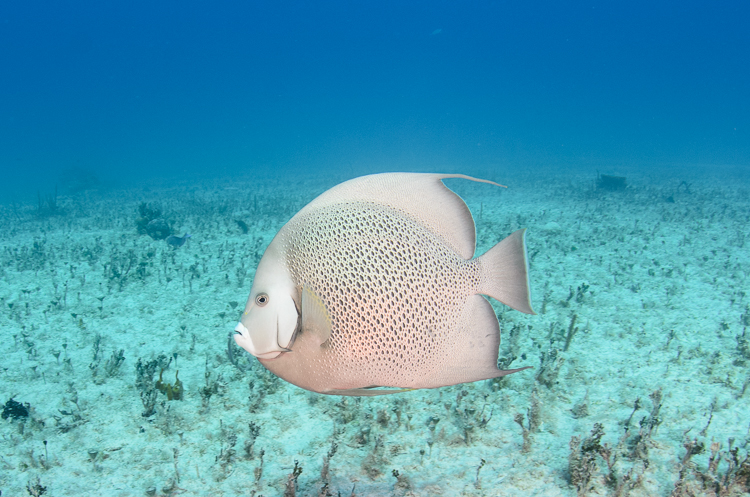
Gray Angelfish Pomacanthus arcuatus
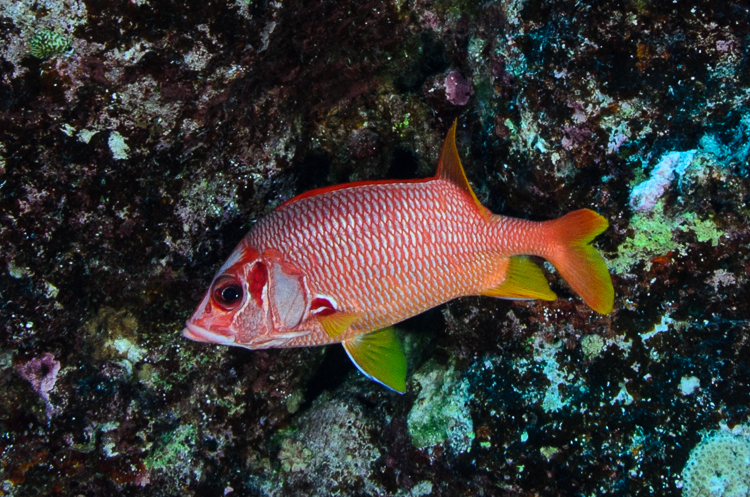
Bluestriped Grunts Haemulon sciurus, Tomtate Haemulon aurolineatum, French Grunts Haemulon flavolineatum, Squirrelfish Holocentrus adscensionis, White Grunts Haemulon plumierii, Spotted Goatfish Pseudupeneus maculatus
Bluestriped Grunts Haemulon sciurus, Tomtate Haemulon aurolineatum, French Grunts Haemulon flavolineatum, Blue Tang Acanthurus coeruleus, Squirrelfish Holocentrus adscensionis

Atlantic Trumpetfish Aulostomas maculatus, Bluestriped Grunts Haemulon sciurus, French Grunts Haemulon flavolineatum, Tomtates Haemulon aurolineatum, Spotfin Butterflyfish Chaetodon ocellatus, Sergeant Major Abudefduf saxatilis, Ocean Surgeonfish Acanthurus tractus, Squirrelfish Holocentrus adscensionis, Blackbar Soldierfish Myripristis jacobus, Doctorfish Acanthurus chirurgus 

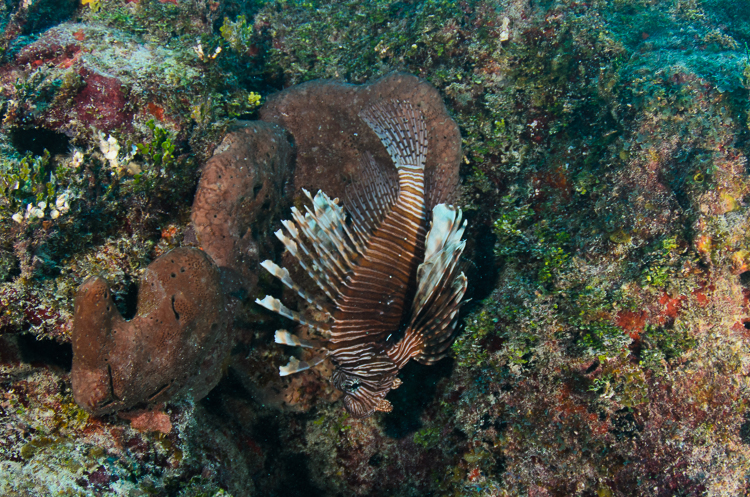
The pythons in south Florida may be getting much of the bad press, but another hugely problematic invasive species introduced by the pet trade is the Red Lionfish Pterois volitans. The fish have become widely established on reefs in the caribbean and the gulf. They grow very large, very fast, and eat many of the native reef fishes. They reproduce extremely quickly and have enormous clutches. A recipe for disaster. So far, it seems they have no native predators. Luckily, very strong efforts have been initiated to attempt to help keep their numbers in check. We know they can't be eradicated, but are working hard to provide some form of natural predator - humans! Reef.org (check out their site for wonderful information and ways to help) is helping lead the way, organizing lionfish hunts and contests and even publishing a lionfish cookbook to provide safe cleaning methods and delicious lionfish recipes - Eat 'Em to Beat 'Em!

Unfortunately, I saw lionfish on every reef dive. My divemaster usually brings a small spear along to do his part, but we didn't have one today. He was pretty sure he had taken care of them all at this dive location. Guess not...
Red Lionfish Pterois volitans, Bluestriped Grunts Haemulon sciurus, Bluehead Wrasse yellow initial phase Thalassoma bifasciatum (yellow fish to left center), Longspine Squirrelfish Holocentrus rufus (two bottom right, better IDed from photos earlier in sequence), and maybe a schoolmaster Lutjanus apodus

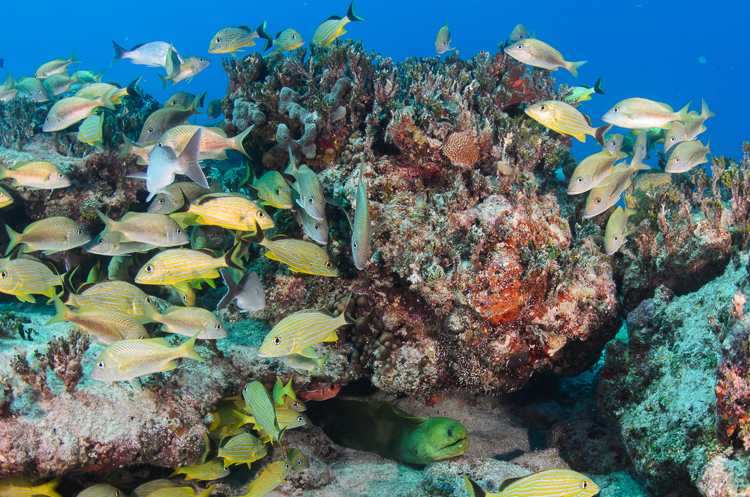
Red Lionfish Pterois volitans, Bluestriped Grunts Haemulon sciurus (top center with black tails), French Grunts Haemulon flavolineatum (bottom center), White Grunts Haemulon plumierii (intermixed, mostly bottom left), Blackbar Soldierfish Myripristis jacobus (left center background), Goatfish Sp. (Red Goatfish Mullus auratus???? - left center red fish in sea of grunts)
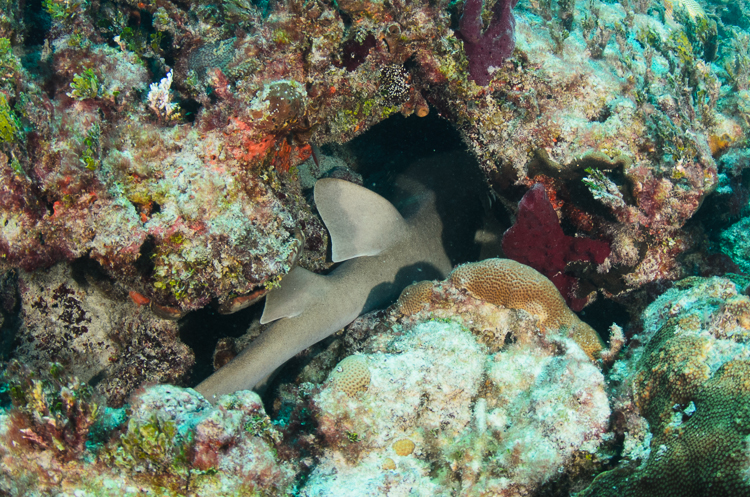
I spotted a nurseshark on this dive, which I left to his slumber.

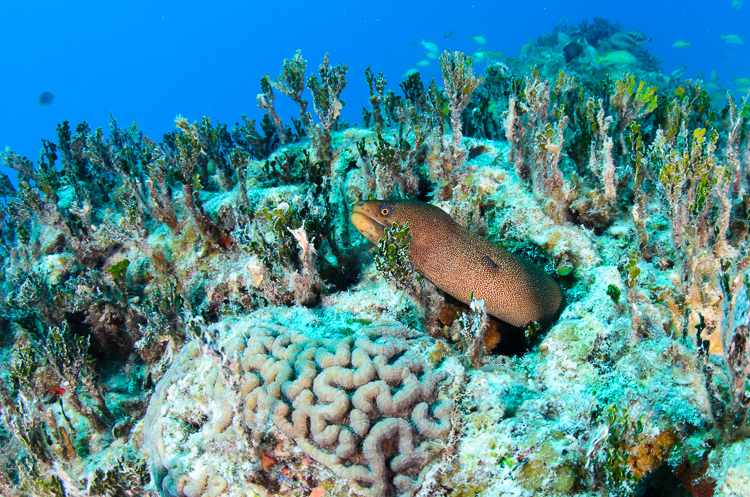
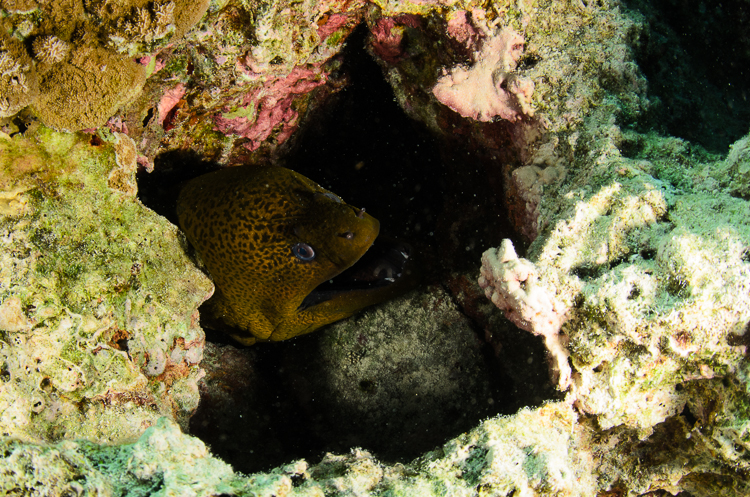
And finally I will leave you with a couple eels spotted on the reef. This was actually quite an enjoyable dive.

Goldentail Moray Gymnothorax miliaris
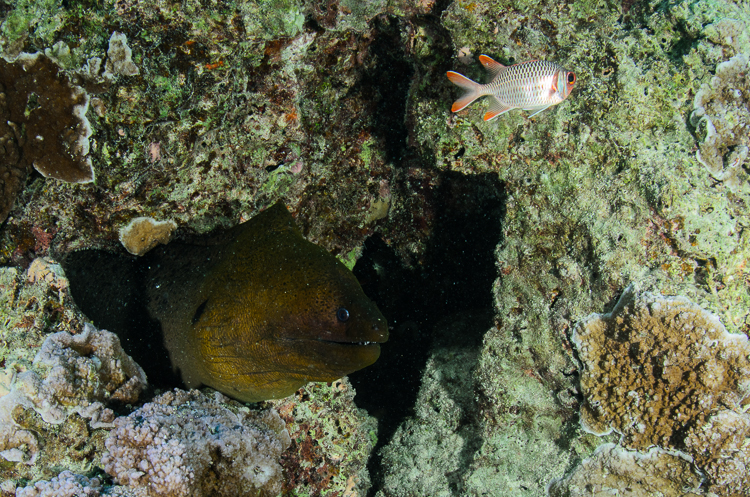
Green Moray Eel Gymnothorax funebris, Bluestriped Grunts Haemulon sciurus (all over with black tails), French Grunts Haemulon flavolineatum (bottom left), White Grunts Haemulon plumierii (intermixed, mostly center left and center right), and maybe a Blackbar Soldierfish Myripristis jacobus (partially hidden bottom center)???
More Bimini (and sharks, and snakes!) to come very soon.

Bimini Part IBimini Part IIBimini Part III.

Sunday, March 10, 2013

Bora Bora IV: Macro


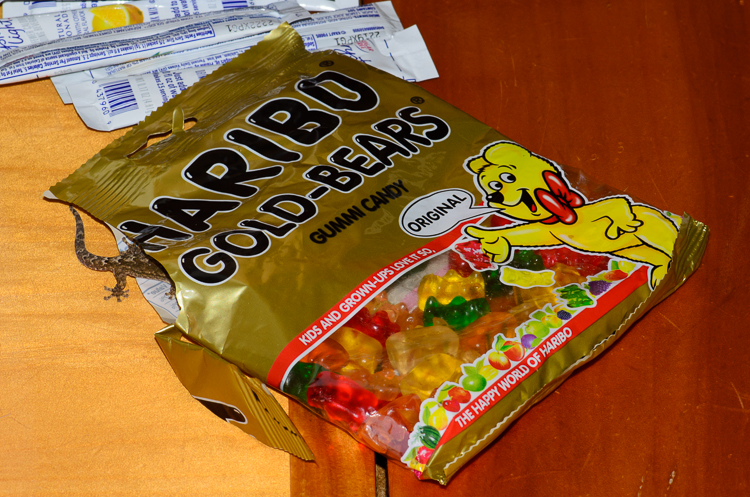
Herps on Bora Bora were few and far between. There were geckos on most of the buildings at night, of which I tried to ignore. One day we came in the room to find this bear eating gecko.


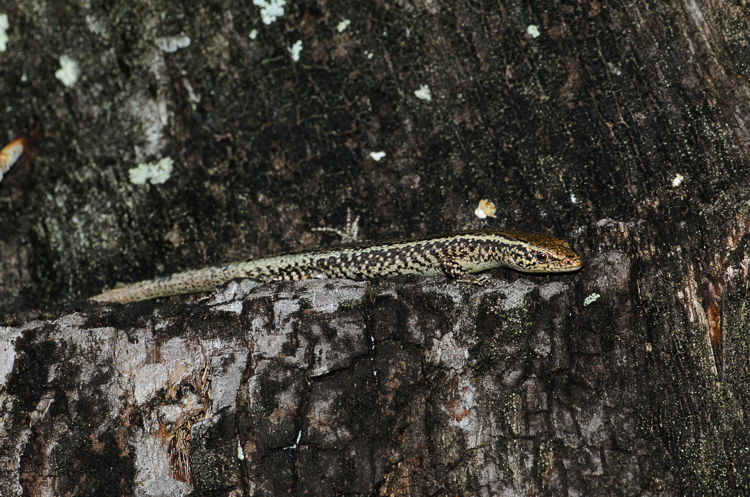
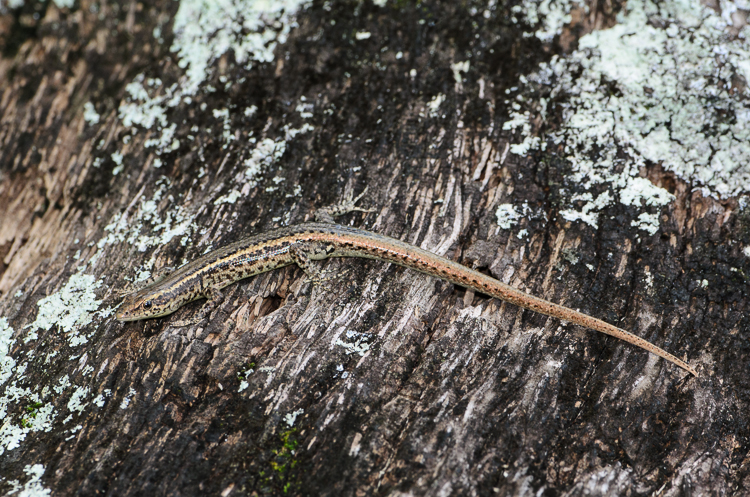
Other than these, I quickly noticed small skinks around the beach and on the palm trees. I believe these are Snake-Eyed Skinks Cryptoblepharus poecilopleurus. I photographed a bunch of them and didn't notice any other different appearing animals.


I asked about sea turtles but mostly was told we would be very lucky to see any. I guess the polynesians find green sea turtle meat to be very delicious. Despite it being illegal, they are still commonly eaten when found. There is a small turtle rehab and head starting facility on the island, but they are a relatively young facility and I didn't visit, so I don't know how well it is doing. I was told I might have a chance to see a hawksbill, but my divemaster had only seen three or four in the last three months.

I only shot with my macro setup on two occasions sadly. When you have chances at manta, it can be hard to convince yourself to put the macro lens on your rig. I snorkeled around the coral gardens by the resort briefly with my macro lens on one of the first few days.

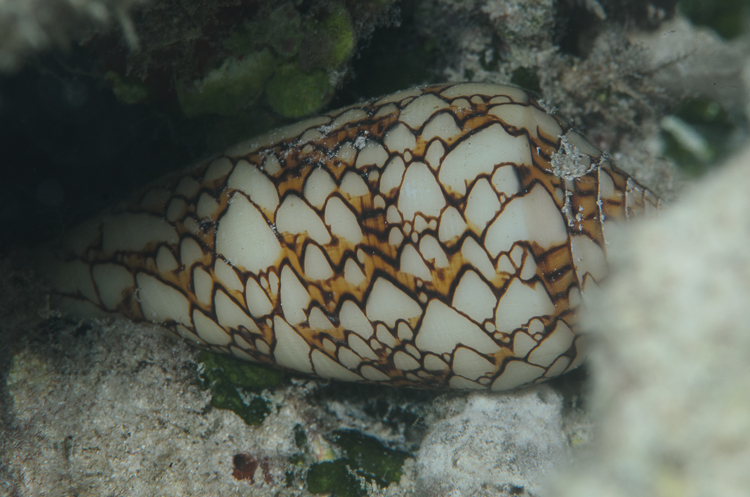
Textile Cone Snail Conus textile
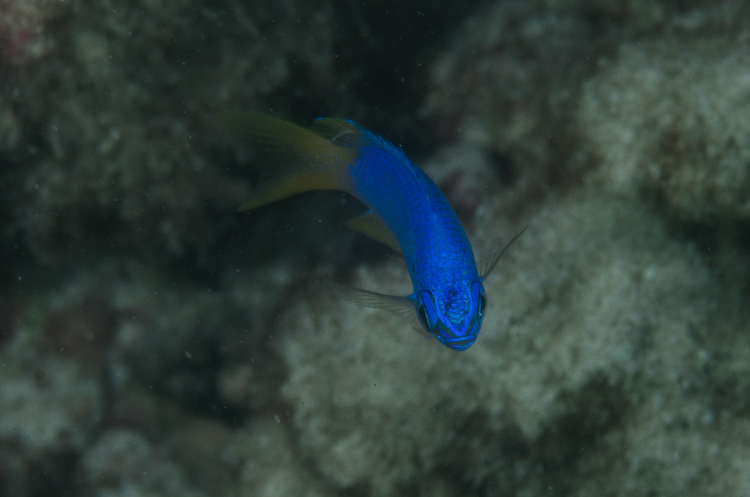
Neon Damsel Pomacentrus coelestis
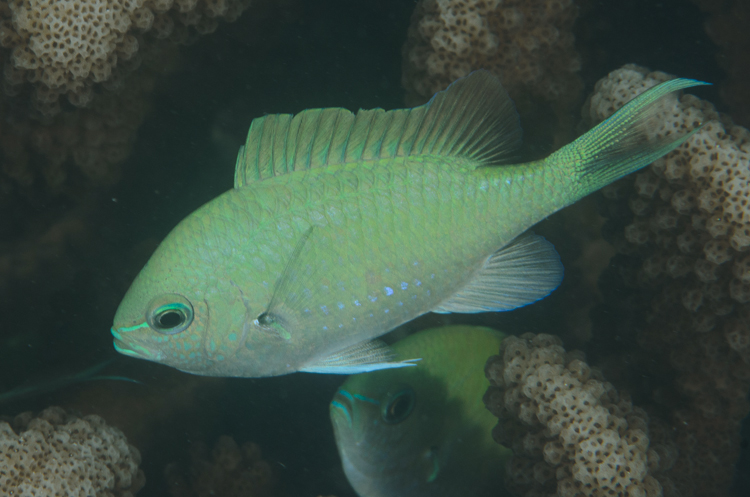
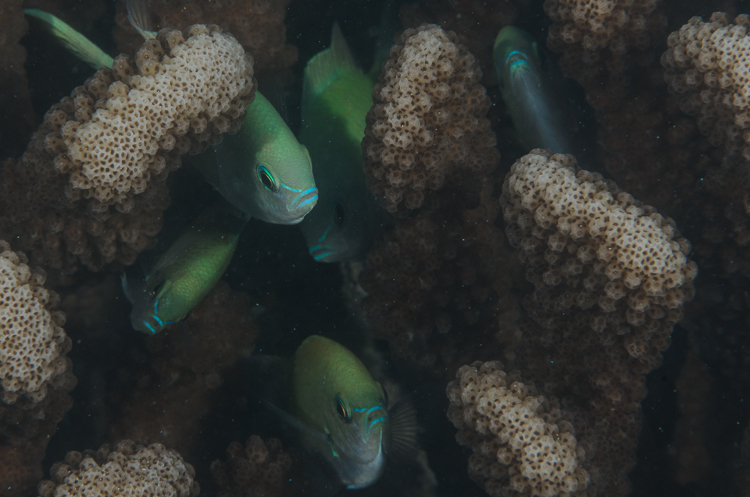
Black-axil Chromis Chromis atripectoralis

There were a few lionfish that were hiding in the structure and coral during the day. One night I saw a few of them swimming around after dark, but I never had a chance to photograph them when they were not hiding.

Clearfin Lionfish Pterois radiata
This crab was hanging out on one of the wooden supports holding up the walkway to the bungalows.

Near the end of the trip, we booked one of the afternoon "fun dives", which are basically for beginners or people getting certified. I knew we would dive the site with the eagle rays and sand flats, but figured with the group of beginners I could split off and stay beneath the boat and explore the reef. As it turns out, my buddy Rob and I were the only people on the books to dive. We ended up with a private dive as we explored the reef for macro life. It turned out to be one of my favorite dives of the trip!

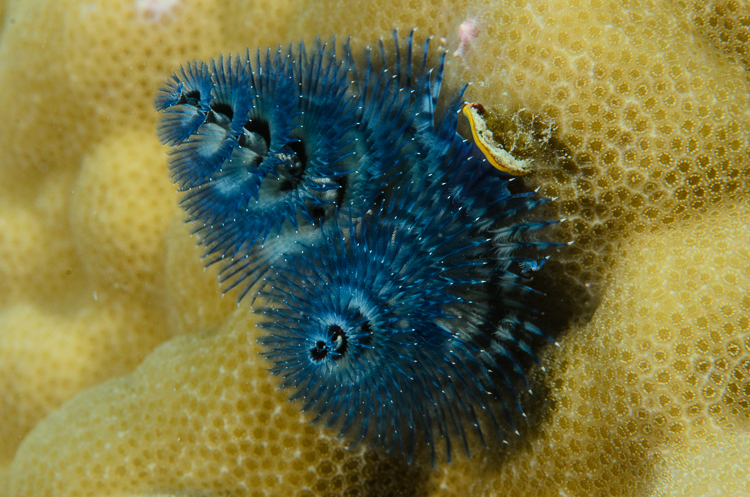
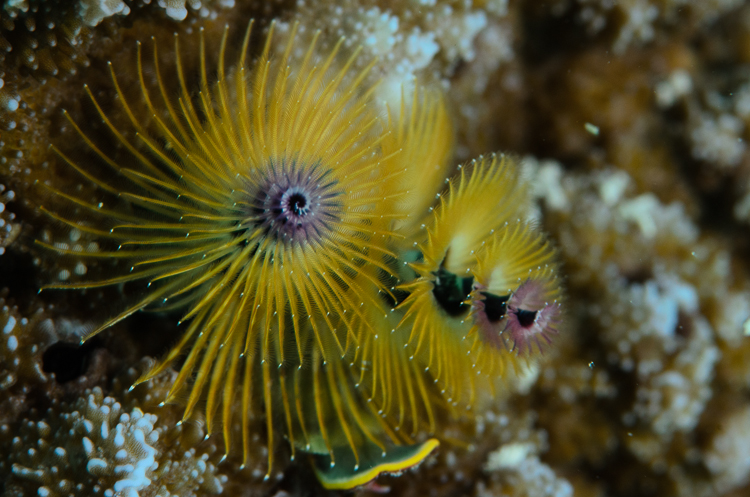
I finally took the opportunity to photograph some of the christmas tree worms I had been seeing all trip.


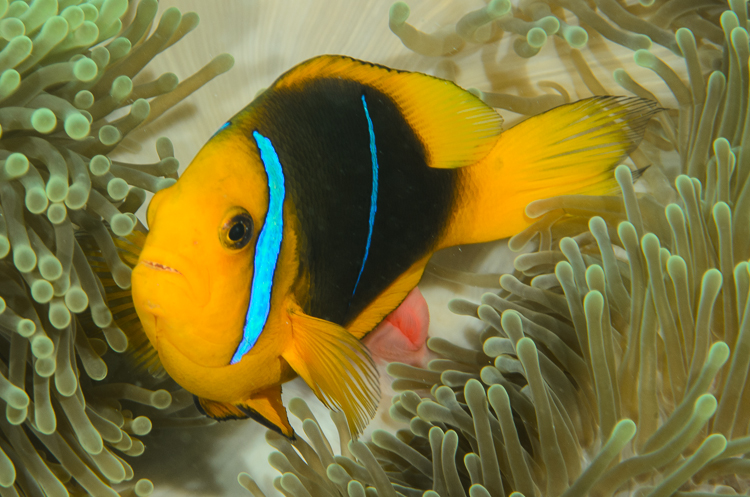
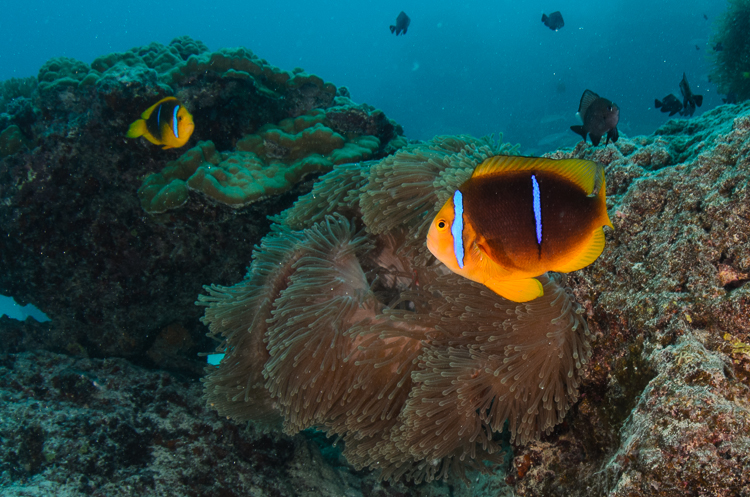
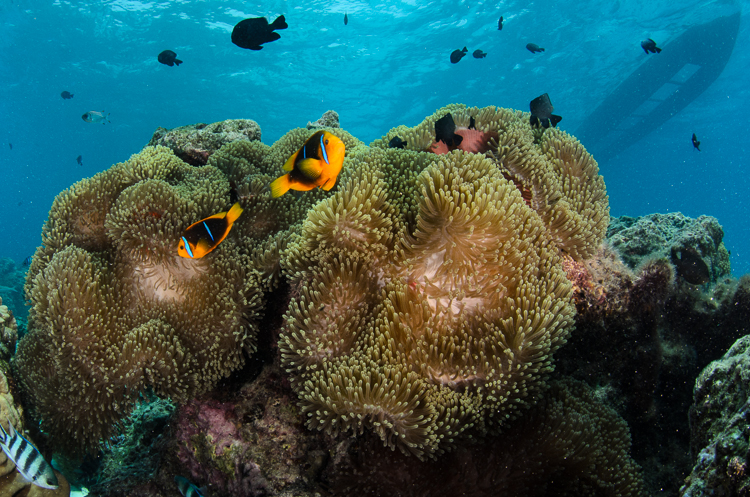
I also enjoyed focusing on the clownfish that were swimming in and out of the anemones.


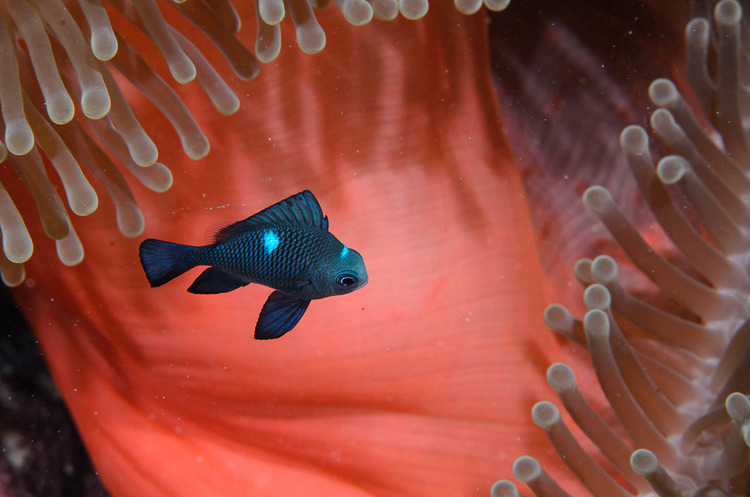
Other fish in the anemones included these Three-spot Dascyllus Dascyllus trimaculatus.


This Peacock Razorfish Iniistius pavo was able to react to my strobes and was often photographed in a blur of movement or in a different orientation. Only once or twice did it stay still.


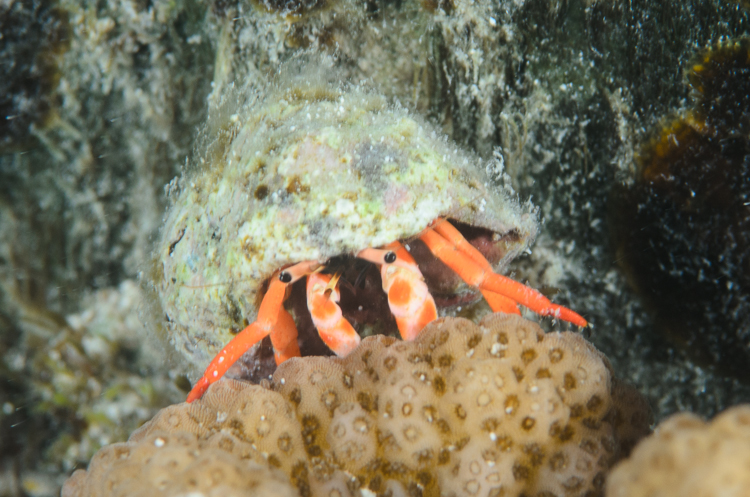
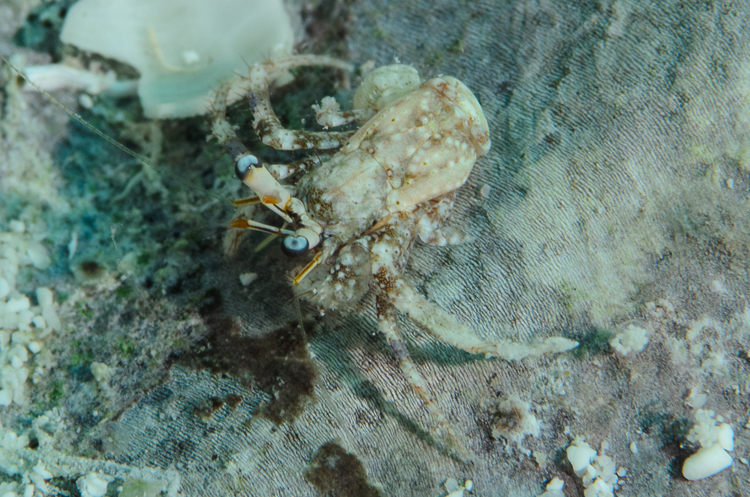
Julian, our divemaster, turned up a couple small crustaceans to pose for the camera.


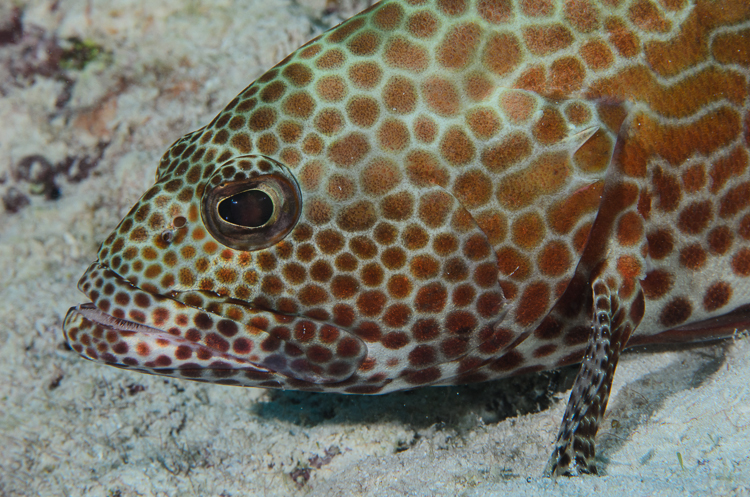
Snubnose Grouper Epinephelus macrospilos were commonly perched along the reef.


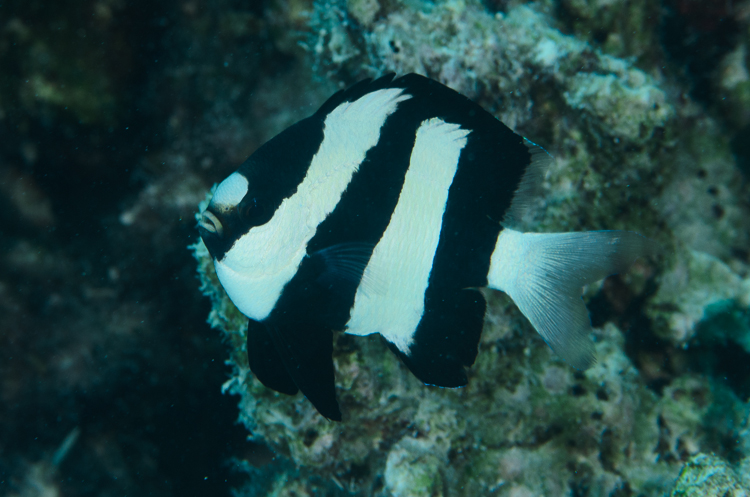
Humbug Dascyllus Dascyllus aruanus

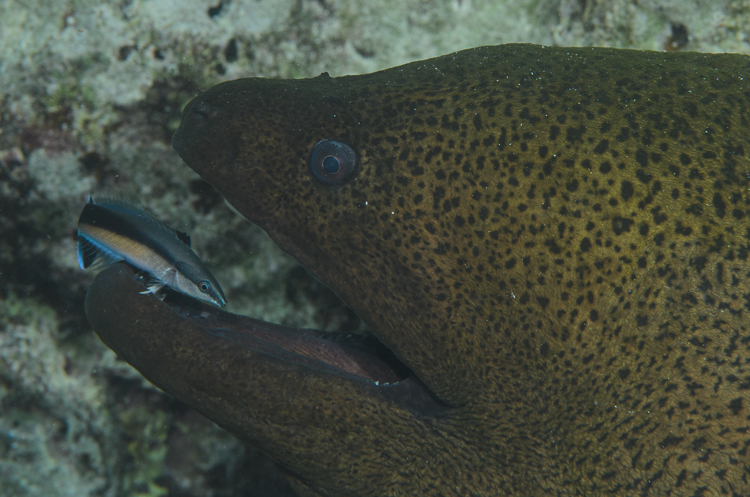
We finished our macro dive after 70 minutes of bottom time with a few nice finds. This enormous moray eel was out of his hole and enjoying being cleaned by a Bluestreak Cleaner Wrasse Labroides dimidiatus.


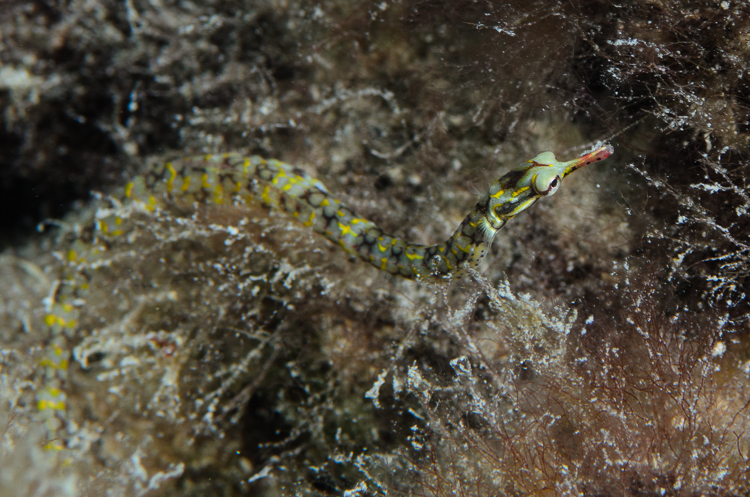
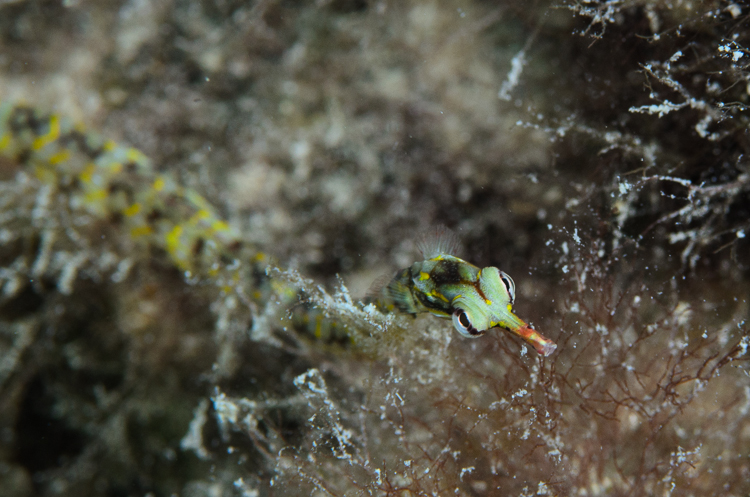
We had seen one of these small pipefish earlier in the trip, but I was unable to do them justice with the wide-angle lens. We found three of these on a small grouping of coral.

Corythoichthys conspicillatus


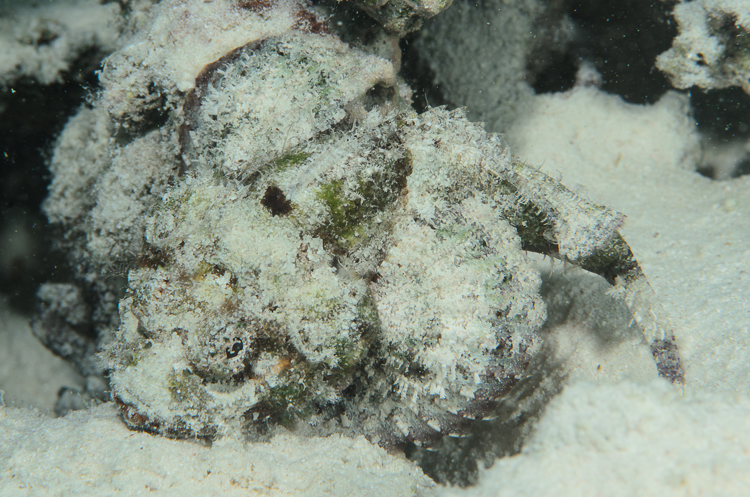
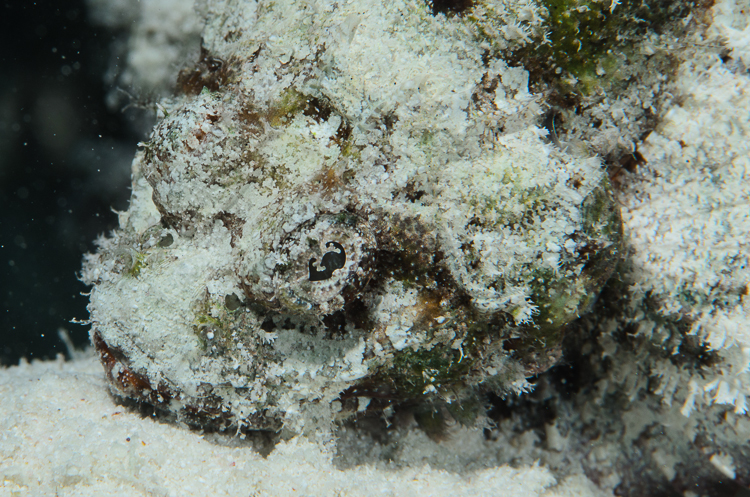
Finally, right under our boat in about 15 feet of water, Julian turned up this small stonefish. It was the only one we saw on the trip and I was ecstatic to be able to see it.

Reef Stonefish Synanceia verrucosa


All in all we had a wonderful time diving and enjoying what Bora Bora had to offer. There was one other memorable encounter on our second to last day that I have to finish with. Just after a manta decided to drift by us, I looked ahead along the coral and saw this cruising along top the reef.

Hawksbill sea turtle Eretmochelys imbricata


I didn't quite get the shots I wanted, my strobes were positioned very far out for large mantas, but I really enjoyed swimming along this turtle.


Happy Herping ;)


BH

If you want to read the rest: Part IPart IIPart III and Part IV.
Wednesday, March 6, 2013

Bora Bora 2013: Part III Wide Angle

Many of the dives we went on really featured large animals. It was very hard to get myself to commit to placing the macro lens on my rig for a day of diving. The end result is that I primarily shot with my Tokina 10-17mm and the Nauticam 9" dome port.
Bora Bora might be known best for the aqua blue lagoon, and the over-the-water bungalows, but I was interested in finding out what we might see diving. I was initially very attracted to the prospects of numerous species of shark and rays. Let the fun begin!

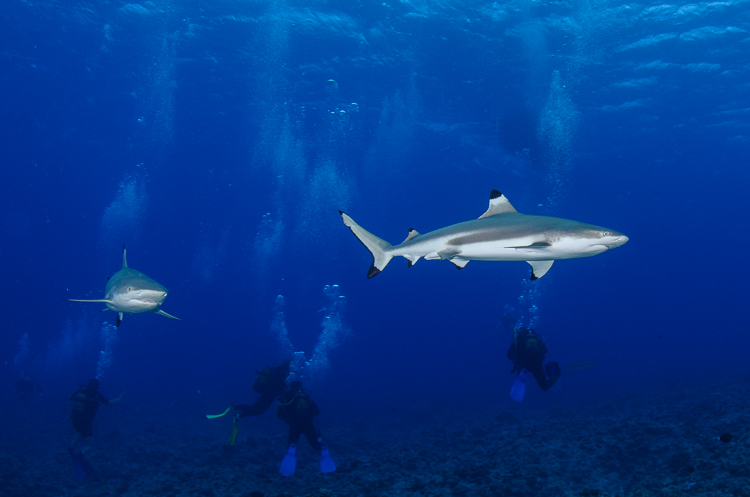
Outside the lagoon we dove a couple dives that featured deep blue water, great visibility and an abundance of life. One of these dives was a pleasant drift dive, and another involved mooring above a couple craters just outside the wall the waves broke on. Usually, just after jumping in the water, you would look down and spot 2-3 blacktip reef sharks slowly circling you and the boat. These dives were great fun.

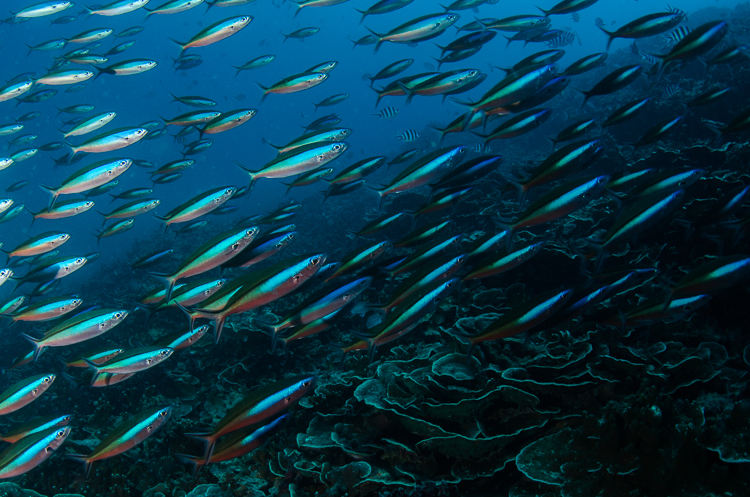
Here is a large school of what I believe to be Blackfin Barracuda Sphyraena qenie I noticed while descending.
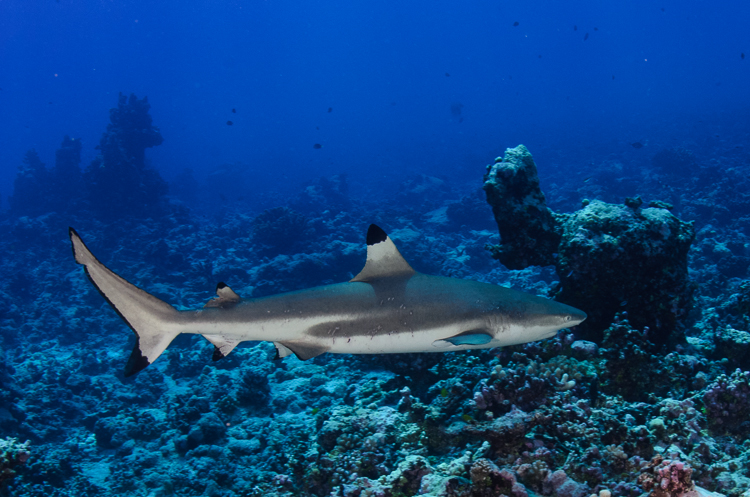
Blacktip reef sharks Carcharhinus melanopterus were usually all around us, although they rarely got too close.


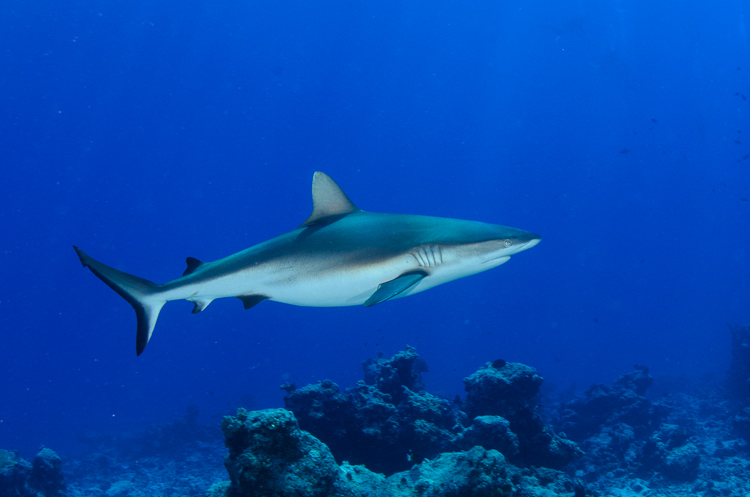
Grey reef sharks were less common, but one or two routinely showed up on one of the dives.
Grey reef shark Carcharhinus amblyrhynchos

We saw a decent amount of white tip reef sharks, especially solitary animals a few times while diving in the lagoon. They never got close though and I only have a very poor picture of one. I was bummed we missed out on a Bora Bora special, the Lemon Shark Negaprion brevirostris. There is a dive where you can be literally surrounded by dozens of them. Unfortunately, a diver had been pretty tragically bit the day we arrived, so that site was all but closed. Another group saw a solitary lemon on a dive while we were in the water with them, but none of our group noticed. It reportedly stuck around for 10 minutes at the end of the dive and gave great close up looks. I also missed out on tawny nurse sharks. The divemasters reported they were rare, but a guy at our resort said he saw a handful in a short while snorkeling on the other side of our motu in the reef. The day I tried near the end of the trip I got rained out miserably. On our last day, a fisherman looking fellow in a small dingy tied up before we put in to a site and started talking excitedly with our divemasters in French. The French divers on the boat started freaking out, and one finally turned around and said there was a large tiger shark sighted that morning by the man in the boat at this site. They were not excited. I threw on my gear and jumped in quickly with the camera, fingers crossed. Cyril, our divemaster, told me he would pay me for the days dives if we saw one... No tigers were had.

Even with the wide-angle, I spent time trying to photograph some of the fish with limited success.

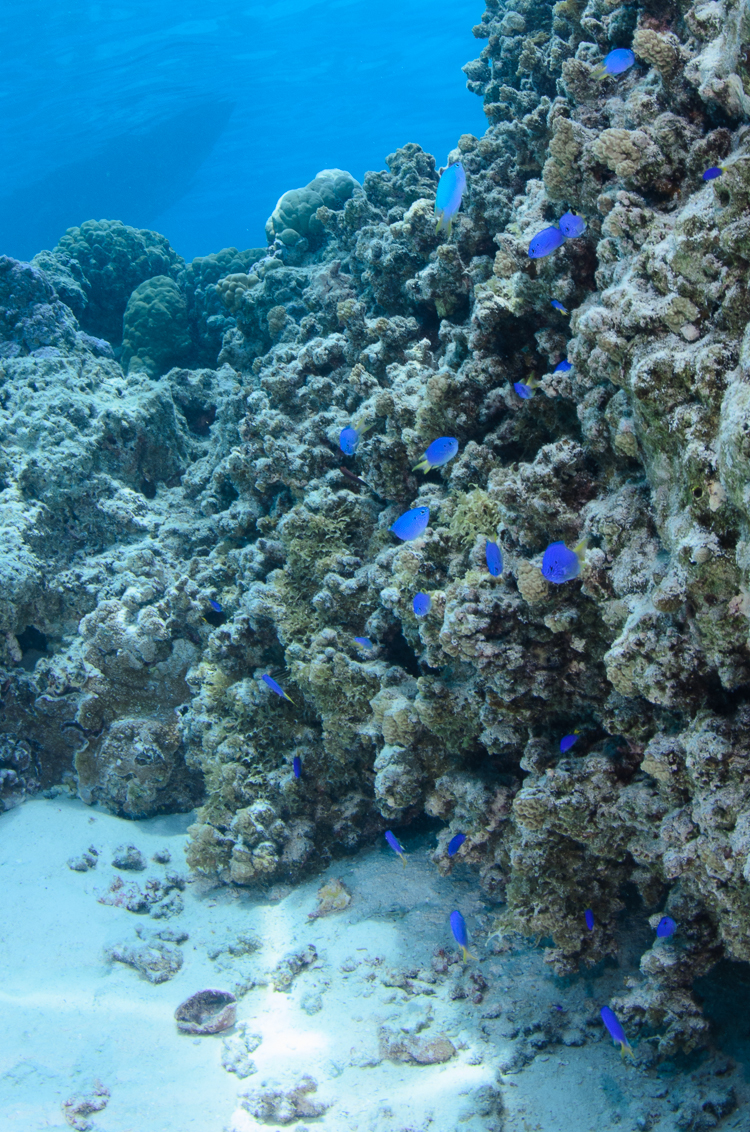
Neon Damsels Pomacentrus coelestis

Orange-finned Clownfish Amphiprion chrysopterus were common sights around the anemones.


I tried to photograph as many fish as possible, but many did not turn out.

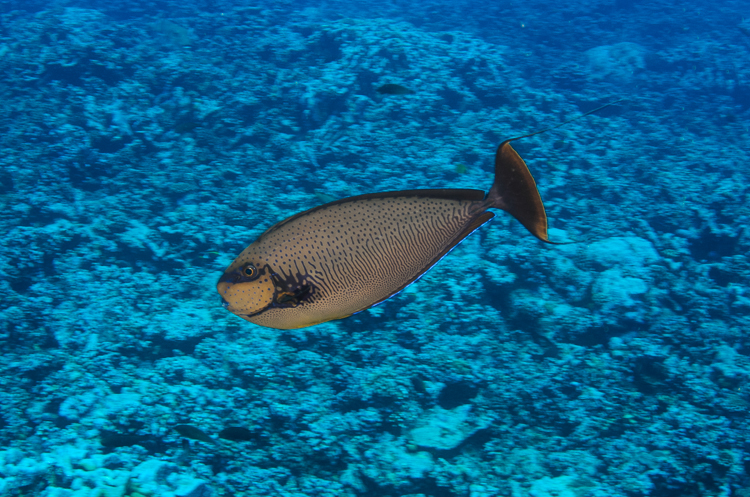
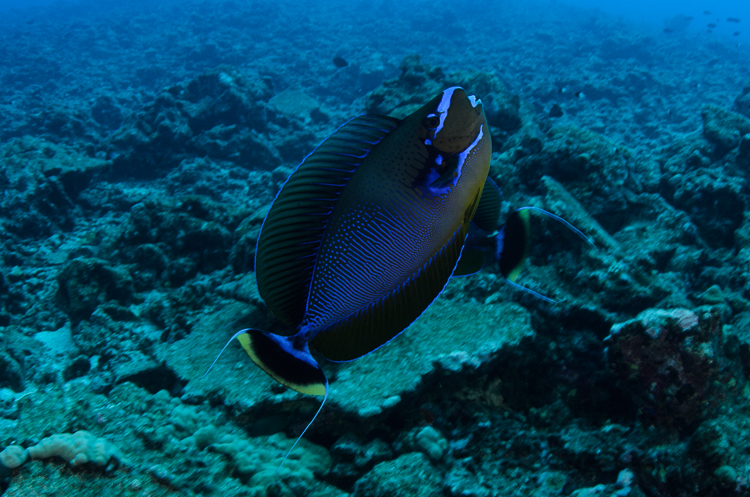
Bignose Unicornfish Naso vlamingii
Did I turn my right strobe off here on accident?
Sometimes, you wish you had your macro port on, but you have to make do with what you have.

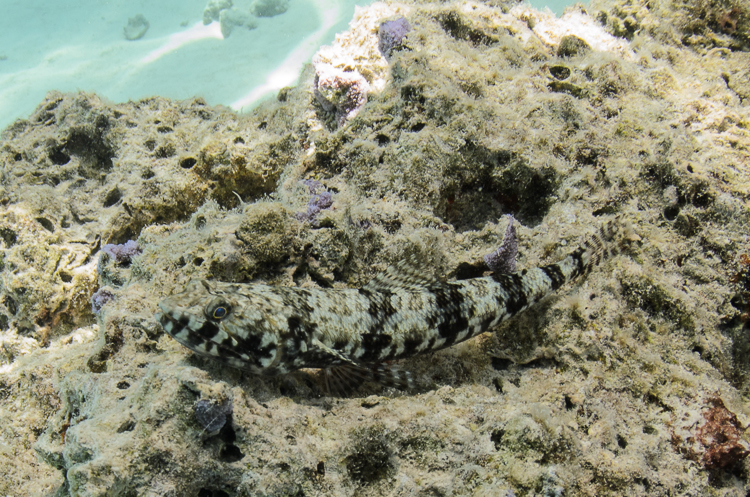
Reef Lizardfish Synodus variegatus
Whitespot Soldierfish Myripristis woodsi
This was a common site on some of our drift dives.
Yellow-tailed Dascyllus Dascyllus flavicaudus

Bignose Unicornfish Naso vlamingii blue phase
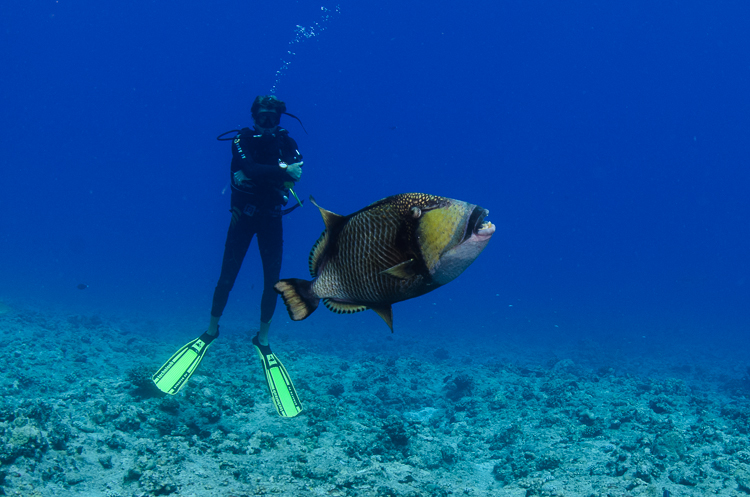
Titan Triggerfish Balistoides viridescens


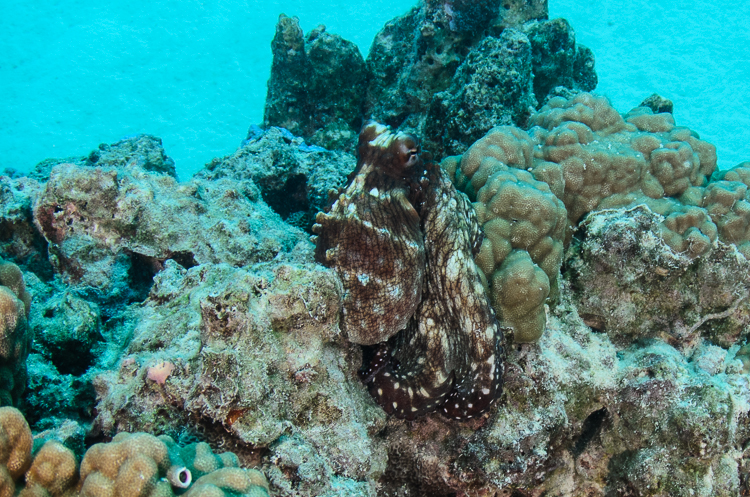
One dive Cyril found two octopi hanging out on the same coral formation. These were the only ones we would see all trip.

I am unclear of the species.
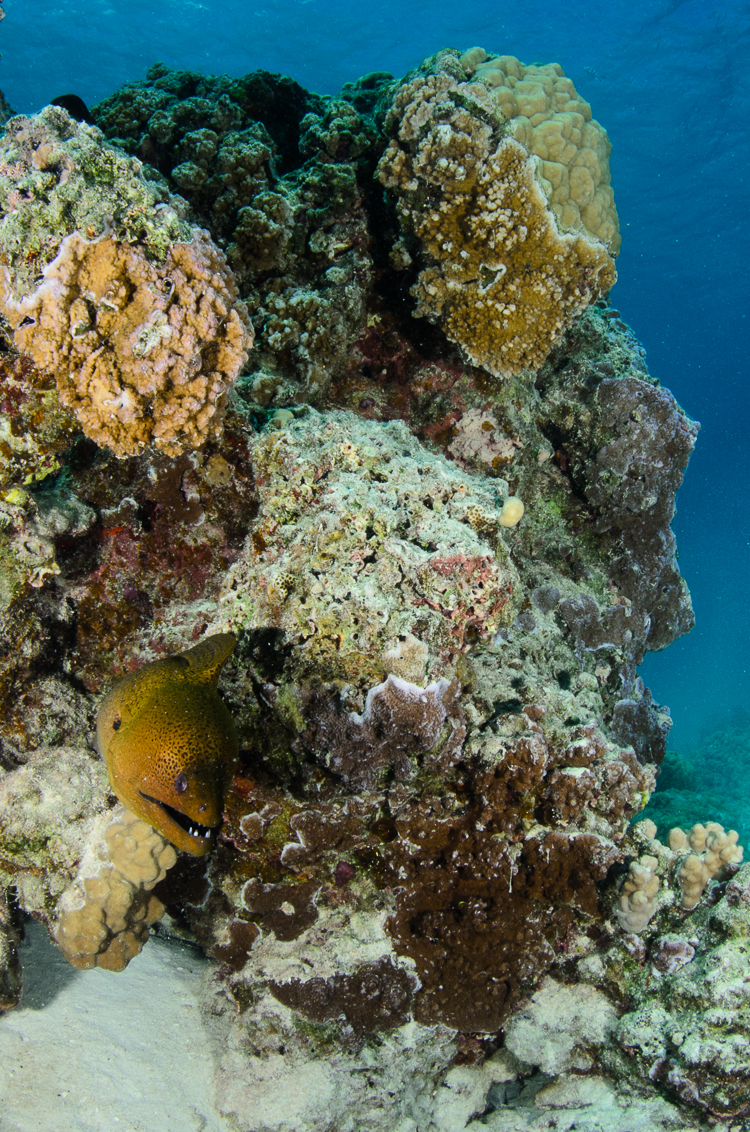
I had found a smaller, lighter colored eel species on our first day while exploring the coral gardens. I never saw it again, but we ended up seeing a ton of large Giant Moray Gymnothorax javanicus. We would usually see a few on each dive.
Most tried to hide.
A few would cooperate.


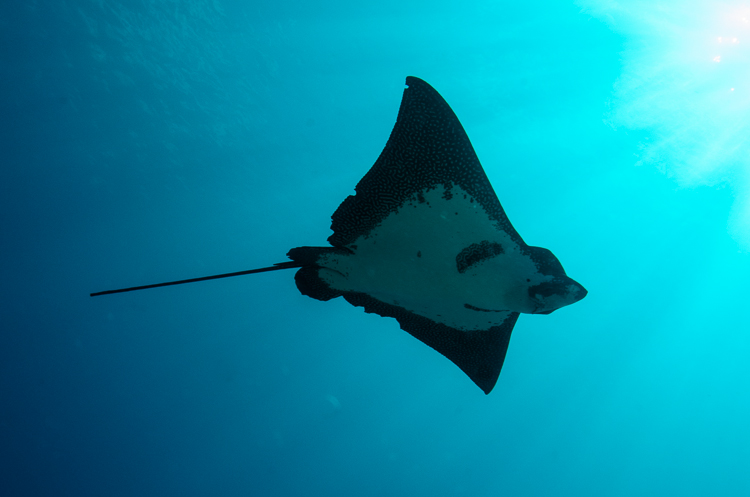
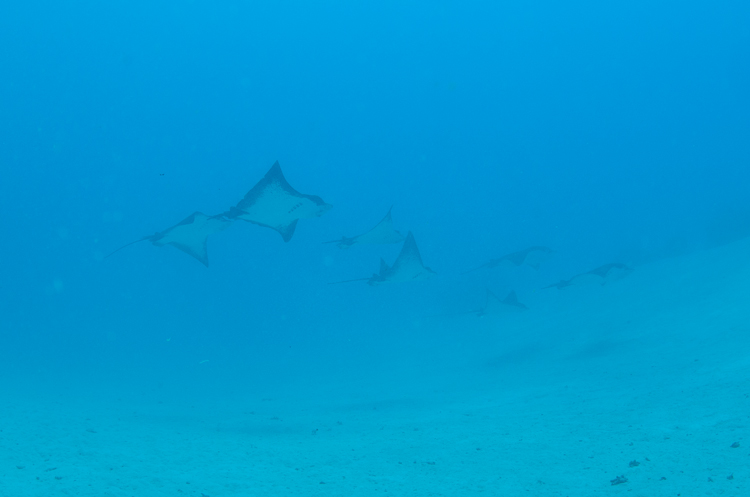
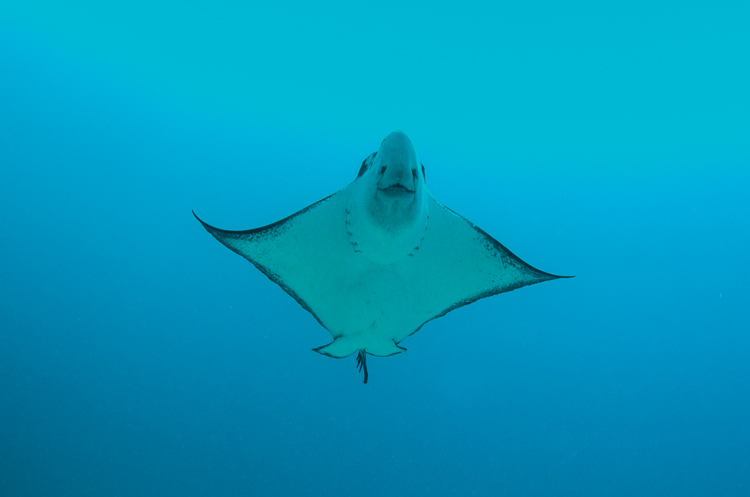
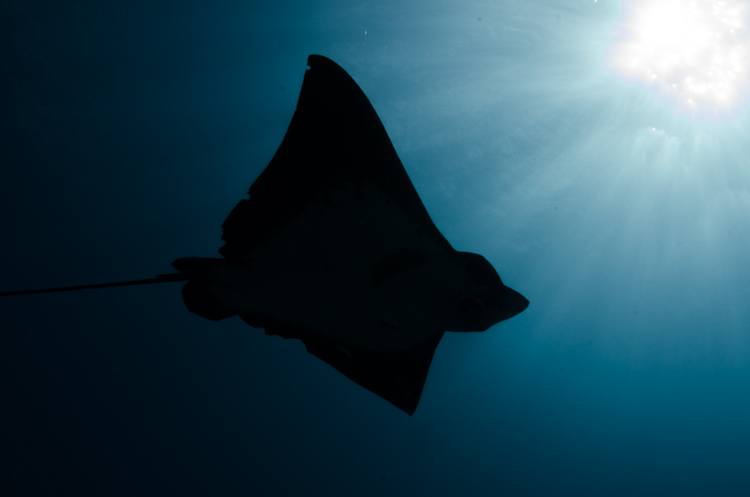
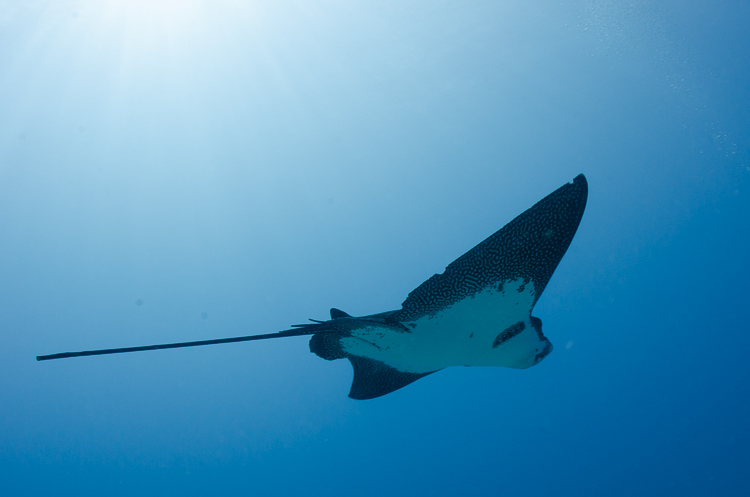
Many of our dives focused on finding larger wildlife to photograph. At one site, we would drift along sandy bottoms, and then rise up a coral wall, finishing over a shallow reef at the boat. Along the the sandy bottoms usually you could see 15-20 different Spotted Eagle Rays Aetobatus narinari.


I had a hard time photographing these. They were extremely skittish and would turn and run quickly. The plan was to wander into their path slowly and then hug the bottom in the sand and try not to disturb them. Flash ended up spooking them very quickly, so I always shot them in natural light. Twice using these methods an eagle ray cruised a couple feet over top of me. Most turned and fled even when trying to remain innocuous. Most of the time, this is what you would see.


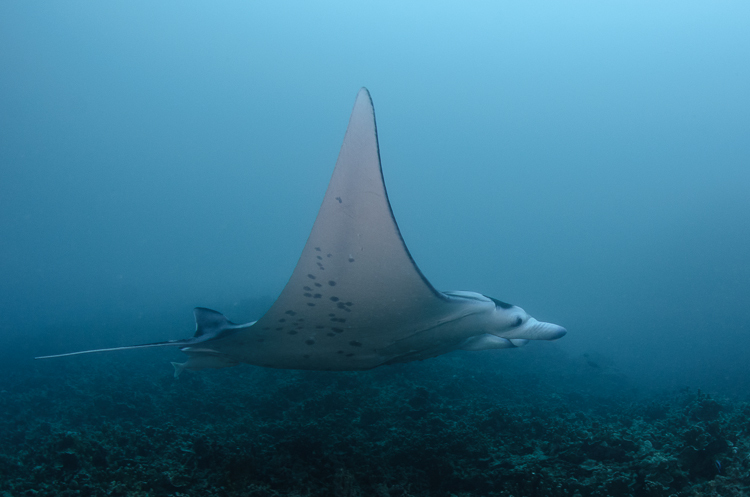
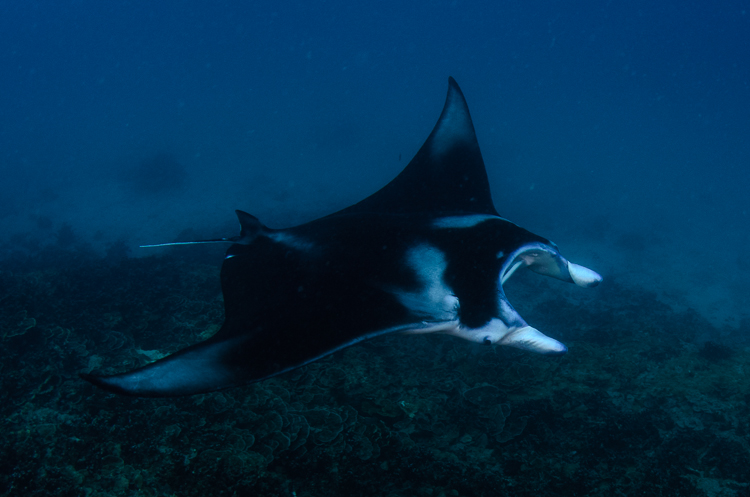
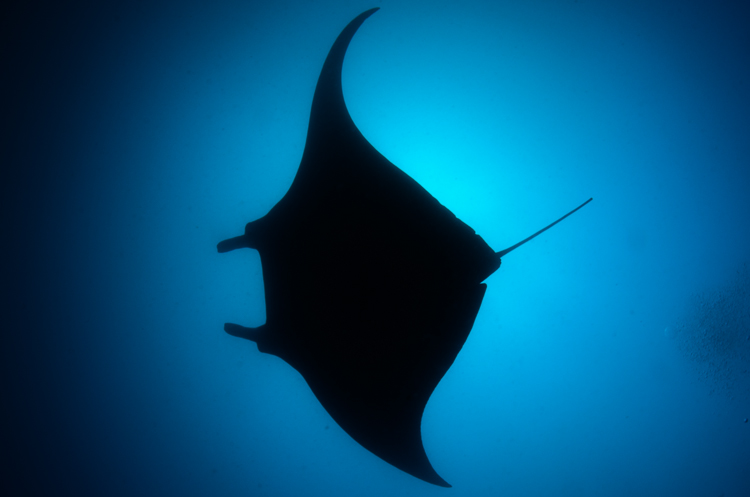
Which really left just one other large animal. When researching Bora Bora I had the lagoon had some cleaning stations that almost year round would attract an animal I have wanted to see for as long as I can remember...


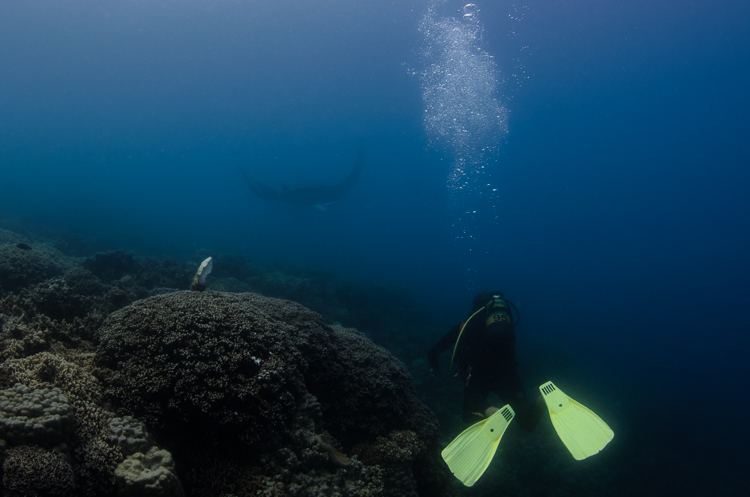
The first time diving the site we struck out. Here we are on the second dive, just waiting patiently...


A large shape coming out of the gloom.


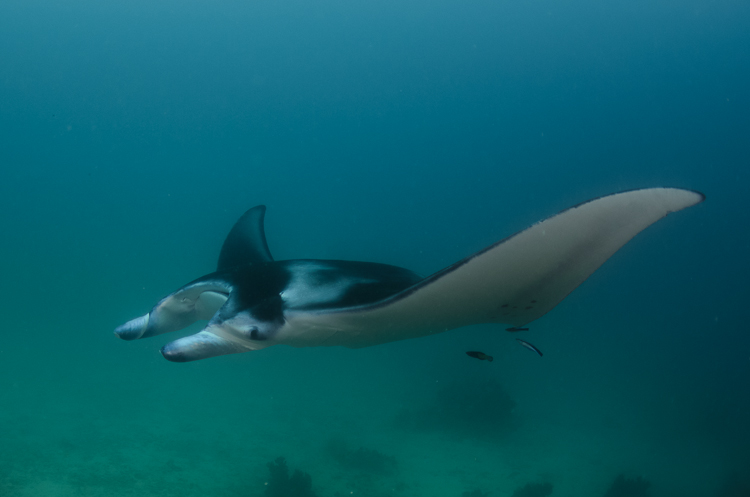
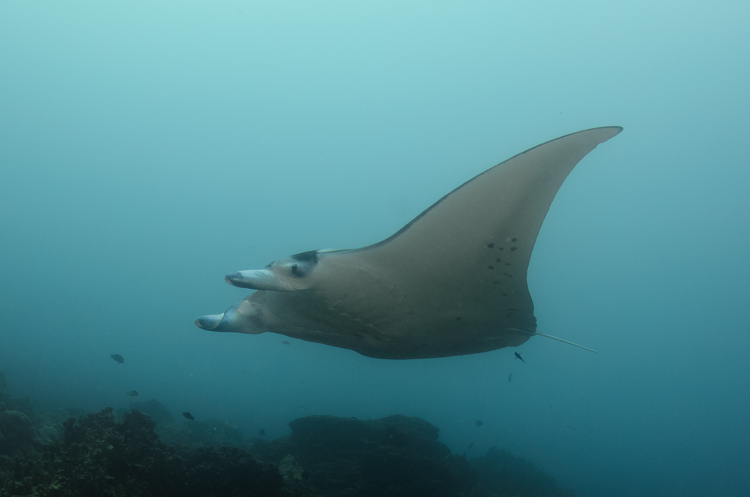
Manta Rays!


We ended up seeing them on three of our dives. Two of these times we saw numerous individuals and a few good moments with them. One time, there was just a fleeting fly by and I never and tried to raise my camera.


This concludes the wide-angle shooting. Stay tuned for more!


BH

If you want to read the rest: Part IPart IIPart III and Part IV.