
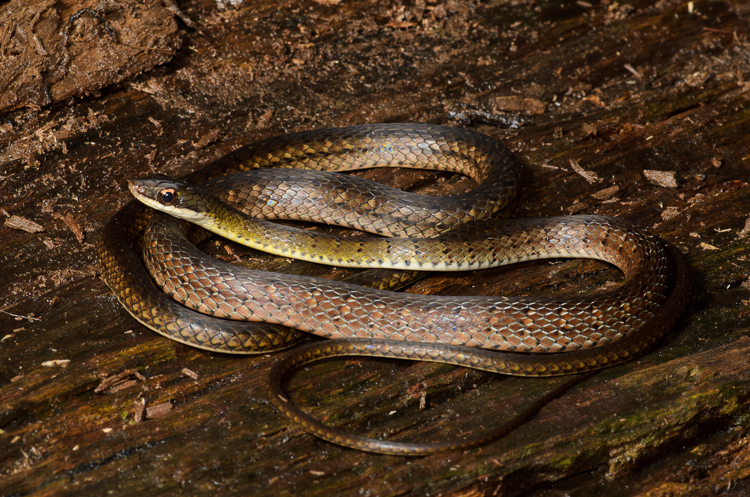
Carl and I set out on a short hike to look for lizards while Brian worked on his project. Carl managed to flip this racer checking under a piece of a fallen log.
Another Dendrophidian sp (likely percarinatus?). This one was much larger than the snake last night.
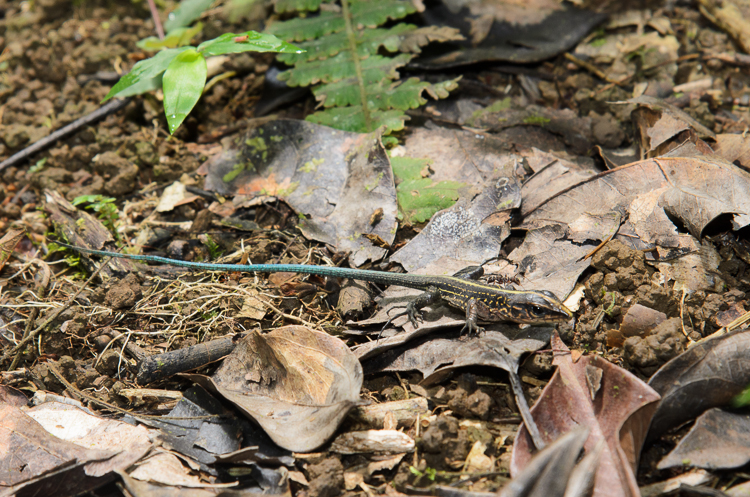
We saw many Central American Whiptails Ameiva festiva active around us. I even photographed a little one.
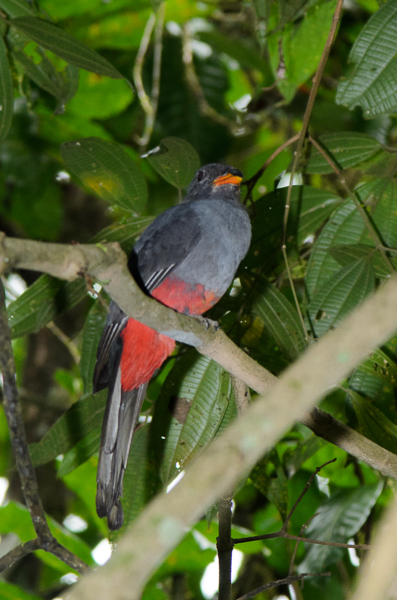
We got decent looks at a Slaty-tailed Trogon? Trogon massena
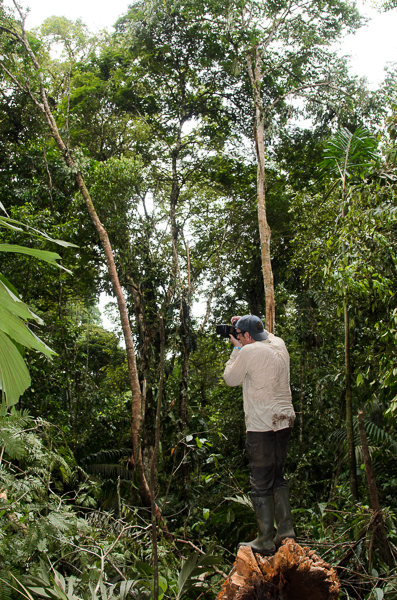
In a small clearing in the forest created by a tree fall, we spotted a Norops limifrons. It took some balance to photograph it.
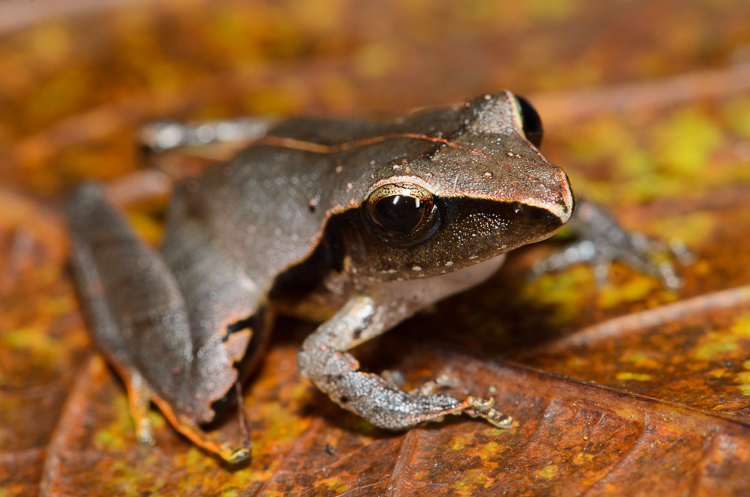
We turned up a Tularan Robber Frog Craugastor mimus.
We joined Brian for a nice lunch and headed out to one of his study plots after. Unfortunately, it poured on us shortly after arriving. Nice reminder we are in a rain forest.
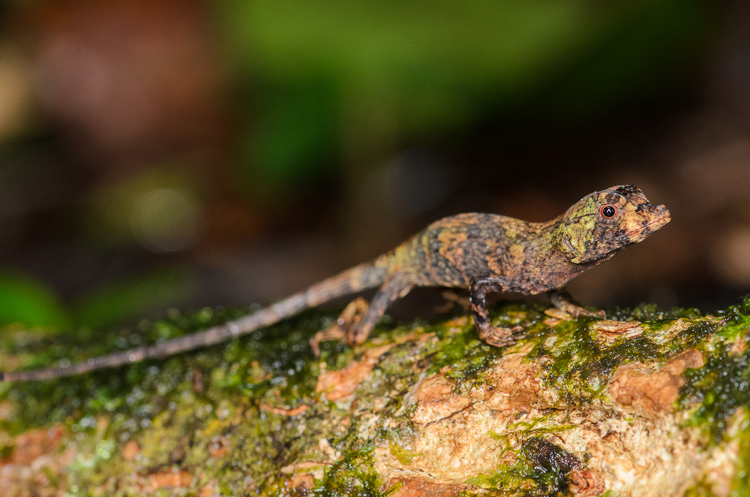
Pug-nosed Anole Norops capito
Limon Robber Frog Pristimantis cerasinus

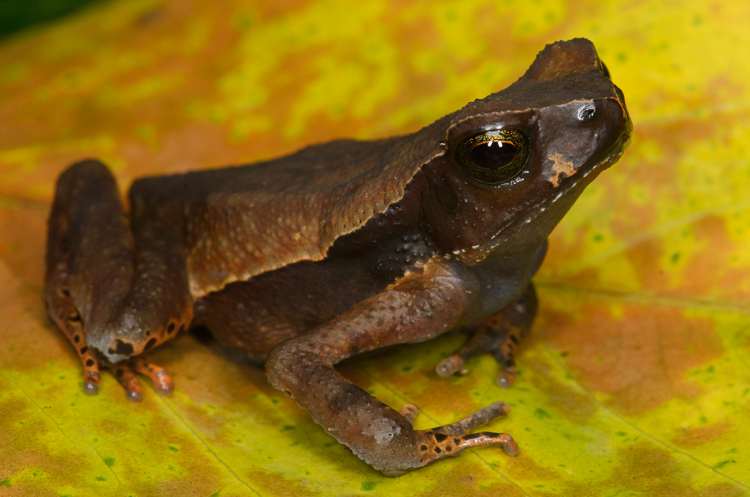
Litter Toad Rhaebo haematicus
Brian finished up his plots and we headed back to dry out for the afternoon, recharge some batteries and get a nice hot meal. From here on Carl and I opted to drive to dinner. We were hiking significant distances from the lab clearing out into the forest, and managing our time for that. We also were enjoying a brew or three after returning back from our night hikes with other researchers. By the time we would set out on the long hike to our cabin from the lab clearing it would often be extremely late and night and our energy levels were on empty. We figured we could spend more time in the main forest and then get back to our cabin faster by car to turn in for the night.
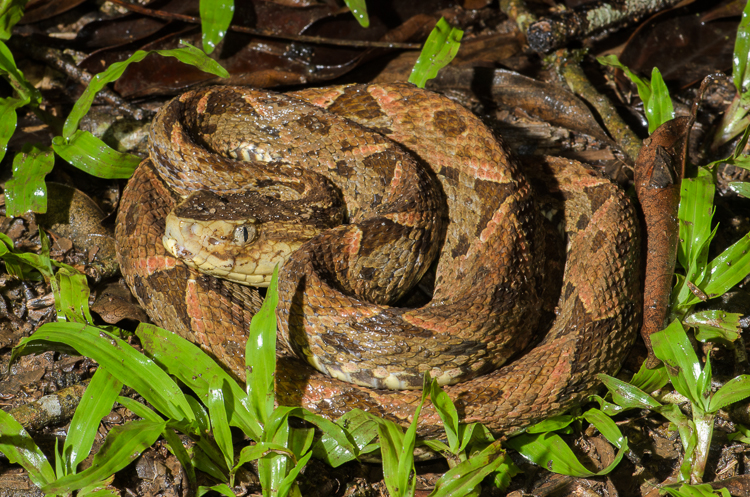
On the way to a froggy spot after the fall of night, we noticed one of the La Selva guards hanging out in the lab clearing. Brian jokingly asked him there was snake. He moved his flashlight and we saw this curled right by the path.
Fer-de-lance Bothrops asper
We had a hiked a way back, and turned off the main trail to head to our spot to search for the night. Right after turning, one of us noticed a small snake crawling between the feet of the first person. We had no idea what it was at first, which is usually a very exciting thing!
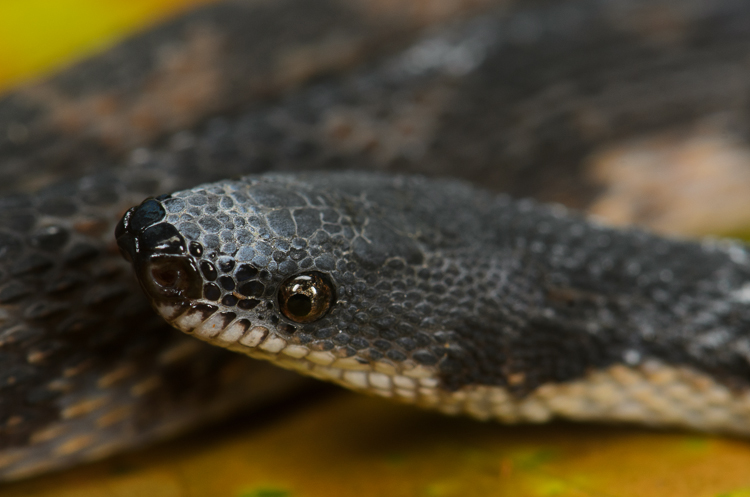
Rugose Litter Snake Nothopsis rugosus
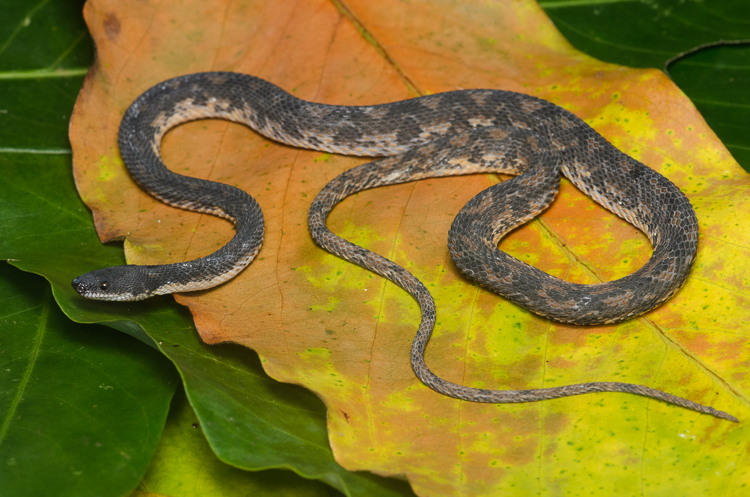
The snake was really interesting to look at. Upon close examination, you could see tons of small scales along its head. It was a very different appearing snake.
This night was starting off pretty darn good! I was very excited to be able to see and photograph more Corytophanes. Brian and I had only seen one in my first trip in 2010 and it was after my camera had died from the moisture. Carl also tends to be a big lizard fan, and it was a species we really wanted him to be able to see.
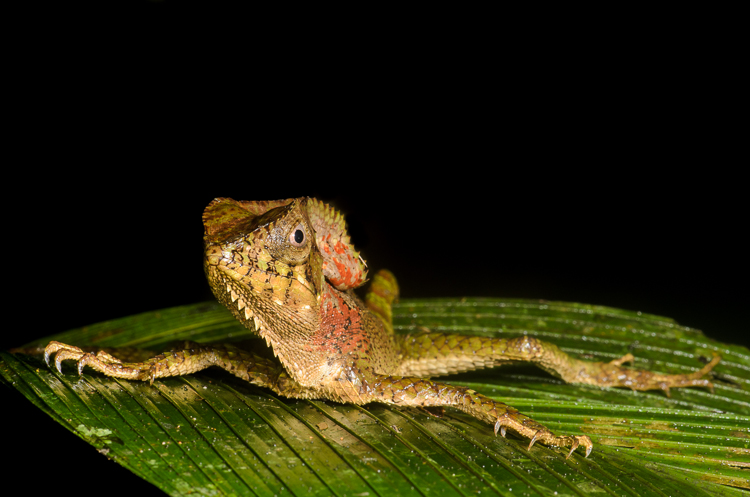 |
| Helmeted Iguana Corytophanes cristatus |
The frogs were out en masse.
 |
| Fitzinger's Robber Frog Craugastor fitzingeri |
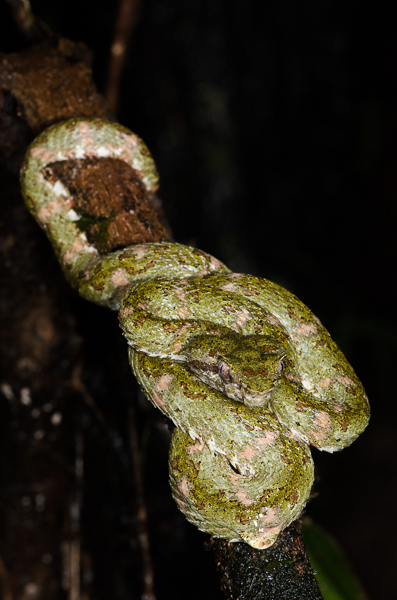 |
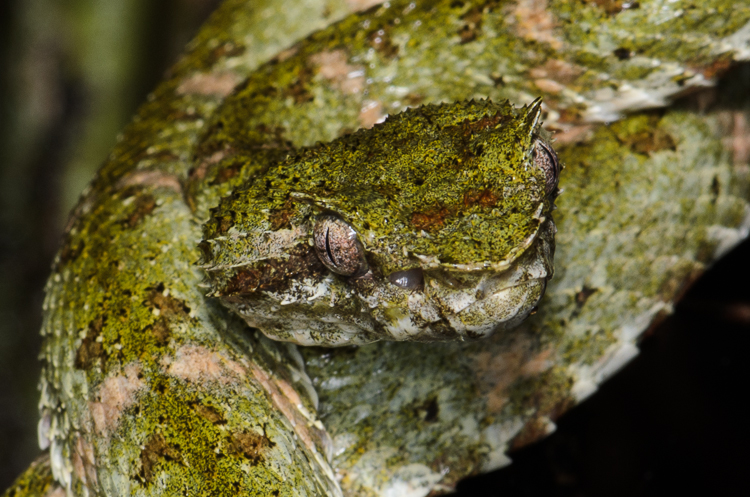
| Eyelash Viper Bothriechis schlegelii |
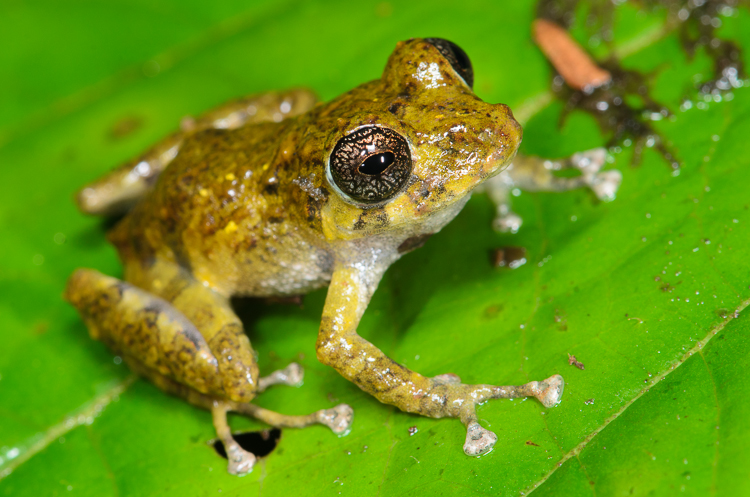
I went back to photographing my frog. It wasn't nearly as cool anymore. It was a little Pristmantis cruentas.
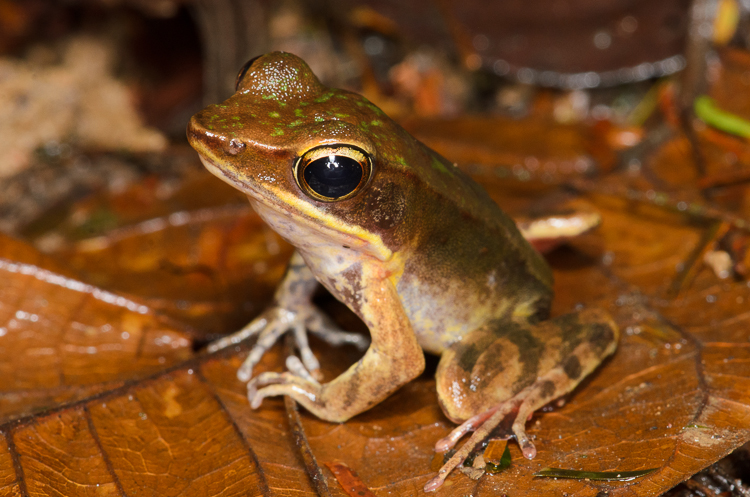
But these guys are always cool. Warszewitsch's Frog Lithobates warszewitschii
And then the glass frogging began. We saw over 10 of these.
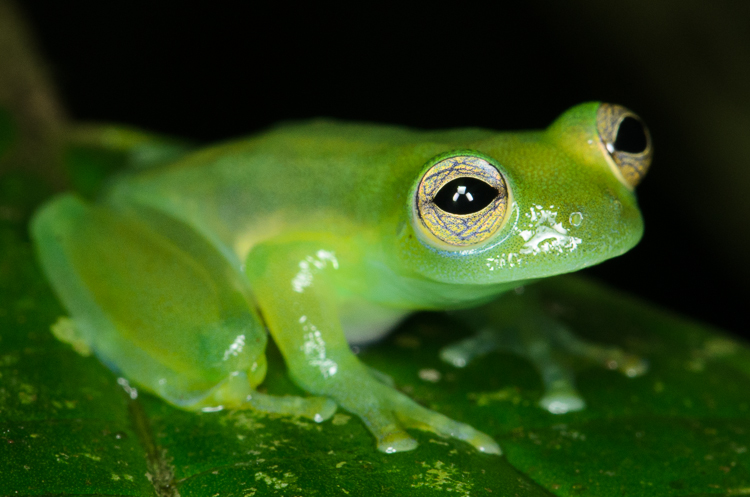 |
| Spiny Cochran Frog Teratohyla spinosa |
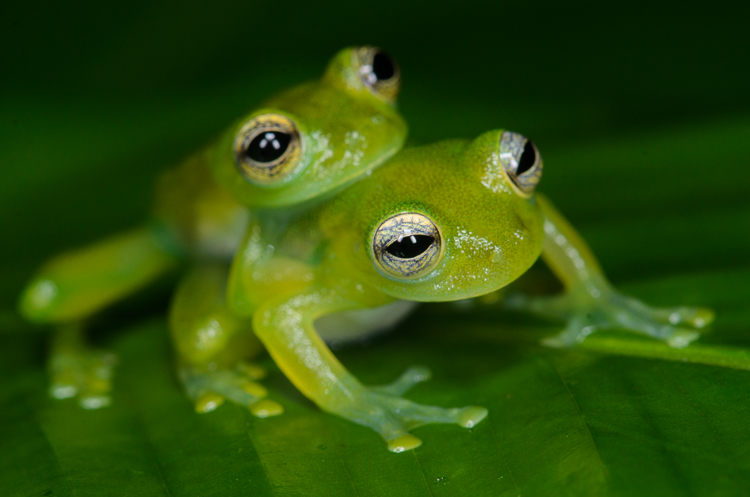
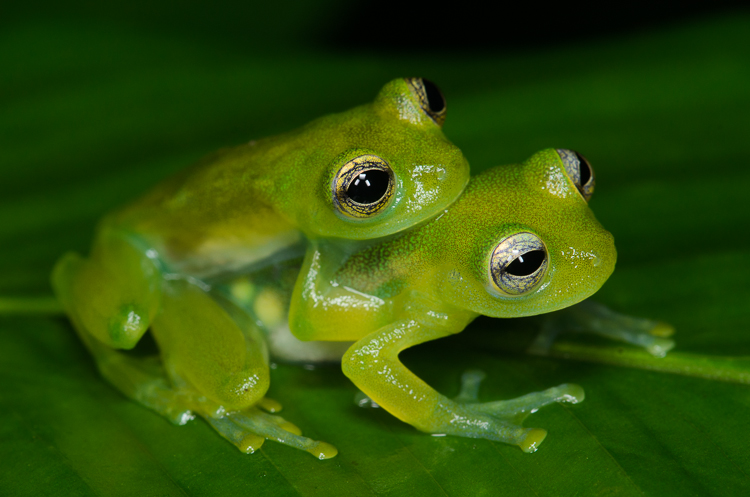
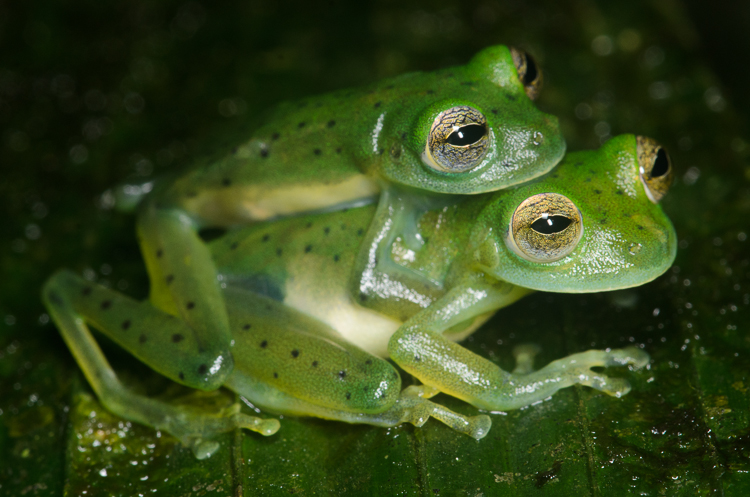
The Emerald Glass Frogs Espadarana prosoblepon were also out and calling. We saw four of these tonight, as well as 1 amplectic pair.
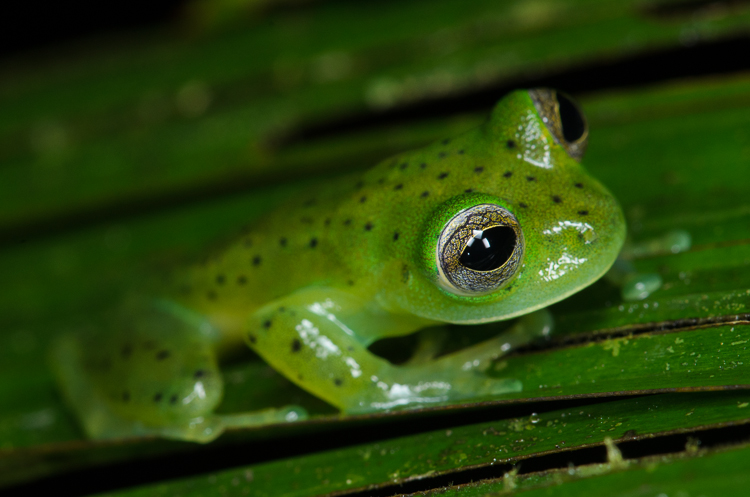
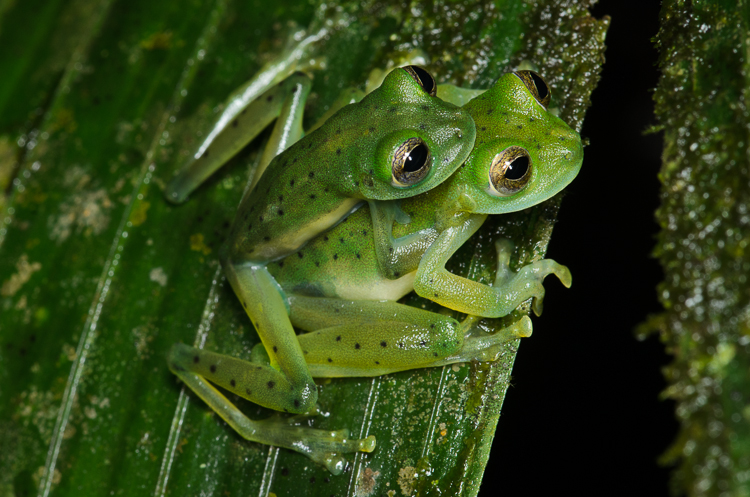
Hiking back to the start of the streams, Brian usually discussed other species he hoped would show up during his surveys. He mentioned he really wanted to see one of the water loving niche snakes, such as the Costa Rican Water Snake Hydromorphus concolor or the Orange-bellied Swamp Snake Tretanorhinus nigroluteus. I guess the crayfish biologist sometimes find them in similar streams during their surveys. Anyway, Brian was dreaming of future catches when Carl saw a flash of color and yelled "CORAL!!!" We all converged quickly and were elated to see a nice sized Allen's Coral Snake Micrurus alleni. It was very difficult to photograph.
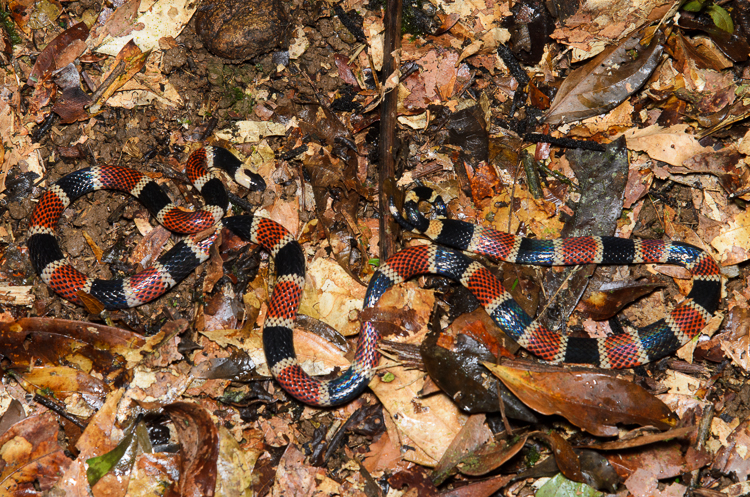
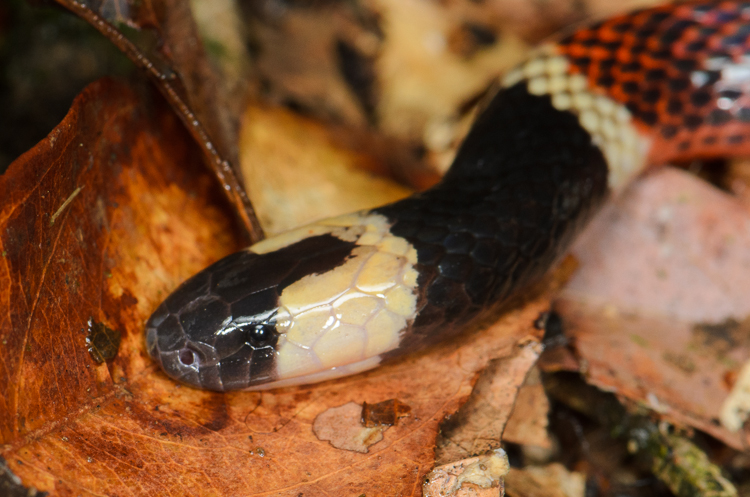
The hike out we saw a Fer-de-lance Bothrops asper. I was unable to get pics, read on find out why.
At this point, the humidity again got to my camera. Pardon my rant.
When my Nikon D200 died in 2012 I had been awaiting a never announced Nikon D400 for years. It has still yet to arrive. Not fully committed to full frame, (I refuse to play your full frame upgrade game Nikon) I downgraded in some features to the Nikon D7000. It had much newer tech, a nice new sensor and fit my hand surprisingly better. It is a better camera just because of sensor technology in the many years that had passed. BUT, it does not have Nikon's pro weather sealing. Is it too much to ask for a pro-level crop DSLR with weather sealing Nikon? Clearly wildlife photography needs this. Canon has answered with the 7D and now 7D2 but Nikon continues to keep it's head in the sand. All along, knowing the type of use I would subject my camera to, this has been a concern. Well two years after purchasing, it crapped out. My concerns were realized. The camera became stuck in Liveview mode, and would also not take any pictures. I stuck it in a dry bag with silicon packets. Later that night after much troubleshooting, I figured out that if I popped the battery out while the camera was on, and then place the battery back in, the camera would be on but in an error mode. I could then press the shutter release, and the camera would function in normal mode, but now my LCD review would not work. I could shoot blind, similar to the dark ages of film, but without the instant review or histogram access. I was elated I could still shoot though! After a few hours of keeping the camera on in this mode, the LCD would start to work again, and I could review the pictures from hours earlier. If I turned the camera off at all, this whole process would start again. The trip was not ruined, but how long would it last like this?
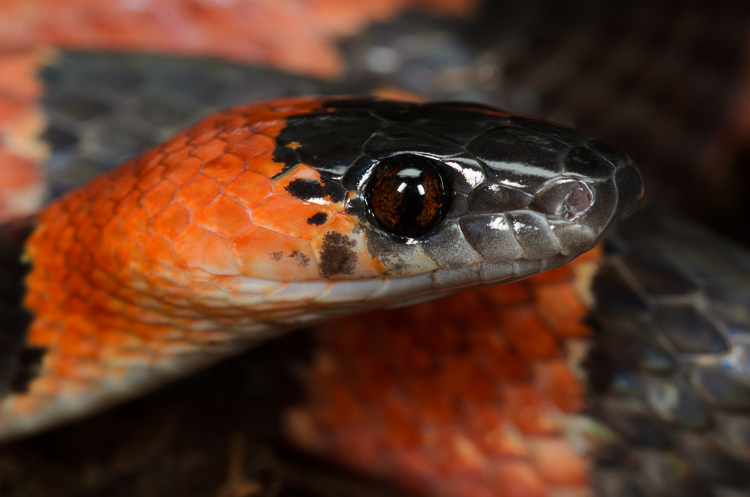
The rest of the hike out was fairly uneventful. We may have just been too exhausted to notice anything though. Our nightly ritual became convening in the lab clearing near Brian's office and shariing a brew (usually Pilsen) with other researchers on some hammocks and rocking chairs. We were doing this tonight when one of the girls started to walk back to her room. She yelled snake a few yards away and crossing the path we saw this.
 |
| False Coral Snake Oxyrhopus petolarius |
We eventually called it a night and wearily stumbled to our car. On the short drive back to our cabin, Carl and I did roadcruise a new species for the trip though.
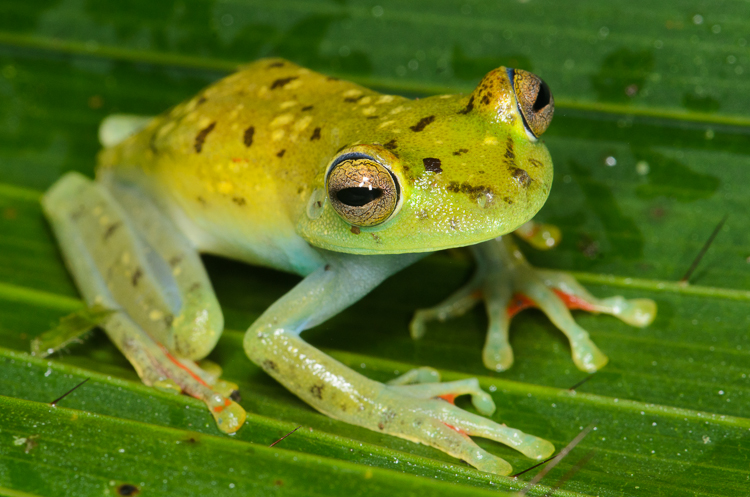 |
| Canal Zone Treefrog Hypsiboas rufitelus |
BH
You can see Part 1, Part 2, Part 3 and Part 4 here.


