Buckeye Herps Blog

A photographic journal of the reptiles and amphibians of Ohio, Michigan and other places interesting wildlife call home.
Showing posts with label winter tasks. Show all posts

Wednesday, March 23, 2011

Winter Tasks 4: Travel to warmer places!!!! / Hawai'i Herps

As you might have noticed, I am spending the month of March in Hawai'i.  Techniquely, I am working, but I find it easy and necessary to spend as much time outdoors as possible.  I haven't touched a TV in weeks..

Hawai'i Herps

There are over 30 species reptiles and amphibians that have been documented in Hawai'i.  Unfortunately, it seems this number is slowly increasing.  Only a handful of these are actually native to the islands.  The native herps include the sea turtles and the sea snake. 


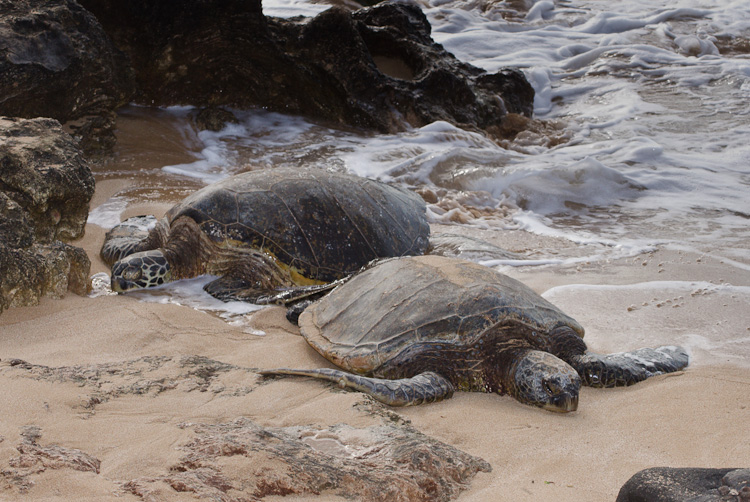
Green sea turtles are extremely common in the waters around the islands, as well as sometimes basking on the beaches.  Hawaii is one of, if not, the only place in the world they do this on a regular basis.  On some of the noninhabitated islands, they will do this in great numbers.


Unfortunately, the other sea turtles are rarely seen.  They include the hawksbill, olive ridley, loggerhead and leatherback sea turtles.

The last native Hawai'ian herp is the Pelagic sea snake, or Yellow-bellied sea snake.  They are a very attractive snake, but rarely seen in and around Hawai'ian waters.  They are venomous, but extremely hesitent to bite and pose very little risk to swimmers.  Unfortunately, I don't have any pictures of these...  These 6 animals make up all of the native Hawaiian herps!

Hawai'i has thus become an island zoo.  Walking or driving around the island in a day will reveal numerous nonnative birds, mongoose, boar, transplanted plants and lizards galore.  The volcanic creation of islands, isolated from the rest of the world had created a fairly remarkable ecosystem.  The "native" animals were all invasive at some point, requiring wings or flippers to reach the islands. More recently though, most of the invasive species have arrived as a result of well meaning but poorly thought out introductions or escape from the pet trade and have arrived in the past 200 years.  I have managed to photograph a few of the invasive species so far, but am still just scratching the surface.  Plenty of little skinks, geckos and even some frogs and turtles left to pursue.

Most of the lizards are fairly small, and likely pose a small risk to what little "natural" environment is left.  Some larger species such as giant day geckos and tockay geckos have become established though and pose a threat to many species of birds.  There is also the ever looming threat of invasion by brown tree snakes, similar to the situation Guam has.

To finish up the turtles, Hawaii does have a few freshwater turtles.  There are two species of asian softshell turtles, one north american softshell and the red eared slider.  I have woefully ignored these, as I don't have any desire to spend time in freshwater while on the islands.
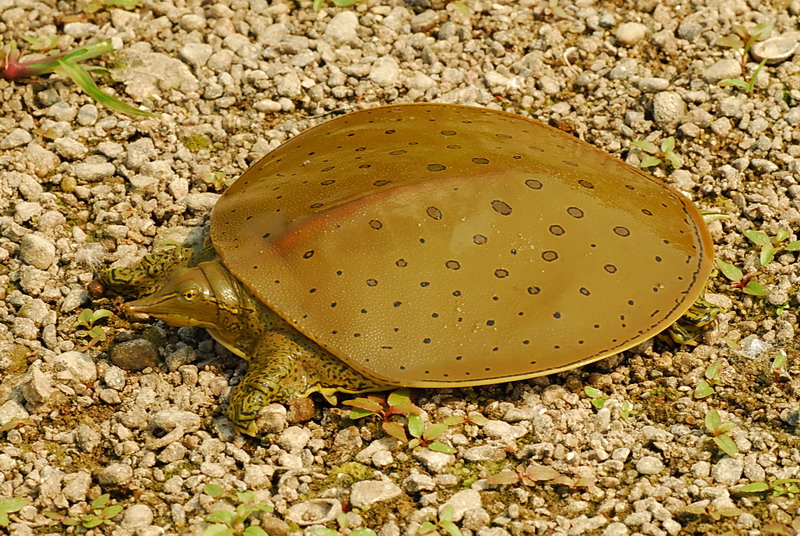
Here is the spiny softshell turtle, although an individual photographed in Ohio.


As well as an Ohio red-eared slider.


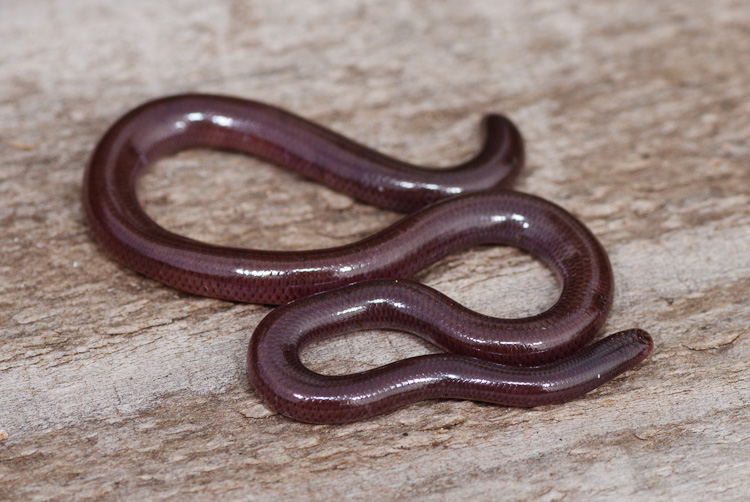
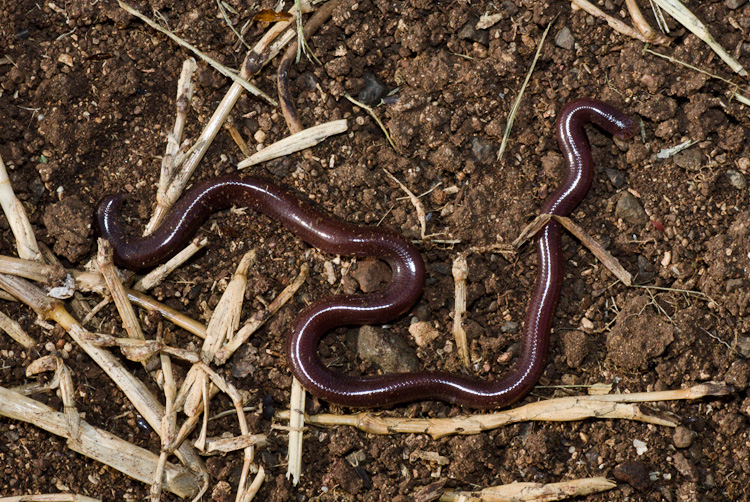
Hawaii does have one other snake though, the blind snake.  This snake is extremely small, fossorial and completely harmless. It looks like a worm, and feeds on ants and termites.  Interestingly, these snakes are parthenogenic.  This means there are only females, and they reproduce assexually without fertilization by males.  Despite flipping numerous logs, palm fronds, debris, rocks, etc I had not been able to turn one up for 3 weeks, but finally found 3 in an afternoon from a tip off by a friend who found them as a kid 20+ years ago. 


That does it for the snakes and turtles.  We will discuss some of the lizards and then amphibains next time.

If you have more specific questions, I am happy to try and answer them.  For the most part, I am learning much of this on my feet during my time here.  Those who are interested in learning more should check out the excellent book, although slightly outdated, Reptiles and Amphibians of Hawaii by Sean McKeown.

Monday, February 28, 2011

Winter Tasks: 3

Scout and prepare for next season.

I have been fairly lazy at this the past few years, but winter provides and opportune time to prepare for the upcoming season.  When you pay your dues during the winter, there are often immediate and direct results.

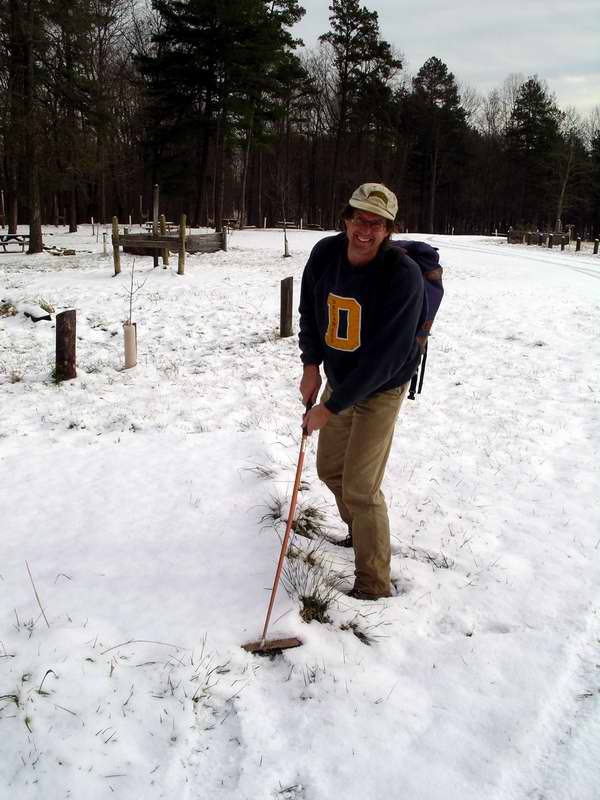
Carl - paying some dues.
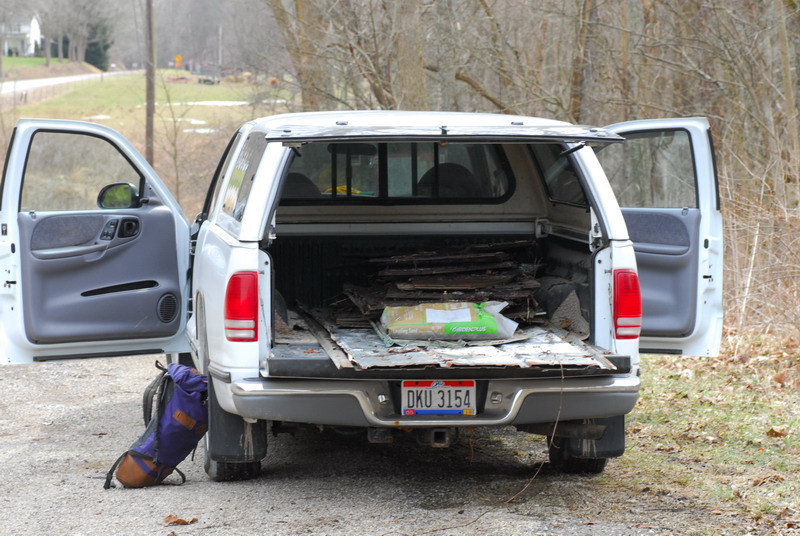
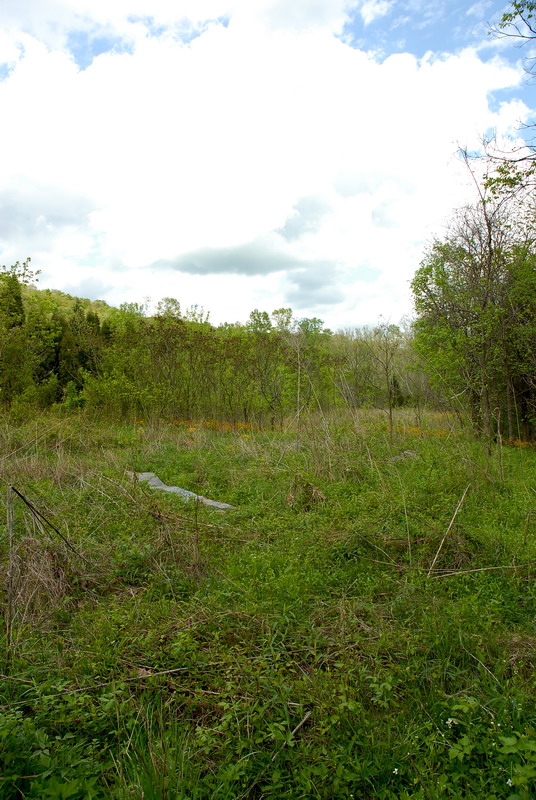
I use this time of the year to read and conduct research, communicate with other herpers/wildlife agencies, scout areas via google earth, and then on foot.  When scouting on foot, the lack of leaves and vegetation makes it much easier to spot springs, rock outcroppings, old structures/junk piles and prospective vernal pools.  I also use this time to lay tin, boards and other cover objects, such as carpet.

Laying tin (RIP truck)


Fruits of labor...

I was hoping to hit up a junk yard prior to leaving for Hawaii and obtaining some cover objects.  Unfortunately, we got another foot of snow and I didn't feel like lugging tin in snowshoes.  I will try to take some pictures of the process when I do get some out there.

Happy herping,

BH

Friday, February 25, 2011

Winter Tasks: 2

2. Keeping records

Record keeping is important for a many reasons.  First of all, your memory is only going to get worse, and it is easy to forget old outtings.  Second, there is much to learn from your previous work, which can greatly help you in your future searches.  Third, your data is important and should be made available to people who can use it.

I really should be better about keeping more acurate data (temperature, moon, wind, etc) but I find if I focus on too much, I just don't do it.  I record date, time, GPS location, and try to photograph every animal I see.  If it was found on the road, I will put AOR or DOR in (active on road, dead on road) in my data.  When pertinent I will also record any interesting or notable comments about the find.  I also try to include people who were present for the find as well.

Most of this data sits around all year, and then I try to get it all entered in the winter.  Just tonight I finshed my data for 2010.  It wasn't my best year, but it was memorable as they all are.  Mainly, I was super busy, and just didn't get in the field as much as years past.  This year was a good year for trips though, and I logged entries in 4 other states as well as Costa Rica.

When keeping data, try to stay simple. If you make it too complicated, you just want do it.  This is different for everyone, but try and find what works for you.

When traveling out of state, I utilize www.naherp.com.

Everyone should check it out.  I have links posted to it on my blog as well as my website. It is an online entry form, and you can upload pictures.  It is easy to view your entries on maps and search the entries of others.  The site has been up since 2006, and was started by a dedicated group of herpers to try and decreased the rift between academic and amateur herpetologists.  So far, there are 1284 users and 61900 entries from all across North America.  Data is visible only to the state and county level, and you can limit this more if you wish.  Researchers may search the database for data, and you can vote on whether you agree to release your data for certain projects.  The site is simple, easy to use and very convenient.  I recommend it highly.

I have logged 138 entries on the NAFHA site.  36 of these were logged in 2010.  A fairly slow year for my out of state outings.  I did log herps from FL, AZ, and PA on the site, but I didn't take as big of trips this year compared to 2009 (Texas, AZ, CA).  Hopefully, 2011 will be a banner year.  I am going to be in the relative herp poor Hawaii the whole month of March, but am already planning big out of state trips in May and July of this year. 

For my "home" states, I use a database logging system programed by friend and fellow herper Carl Brune.  It might not be as user friendly, and takes a little tech savy to get running, but I love it.  It is much easier to search and query your data compared to the NAFHA/NAHERP site.

I have been keeping Ohio data since 2004, and Michigan data since 2008.  The best feature is the maps that can be generated...

Ohio 2004, my first real herping season.  154 records (I plotted only townships I saw at least one animal, as opposed to plotting a dot for each specific animal)


2005 121 records
2006 398 records
2007 250 records
2008 140 records
2009 12 records
2010 18 records (total of 1096)

My map for all through 2010.


Pretty cool stuff.  You should see the map with dots for each animal...

Michigan
2008 52 records
2009 145 records
2010 110 records

2008


Through 2010 (308 records)


This process also helps you set some goals.  My MI goals for the year...

1. Oakland County massasaugas at new locals
2. SE Michigan spotted turtle
3. Wood turtle from a new river system
4. MI spotted salamander
5. MI newt (?!??!)
6. 200 + record year
     (reaching 300 or 400 is possible in Ohio, but I expect to be difficult in MI due to the much shorter field season and much lower diversity.  I just don't see the same numbers of animals I did in Ohio)
7. Lay tin.
8. MI box turtle

For Ohio.

1. Herp with Carl and Brian a couple solid days this spring.
2. 50 records
3. Get one of the last remaining animals I have yet to see that occur in Ohio. The ones I have left to see are short-headed garter snake (tried in 2006, 2010), Copperbellied watersnake (tried in 2007), Ouachita Map turtle (tried in 2006) and southern leopard frog.

So, how do you keep records and what are your goals for the field season?

BH

Wednesday, February 23, 2011

Winter Tasks: 1

1. Spend much needed time with family and actually work on the "honey-do" list

This is self explanatory, but a very important winter function. Inevitably, during the active field season, I end up digging myself into a very deep, expansive, and possibly never ending hole. I avoid doing various household tasks to hit the field. I skip out on spending time with my wife to go on day/weekend trips. I bail last minute on dinner plans due to storms and favorable conditions. The list goes on and on. By the end of March (yes, less than 1 month in the season), my name is mud.

So winter is wife time. I do things. I put in my time and I pay my dues. In fact, I do things happily, with a smile on face. I go to plays, the mall, and any function our friends might be putting together. In fact, I actually invite people over to our place as well. I get active and stay visible. I buy flowers. We go on trips to cities. This usually works to some extent. A major draw back to this plan is that when you disappear in the spring your absence is definitely noted. There might be some truth to "setting your bar low" and just never doing anything. Hate to raise expectations too high in the offseason...

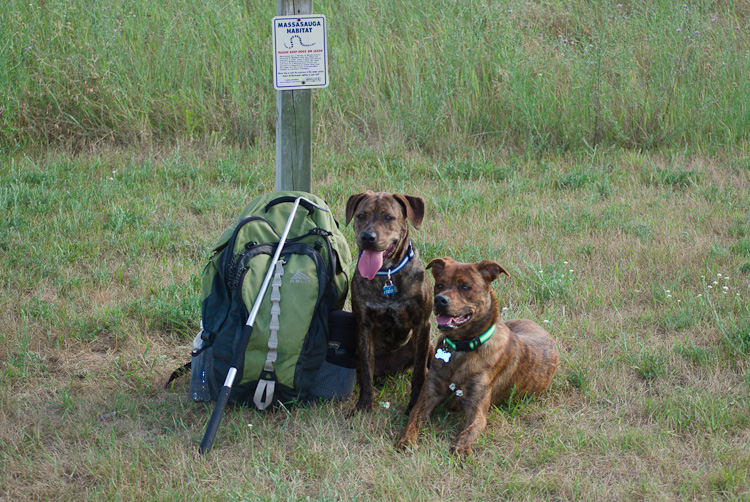
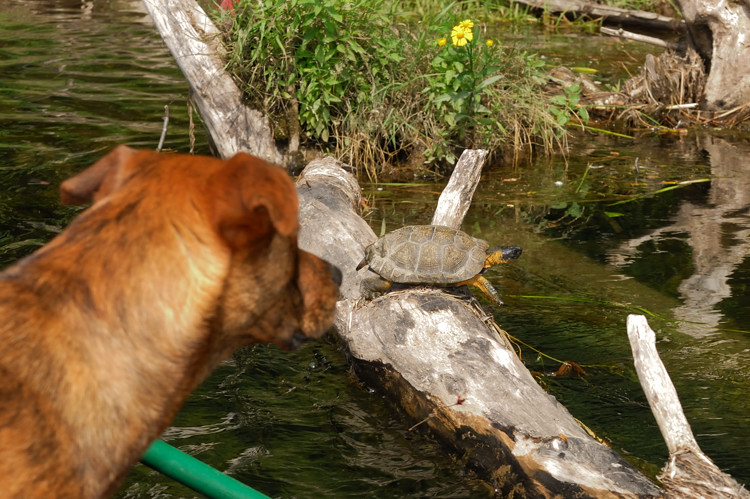
There are measures one can take to help with damage control during the field season. "We" got dogs. Now when I herp, I am taking the dogs for "much needed exercise". Ha, what a sneaky trick. When friends are planning summer events, I always push and offer to plan the canoe brew trip or a nice camping trip. Then I am able to make sure we visit rivers and areas of the state where chances for "accidental" encounters are high. I also purchase dog park passes to the local parks with the best fauna. When my wife wants to "go to the dog park" but not go to a park and herp with the dogs, everyone wins.

This has worked alright for me in the past. They tricks usually can't work miracles but they buy me some good grace. All in all, I am extremely lucky. Molly gives me space and time and pursue my own hobbies and interests. I pay my dues when I can though because you never know when that 11pm spring storm will roll through.

Dog Exercise

Brew Trip

Fall Camping (too cold to herp)

Cutting the xmas tree


BH

Sunday, February 20, 2011

Winter Tasks

Winter - the bane of all herpers. Some of us have it better than others, but for those that live in the northern regions, winter is a cruel mistress. As the herps bed down late fall, our spirits plummet and depression sets in.

Luckily (the glass IS half full...), this period of inactivity provides us with some nice opportunities to get some important functions done.

Here is what I try to do during the winter.

1. Spend much needed time with family and actually work on the "honey-do" list

2. Catch up on the data

3. Scout and prepare for next season

4. Travel to warmer places

5. Actually take some time off and focus on other interests (what other interest?)

BH