Buckeye Herps Blog

A photographic journal of the reptiles and amphibians of Ohio, Michigan and other places interesting wildlife call home.
Showing posts with label pura vida. Show all posts

Sunday, December 21, 2014

Costa Rica 2014: Part 1

You can see Part 1, Part 2, Part 3 and Part 4 here.


If you have read some past posts, you probably know that Carl and I try to get together for a trip once every year or two. Sometimes, it is just a long weekend, but usually we sneak away for a week or so. 

This year I wanted to do something before my son was born. Call it a "last hurrah" of sorts. My brother Brian was spending the year down in Costa Rica conducting his PhD research on leaf litter frogs and human parasites, so why not take advantage of that and join him?

We visited near the end of June, 2014. The World Cup was in full swing and Brian had been there long enough to welcome visitors. Beckett was due in late August, and Carl had wrapped up his teaching responsibilities for the semester. It seemed like as good of a time as any to make the trek.

We chose to limit our travel and mostly stay on site at La Selva Biological Station where Brian was working. We looked into visiting an ecolodge or ecoresort later in the week for a few days, but ended up camping out at La Selva due to the cheap cost and ease of it all. We did commit to a night at another site on the last day, which was a nice change of pace.

I flew in a day earlier than Carl, sorted out the rental car, and fought my way through the back roads to La Selva. 
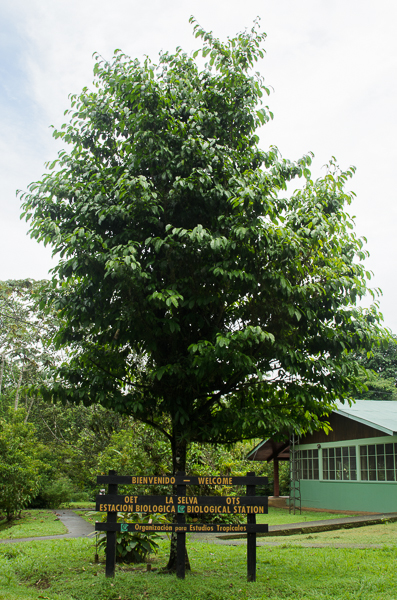
La Selva Biological Station was our home for the week.

I settled in, grabbed dinner and met some of Brian's friends. I was eager to hit the field though, and shortly after night fell, Brian and I headed to a stream he thought would harbor glass frogs.

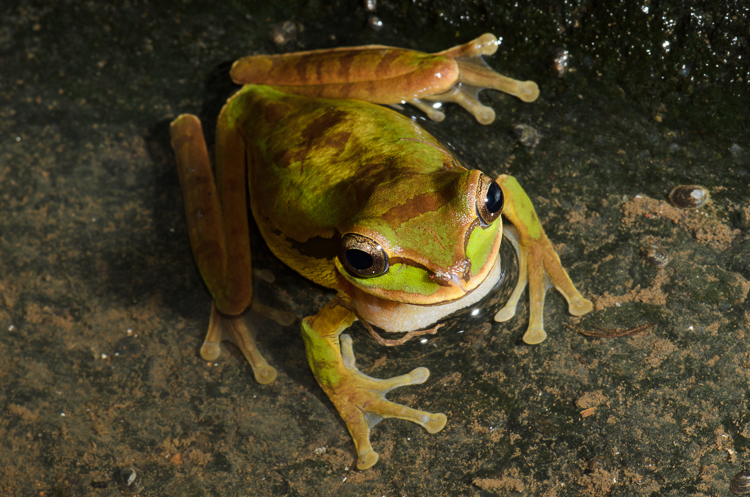
Right outside his office I noticed this Masked Treefrog, Smilisca phaeota.

We set out on the trails and quickly were seeing many of the typical subjects. We flipped this sleeping Central American Whiptail Ameiva festiva.


I was elated to spot one of this frogs though, something I had missed four years ago.
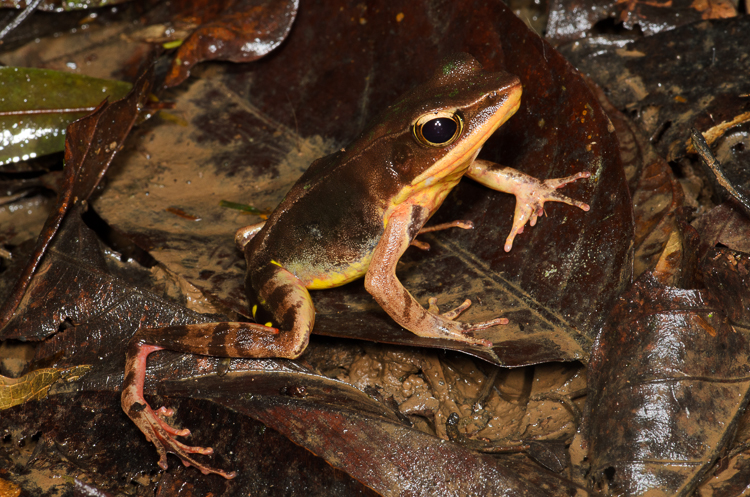
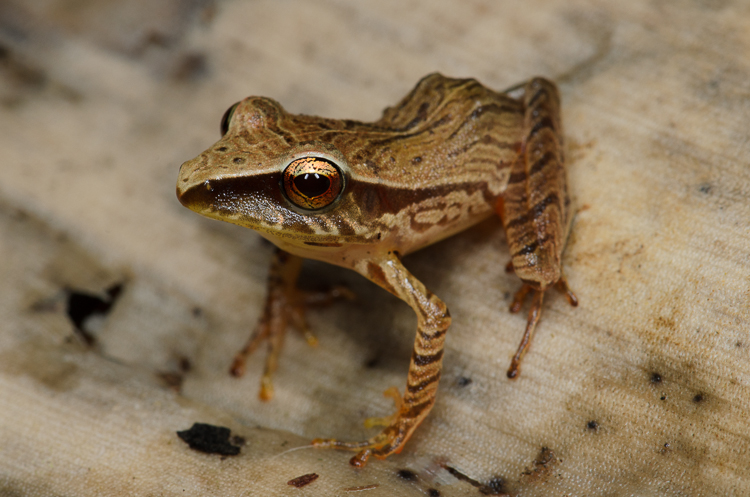
Warszewitsch's Frog Rana warszewitschii
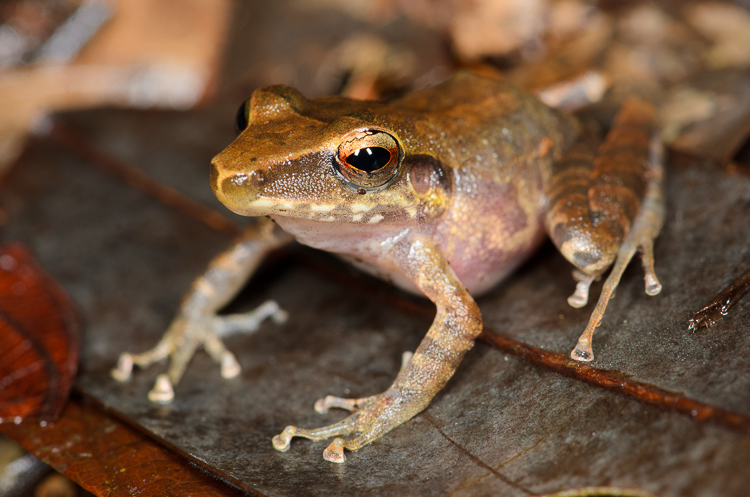
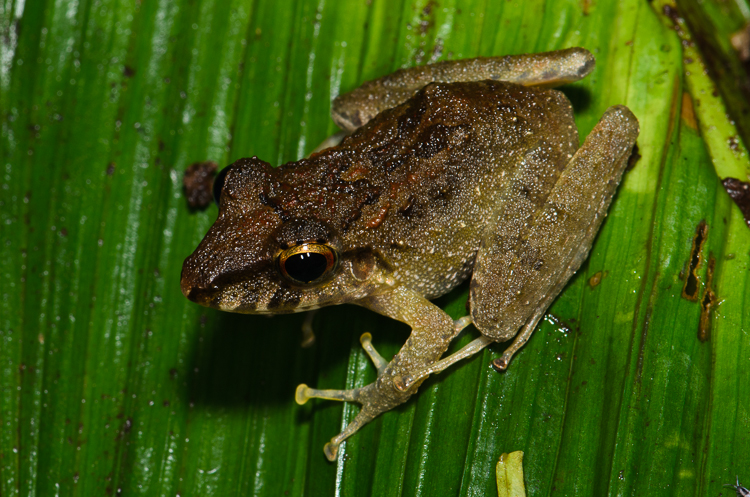
Almirante Robber Frog Craugastor talamancae
We were working our way to our destination, a nice first order stream, when Brian spotted two really stinking cool lizards in the trees.
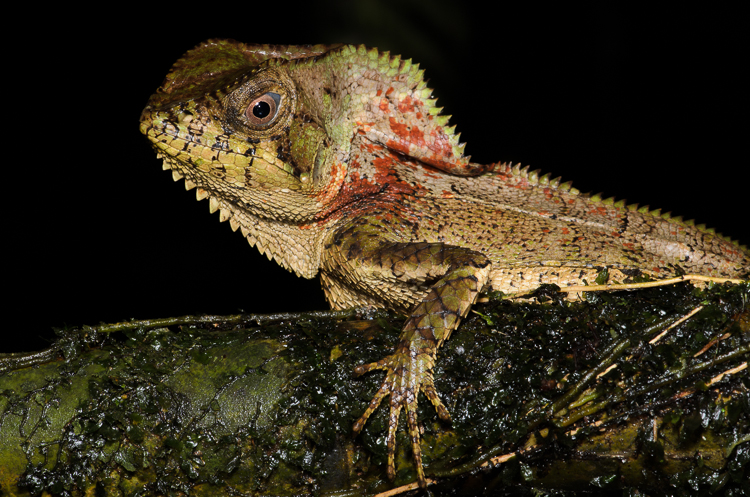
Casque-headed Lizard Corytophanes cristatus
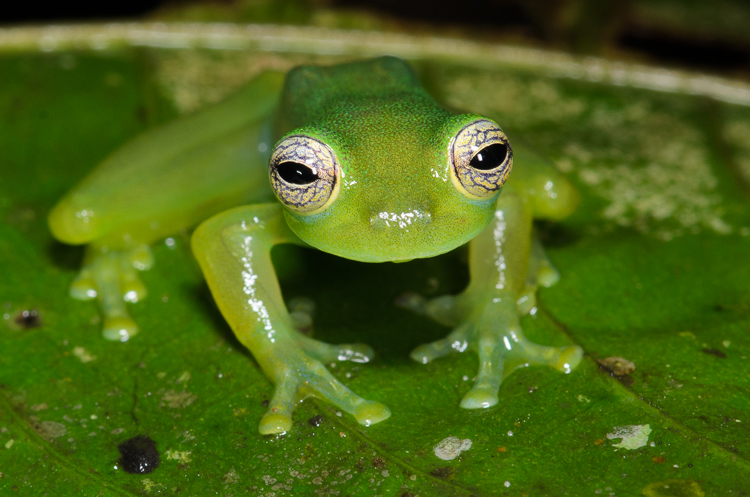
Shortly after arriving in the stream, Brian found one of our targets, the Spiny Cochran Frog Teratohyla spinosa. We would see 12 of these frogs this night, and hear many more calling.
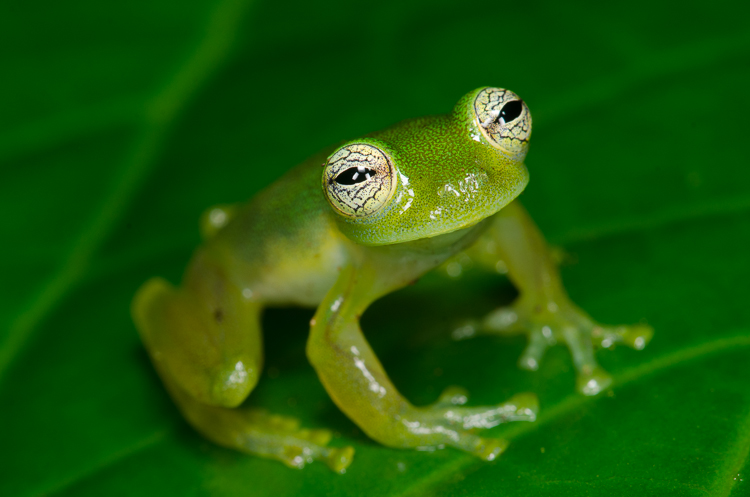

More spinosa.


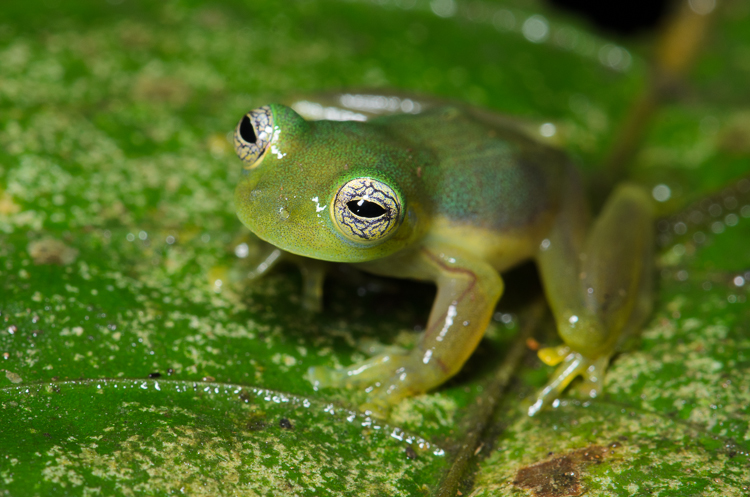
We also saw one Emerald Glass Frog Espadarana prosoblepon.
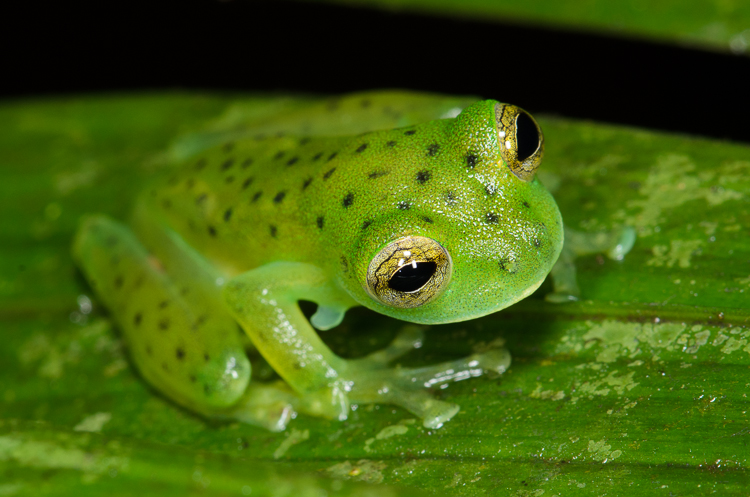

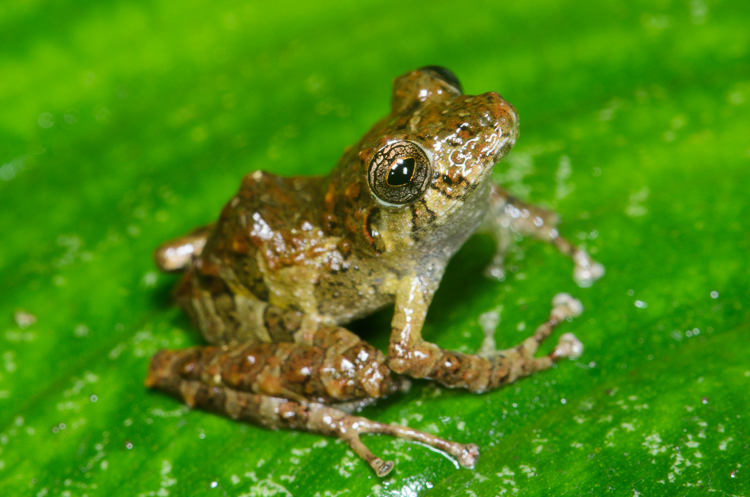
Chirriqui Robber Frog Pristimantis cruentus
I was photographing a glass frog and looked up to see this cool snake moving through a tree.
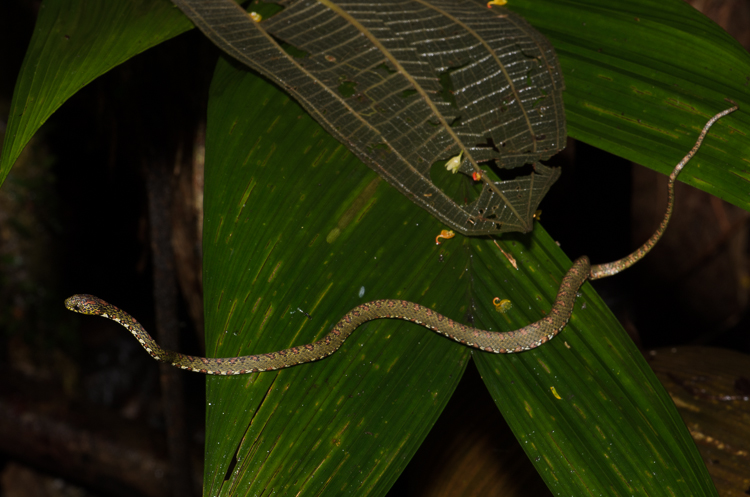
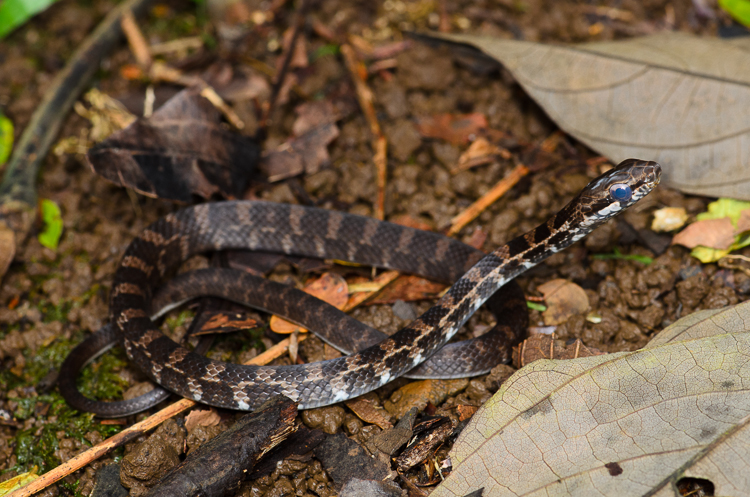
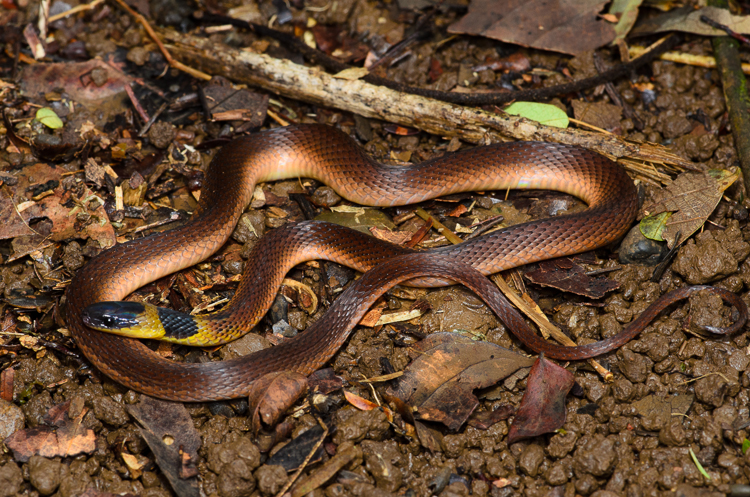
Stejneger's Snail Sucker Sibon longifrenis
We saw a couple Cat-eyed Snakes, a large Fer-de-lance and various frogs on the hike back out. A nice first night!

On the second day we got up early to head back into San Jose and pick up Carl from the airport. Both trips into town and back out went without any major issues. We were soon showing Carl around La Selva and photographing the "common" stuff. Carl and I were housed a little farther off site in a row of cabins that were more tradition "rooms" with private bathrooms. Brian had a cabin to himself most of the year, but did share a bathroom. I forgot the name of our cabins now... It was cool because it forced you to walk 3/4 of a mile to and from the main cafeteria and lab clearing and you ended up herping/birding more. After two days of hiking our asses off and essentially stumbling into the lab clearing very late at night, we started driving to and from the cafeteria. "Lazy" Gringos!

After settling in, we headed to la comedor (dining room) for lunch. We took our time on the walk in and kept our cameras out for some of the daytime animals that were out and about.
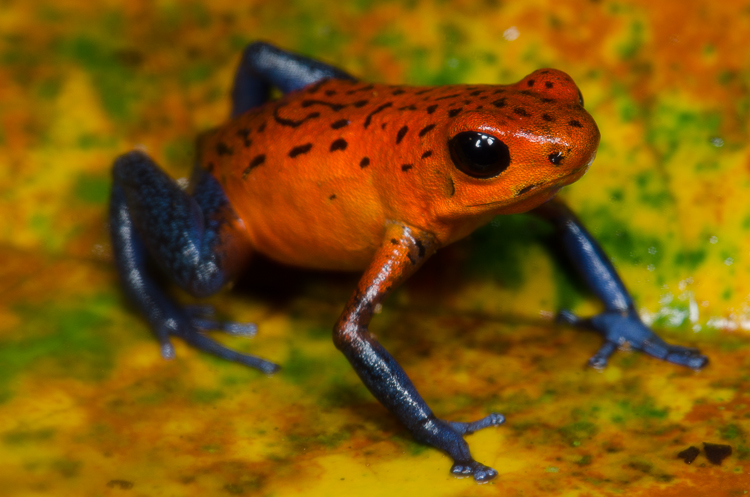
Strawberry Poison Dar Frog Oophaga pumilio
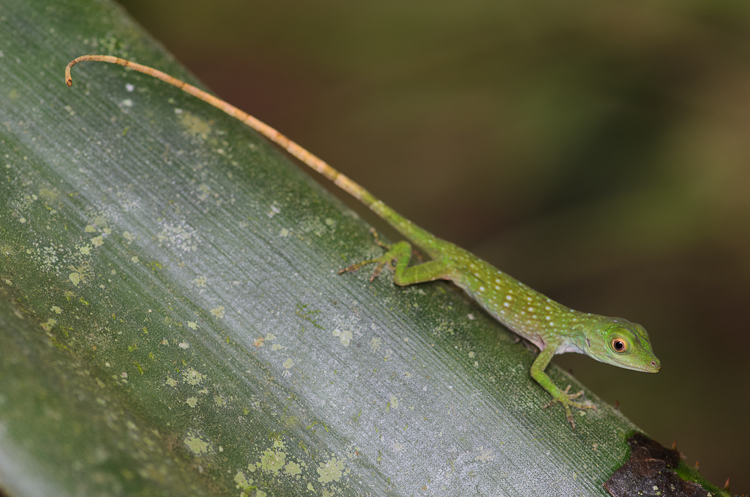
Neotropical Green Anole Norops biporcatus
a young Salmon-bellied Racer Mastigodryas melanonomus
Redback Coffee Snake Ninia sebae
Noble's Robber Frog Craugaster noblei
We then set out to a few of Brian's study plots.  A very quick and dirty version is that Brian marked out study plots under different species of trees and then counted as many reptiles and amphibians, and mark and recaptured them, throughout his plots, all year long. 

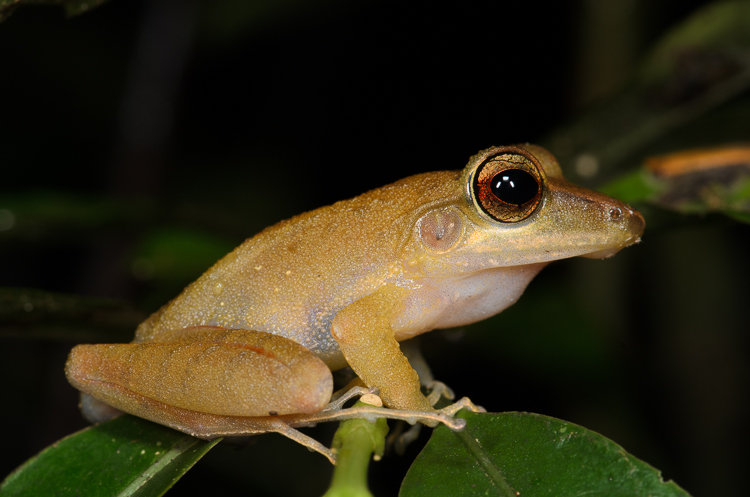
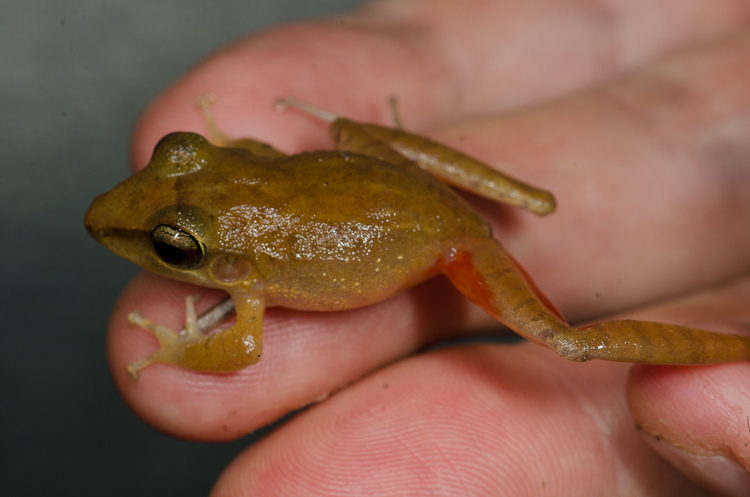
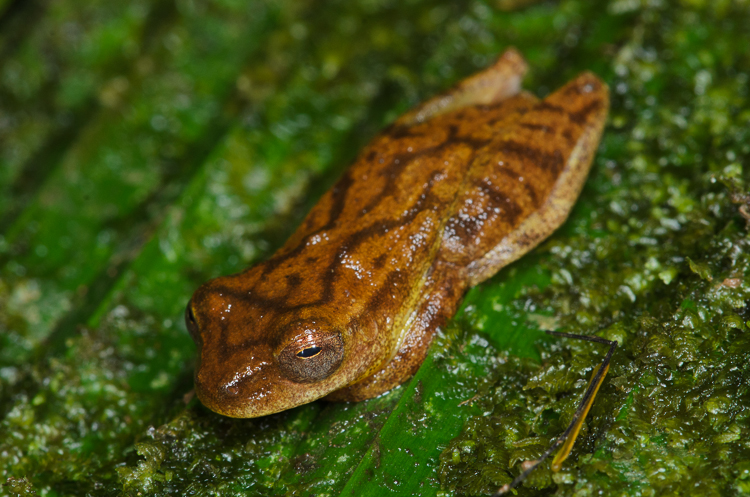
One of Brian's favorite dirt frog, Bransford's Robber Frog Craugastor bransfordii.
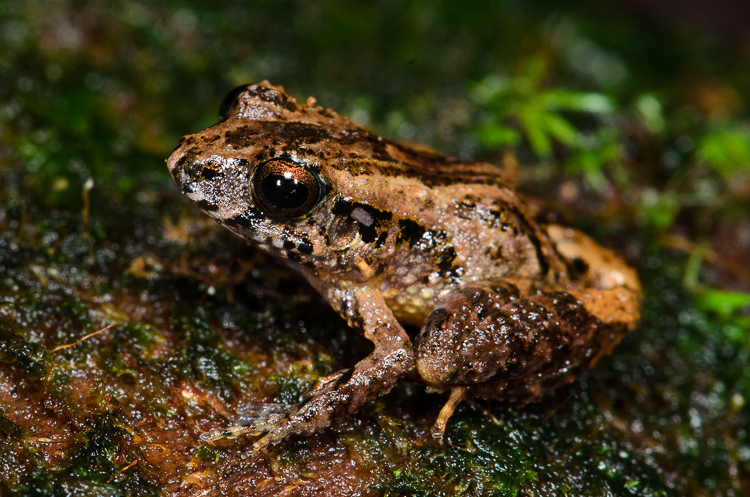

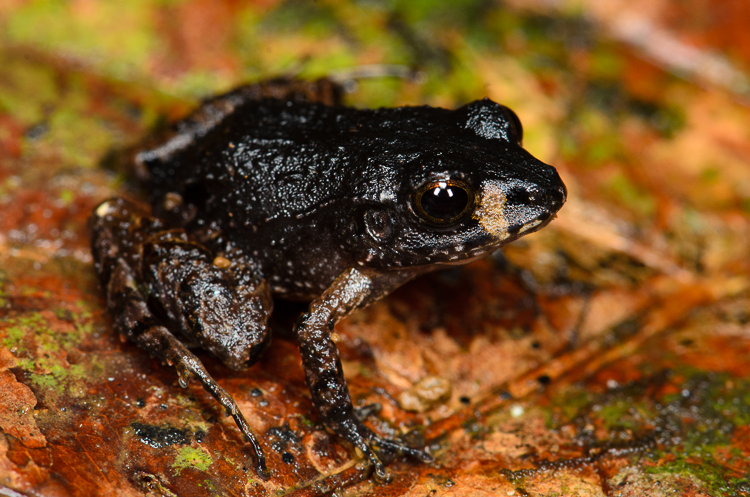
This frog is pretty variable in coloration. Brian asked me to try and photograph a few of the different morphs for him.

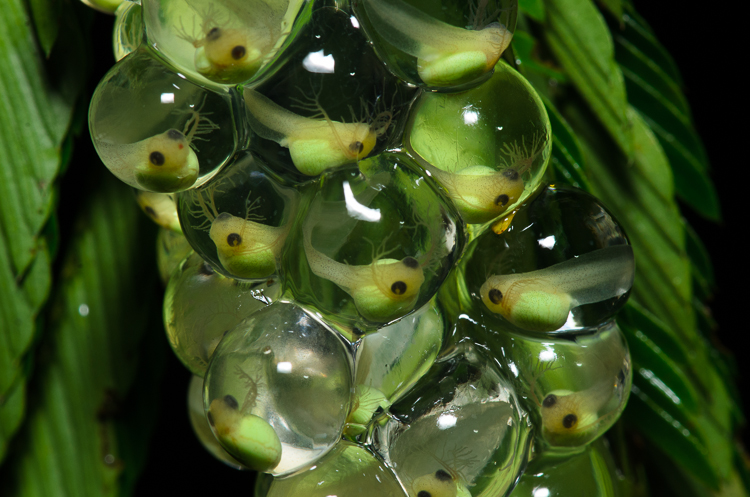
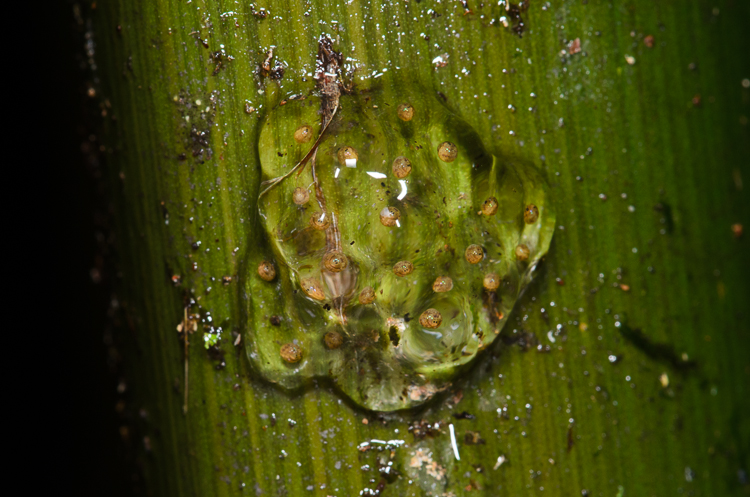
These eggs were in one of Bri's plots. Not sure what they are?


While exploring along a stream we came across this Green and Black Poison Dart Frog, Dendrobates auratus. These seem to have an expanding range at La Selva.
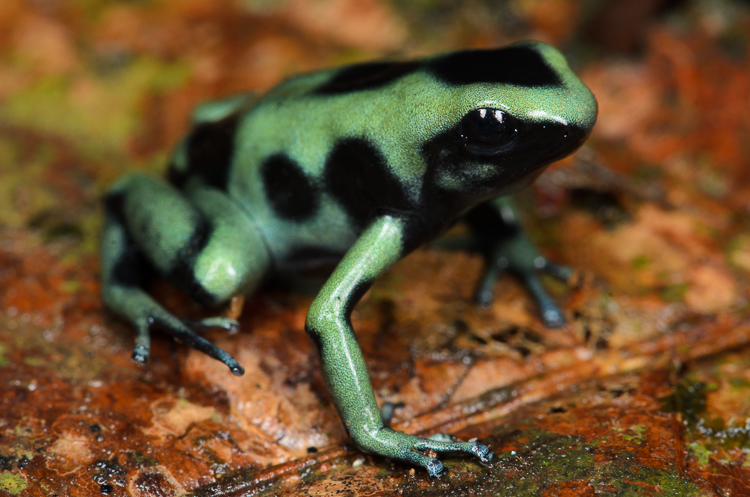


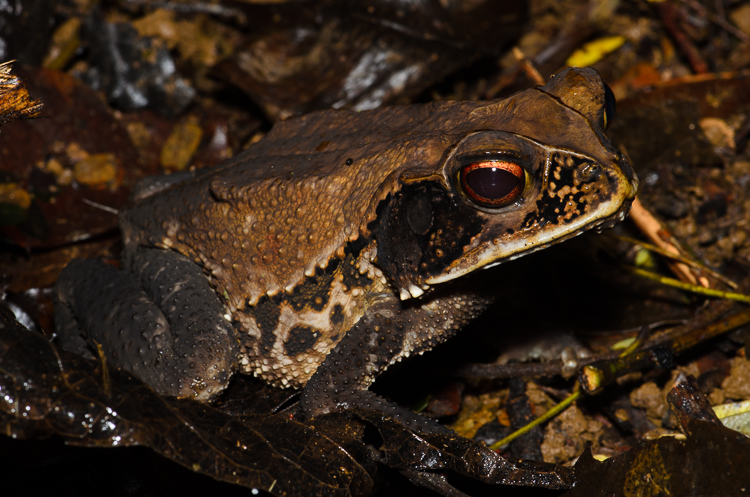
Wet Forest Toad Bufo melanochlorus
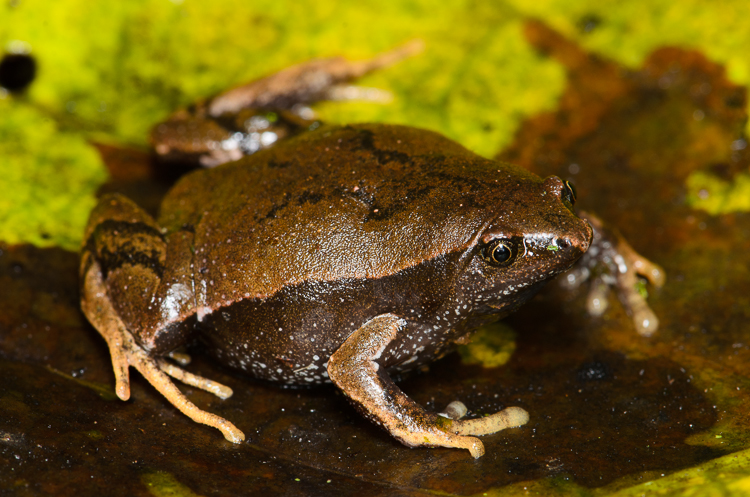
We hiked up on a swamp that had two calls in an active chorus. One of the frogs was an unIDd Smilisca species. The other was a large breeding congregation of Southern Narrow-mouth Toads Gastrophryne pictiventris.
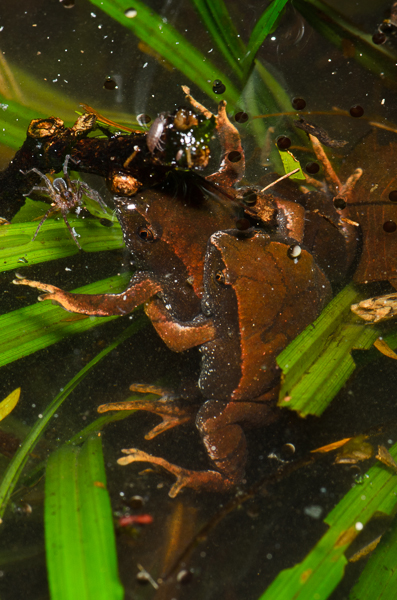


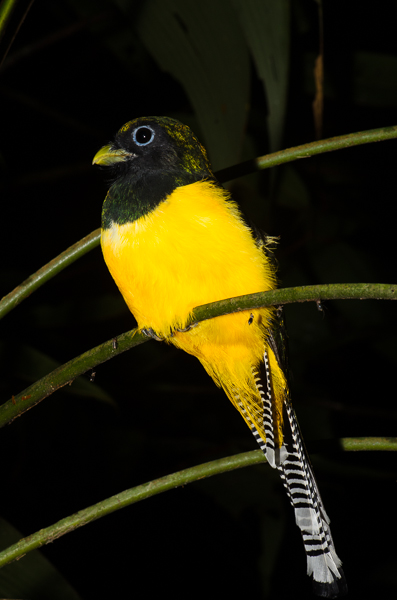
We headed back in to charge our batteries, and enjoy a hot meal. After dusk fell we headed back out to the swamp. On the hike in we walked right under this trogon. I believe it is a Black-throated Trogon Trogon rufus.

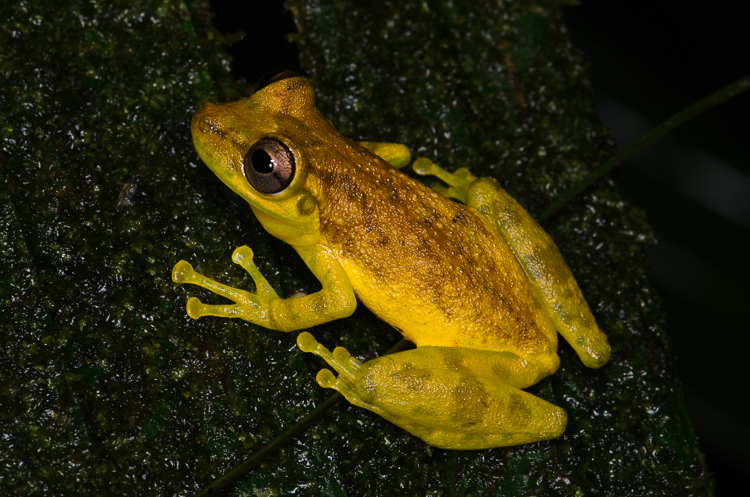
The swamp was alive with activity. We saw a number Olive Snouted Treefrogs Scinax elaeochrous.

There was lots of evidence of recent breeding activity, as seen by recent egg masses of Costa Rica's charismatic Red-eyed Treefrogs.
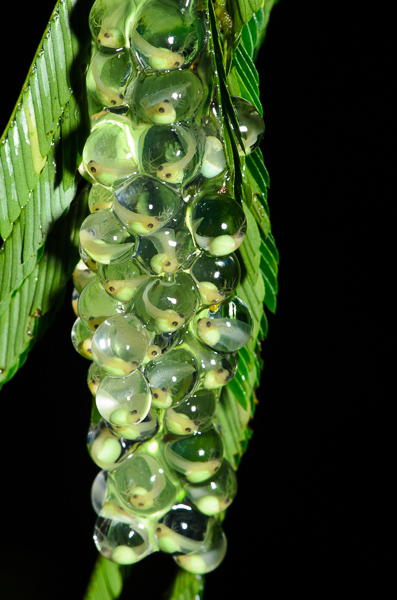
Red-eyed Treefrog Agalychnis callidryas eggs

Fitzinger's Robber Frog Craugastor fitzingeri
San Carlos Treefrog Dendropsophus phlebodes
More unIDd eggs
Brian turned in for the night, but Carl and I headed to another swamp.

More Scinax were out and about.
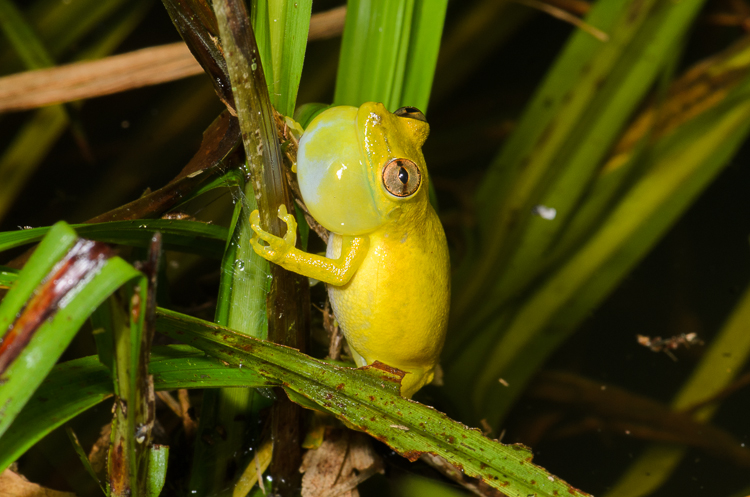

as well as both Agalychnis callidryas and Agalychnis saltator.
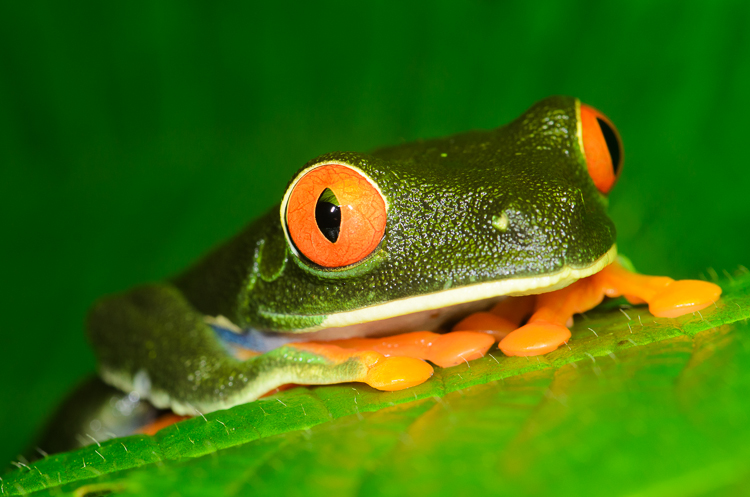
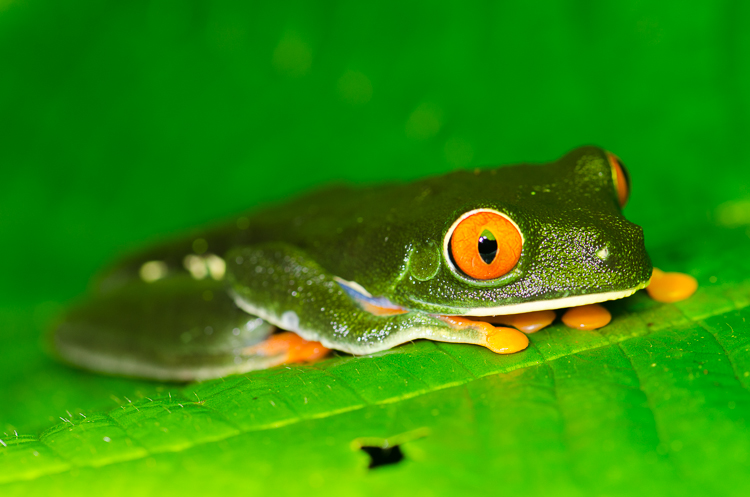
Red-eyed Treefrog Agalychnis callidryas


We also saw another Sibon longifrenes, caimen, green basalisk and the hourglass treefrog. We were pretty gassed and it was getting very late so we started the long trek back to the lab clearing, then the comedor, then hike back to our room. It wasn't totally wasted, although we could barely keep one foot going in front of the other.
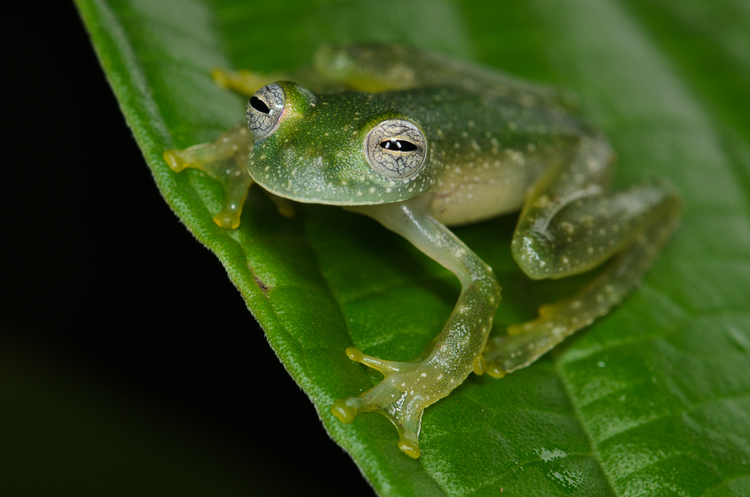
Powdered Glass Frog Teratohyla pulverata
Pulveratta eggs

We also spotted this snake sleeping along the trailside.
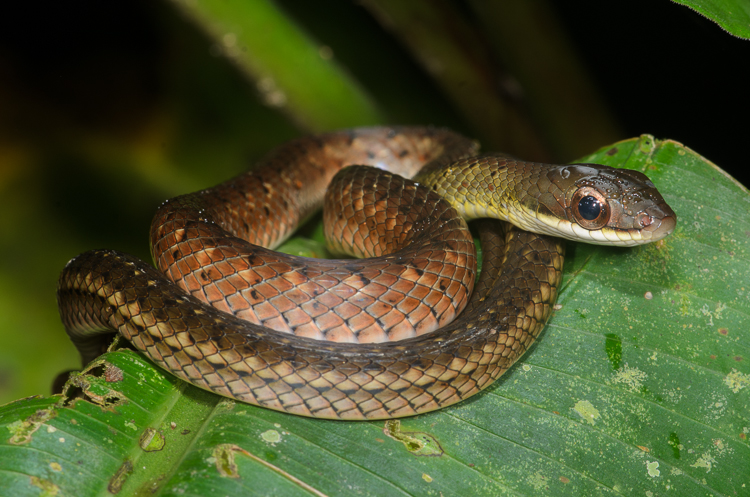
Dendrophidian sp, likely percarinatus?
We stumbled back to our rooms, showered, tried to clean equipment and eventually made it to bed. It was extremely late at this time, and if you can imagine, we had a hard time making breakfast in the morning.

I will leave you here for now. More to come in the future!

BH

You can see Part 1, Part 2, Part 3 and Part 4 here.

Monday, December 13, 2010

Pura Vida: 1

PURA VIDA. Those who have traveled to the beautiful country of Costa Rica may be familiar with this expression. The direct Spanish to English translation means "pure life," but Costa Ricans have come to recognize it as so much more. As the unofficial national slogan of this small Central American country, pura vida is a verbal representation of a way of living. It is used to say hello, goodbye, thank you, or as an expression of feeling. When asked how one is doing (Como está?), one may simply respond "Pura vida!"

I spent the 2010 summer doing field work in Costa Rica. It's been three months since I returned, but I would like to compile some memories, experiences, and adventures of the pura vida. We all know too well how memories fade, so I figure now is better than ever to pen this amazing experience.

Interestingly enough, this story extends all the way back to February of 2009. At this time, I was digging around the internet, trying to find engaging work as a biological field technician. While searching, I stumbled upon a Research Experience for Undergraduates program hosted by the Organization for Tropical Studies. Apparently, the program takes 10 American undergraduate biology students down to La Selva Biological Station in Costa Rica for a summer of independent research projects. It seemed amazing – but also very competitive. At that time, I was just becoming earnestly interested in ecology and certainly wouldn’t have been able to field a legitimate application. However, I opted to bookmark the link and perhaps apply more competitively the following year.

I spent the following spring and summer spending A LOT of time field herping in SE Ohio with Carl Brune. According to my notes, I field-herped 40 days from March 15 to August 31… or roughly 1 in every 4 days. Aside from having great times, I learned a fair amount about the natural history of reptiles and amphibians. Come September, I became busy with school and club soccer again. However, at some point, I noticed the REU link in my bookmarks. I even emailed it to my brother – “Hey, check this out, looks really sick, I’m definitely going to apply to this!” It seemed like to amazing an opportunity that I wanted to be a part of.

Over winter break in December and into January, I spent serious time drafting essays. With the help of friends (big props to Roxanne Male-Brune), I poured over the application, trying to impress upon the NSF reviewers and REU mentors as favorably as possible. Eventually, with references in line, I submitted the application with my fingers crossed. After a month or so, just when I was beginning to think my chances were dead, I was contacted by a mentor, Kelsey Reider from FIU. A phone interview ensued. On March 15, I was accepted into the program. To say the least, I was fuckin’ stoked. Of course, I immediately began purchasing and upgrading gear for the upcoming trip.

Field Gear

Having heard that rubber boots were an absolute essential for the rainforest, I purchased Muck Boots upon the recommendation of Nick Scobel. They are highly durable, comfortable, and water-proof. I can say with confidence that these were worth every penny (~$85). I can also say from experience that rubber boots are indeed an absolute essential for rainforest hiking.

Upon recommendation from BH and Carl Brune, I copped a new Kelty Redwing field pack (~$100). I am very pleased with this bag

.

I grabbed a few pairs of field pants and “nice” field shirts. At approximately $30 for a pair of pants or a shirt, this was quite expensive. I soon learned that all the weathered veteran researchers and techs wear raggedy flannels and old button downs purchased at thrift stores. It was kind of funny how you could point out the resident researchers compared to the visitors depending on the “quality” of field clothing.

I accrued a plethora of other miscellaneous useful items, including 12” forceps, small ruler, rechargeable batteries, and PLASTIC BAGS. I’ll talk more about this later, but plastic bags are essential for handling amphibians.

I had to be prepared to handle any venomous or unidentified snakes encountered, so I purchased a set of collapsible snake tongs ($100). This was before I found out about the strict “no snake” rule enforced by the REU program.

I ordered a Princeton Tec headlamp online (~$60). For the most part, I was pleased with it. It was certainly better than the vast majority of other headlamps used by others. However, when it began to malfunction toward the end of the summer, I wasn't pleased.

I will almost certainly upgrade here next time I travel to the tropics. I was trying to get my hands (or head) on a Fenix HP10 headlamp, which I hear is one of the best and most affordable lights, but they were out of stock all spring. Also, Fenix handlamps are incredibly powerful and small, so this is a possibility as well.

Books

I acquired a number of books for this trip. For field notes/data entry, I purchased a Rite-in-the-Rain All Weather Journal (No. 390NF) ($18). Highly durable, portable, and lovable.

My parents purchased me a copy of The Amphibians and Reptiles of Costa Rica by Jay Savage (~$30). Not a day passed during my 10 week trip that I did not reference this book. It is excellent, worth every penny, and an absolute essential for any serious herper visiting Costa Rica.

Not a day passed during my 10 week trip that I did not reference this book. It is excellent, worth every penny, and an absolute essential for any serious herper visiting Costa Rica. Although Donnelly and Guyer’s herp guide is small, nifty, and affordable, it is absolutely miserable with the litter frogs, and I do not particularly recommend it (although don’t tell them I said that). I borrowed a copy of A Guide to the Birds of Costa Rica by Stiles and Skutch. I understand it is regarded as one of the best (if not the best) CR birding references. I am ashamed to say I did not open it until I returned to the states.

Stephen Reilly gave me a copy of Heyer et al. ( 1994) Monitoring and Measuring Amphibian Biodiversity. This is a very useful resource for anyone surveying amphibian (or reptile) populations.

Thus, after purchasing all my gear, working on my proposal, and surviving spring quarter at Ohio University, I returned to Cleveland for a two day respite before traveling to Costa Rica.