Luckily, in other parts of the country, some animals may still be found.
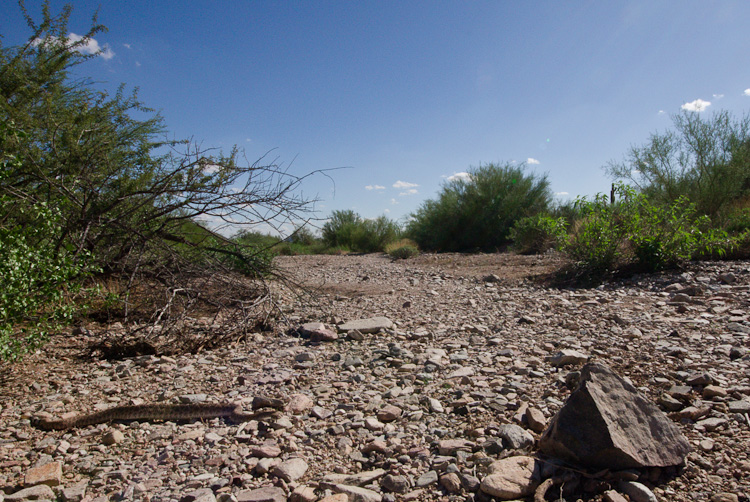 |
| Crotalus atrox crossing an AZ wash |

|
| Crotalus atrox crossing an AZ wash |
PURA VIDA. Those who have traveled to the beautiful country of Costa Rica may be familiar with this expression. The direct Spanish to English translation means "pure life," but Costa Ricans have come to recognize it as so much more. As the unofficial national slogan of this small Central American country, pura vida is a verbal representation of a way of living. It is used to say hello, goodbye, thank you, or as an expression of feeling. When asked how one is doing (Como está?), one may simply respond "Pura vida!"
I spent the 2010 summer doing field work in Costa Rica. It's been three months since I returned, but I would like to compile some memories, experiences, and adventures of the pura vida. We all know too well how memories fade, so I figure now is better than ever to pen this amazing experience.
Interestingly enough, this story extends all the way back to February of 2009. At this time, I was digging around the internet, trying to find engaging work as a biological field technician. While searching, I stumbled upon a Research Experience for Undergraduates program hosted by the Organization for Tropical Studies. Apparently, the program takes 10 American undergraduate biology students down to La Selva Biological Station in Costa Rica for a summer of independent research projects. It seemed amazing – but also very competitive. At that time, I was just becoming earnestly interested in ecology and certainly wouldn’t have been able to field a legitimate application. However, I opted to bookmark the link and perhaps apply more competitively the following year.
I spent the following spring and summer spending A LOT of time field herping in SE Ohio with Carl Brune. According to my notes, I field-herped 40 days from March 15 to August 31… or roughly 1 in every 4 days. Aside from having great times, I learned a fair amount about the natural history of reptiles and amphibians. Come September, I became busy with school and club soccer again. However, at some point, I noticed the REU link in my bookmarks. I even emailed it to my brother – “Hey, check this out, looks really sick, I’m definitely going to apply to this!” It seemed like to amazing an opportunity that I wanted to be a part of.
Over winter break in December and into January, I spent serious time drafting essays. With the help of friends (big props to Roxanne Male-Brune), I poured over the application, trying to impress upon the NSF reviewers and REU mentors as favorably as possible. Eventually, with references in line, I submitted the application with my fingers crossed. After a month or so, just when I was beginning to think my chances were dead, I was contacted by a mentor, Kelsey Reider from FIU. A phone interview ensued. On March 15, I was accepted into the program. To say the least, I was fuckin’ stoked. Of course, I immediately began purchasing and upgrading gear for the upcoming trip.
Field Gear
Having heard that rubber boots were an absolute essential for the rainforest, I purchased Muck Boots upon the recommendation of Nick Scobel. They are highly durable, comfortable, and water-proof. I can say with confidence that these were worth every penny (~$85). I can also say from experience that rubber boots are indeed an absolute essential for rainforest hiking.
Upon recommendation from BH and Carl Brune, I copped a new Kelty Redwing field pack (~$100). I am very pleased with this bag

.
I grabbed a few pairs of field pants and “nice” field shirts. At approximately $30 for a pair of pants or a shirt, this was quite expensive. I soon learned that all the weathered veteran researchers and techs wear raggedy flannels and old button downs purchased at thrift stores. It was kind of funny how you could point out the resident researchers compared to the visitors depending on the “quality” of field clothing.
I accrued a plethora of other miscellaneous useful items, including 12” forceps, small ruler, rechargeable batteries, and PLASTIC BAGS. I’ll talk more about this later, but plastic bags are essential for handling amphibians.

I had to be prepared to handle any venomous or unidentified snakes encountered, so I purchased a set of collapsible snake tongs ($100). This was before I found out about the strict “no snake” rule enforced by the REU program.
I ordered a Princeton Tec headlamp online (~$60). For the most part, I was pleased with it. It was certainly better than the vast majority of other headlamps used by others. However, when it began to malfunction toward the end of the summer, I wasn't pleased.

I will almost certainly upgrade here next time I travel to the tropics. I was trying to get my hands (or head) on a Fenix HP10 headlamp, which I hear is one of the best and most affordable lights, but they were out of stock all spring. Also, Fenix handlamps are incredibly powerful and small, so this is a possibility as well.
Books
I acquired a number of books for this trip. For field notes/data entry, I purchased a Rite-in-the-Rain All Weather Journal (No. 390NF) ($18). Highly durable, portable, and lovable.

My parents purchased me a copy of The Amphibians and Reptiles of Costa Rica by Jay Savage (~$30). Not a day passed during my 10 week trip that I did not reference this book. It is excellent, worth every penny, and an absolute essential for any serious herper visiting Costa Rica.

Not a day passed during my 10 week trip that I did not reference this book. It is excellent, worth every penny, and an absolute essential for any serious herper visiting Costa Rica. Although Donnelly and Guyer’s herp guide is small, nifty, and affordable, it is absolutely miserable with the litter frogs, and I do not particularly recommend it (although don’t tell them I said that). I borrowed a copy of A Guide to the Birds of Costa Rica by Stiles and Skutch. I understand it is regarded as one of the best (if not the best) CR birding references. I am ashamed to say I did not open it until I returned to the states.

Stephen Reilly gave me a copy of Heyer et al. ( 1994) Monitoring and Measuring Amphibian Biodiversity. This is a very useful resource for anyone surveying amphibian (or reptile) populations.
Thus, after purchasing all my gear, working on my proposal, and surviving spring quarter at Ohio University, I returned to Cleveland for a two day respite before traveling to Costa Rica.
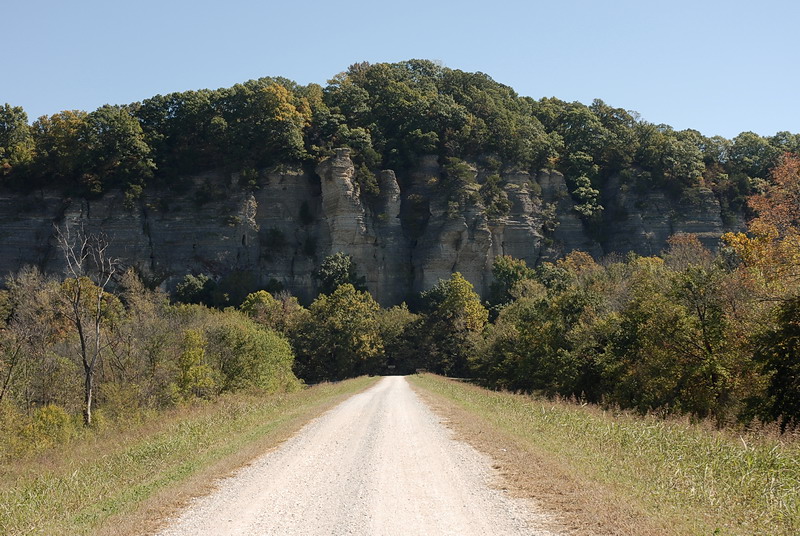 | |
| The drive in to the north end of the road. |
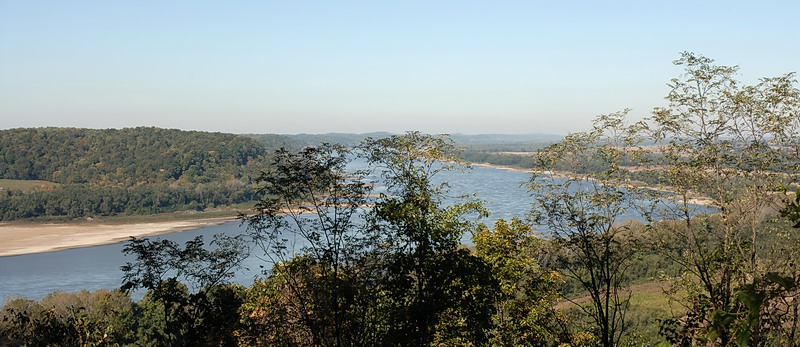 | ||
| The great Mississippi River. |
 |
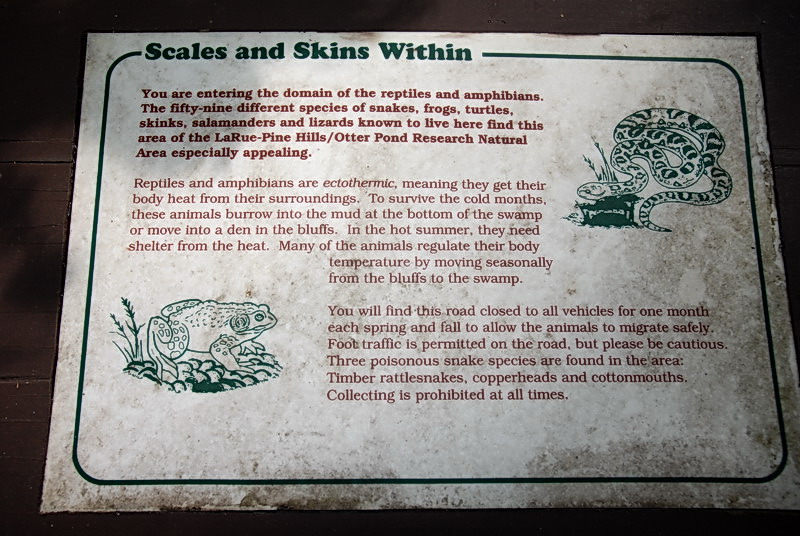
| The northern entrance. The road gets closed every year during the spring and fall for migrations. |
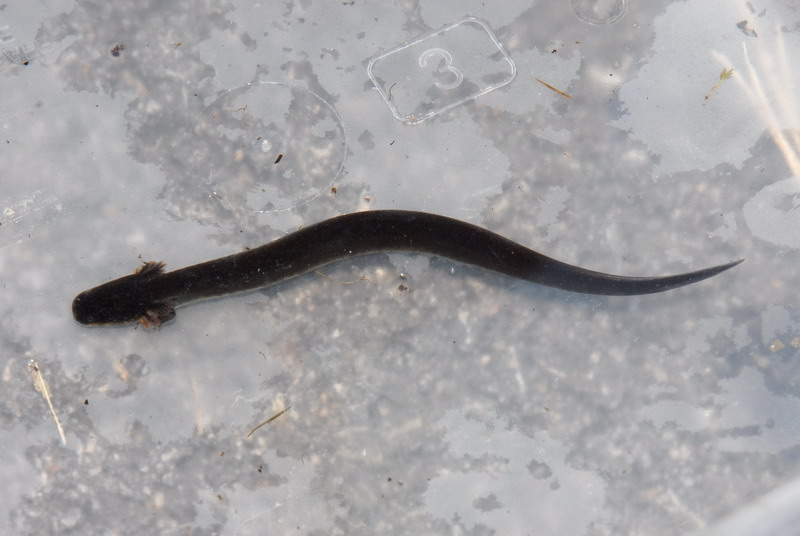 | |
| Lesser Siren Siren intermedia |
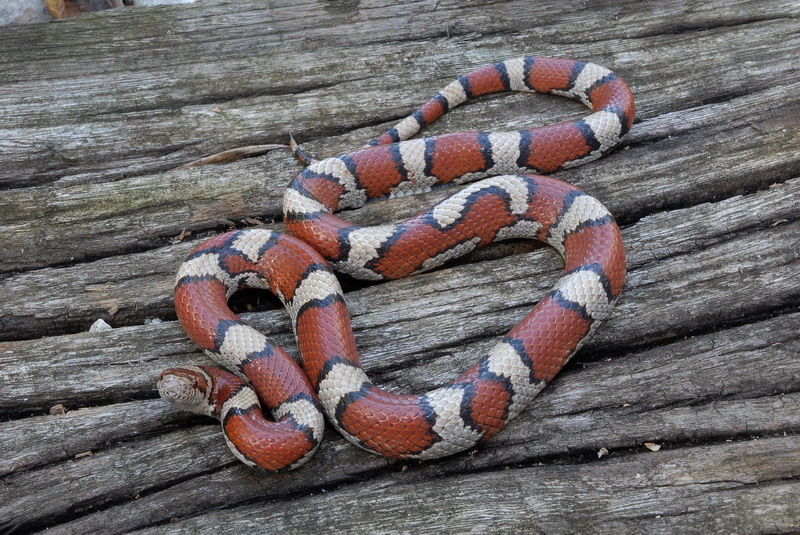 |
| Lampropeltis triangulum |
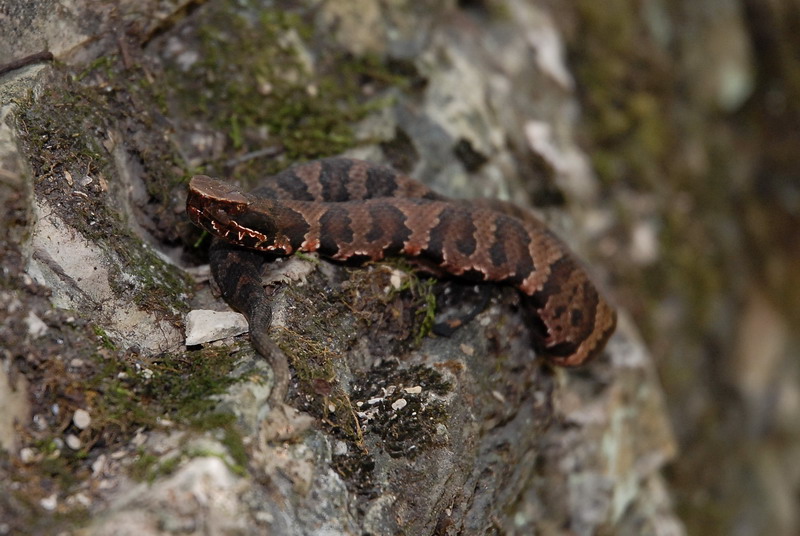
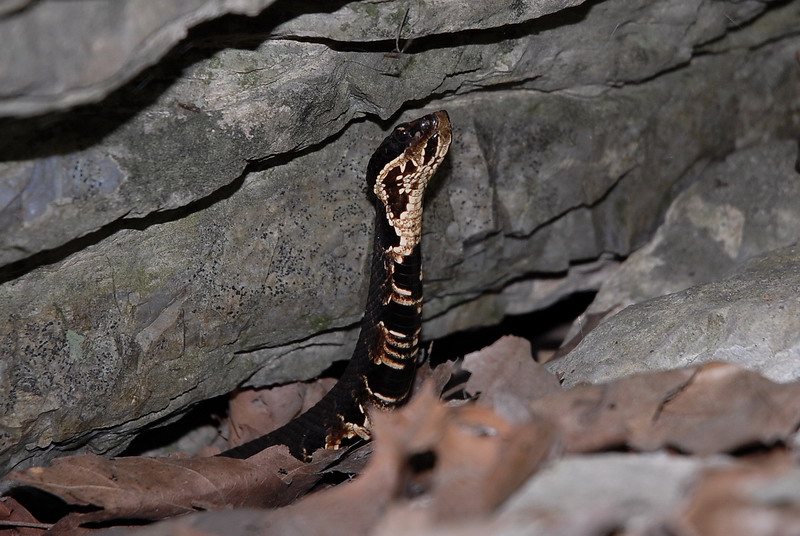
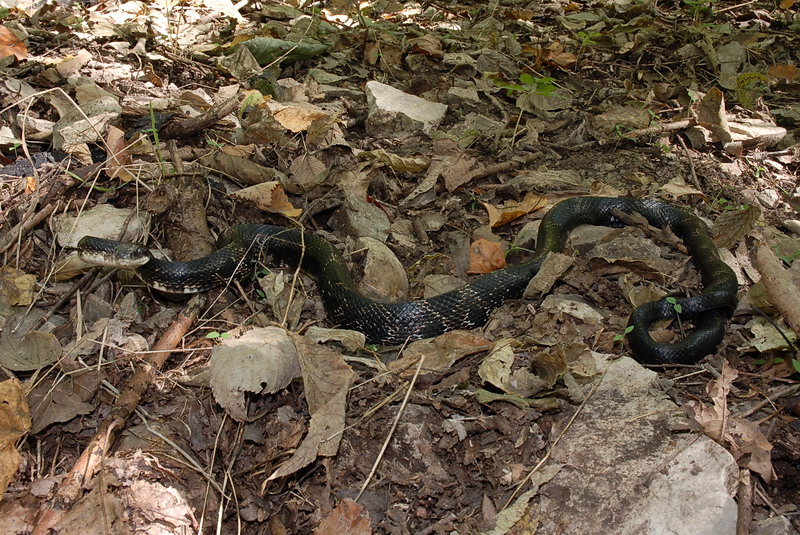 | ||
| A nice sized rat snake. |
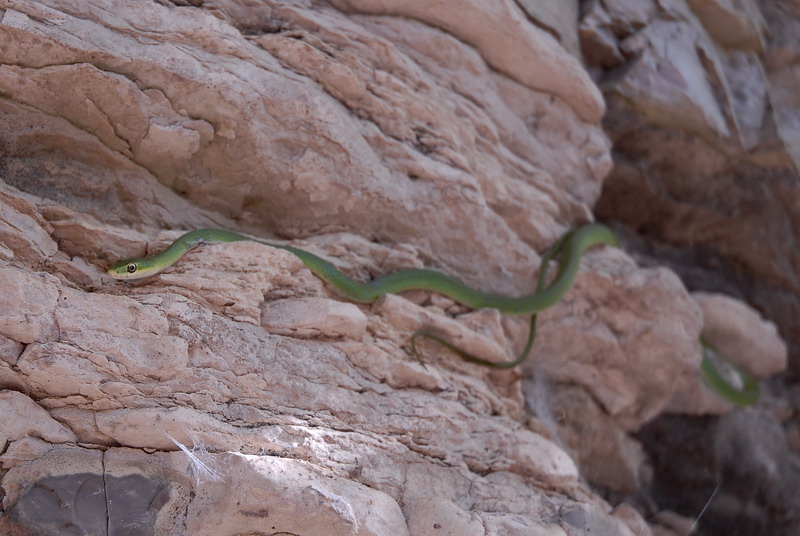 |
| A few rough greens turned up. |
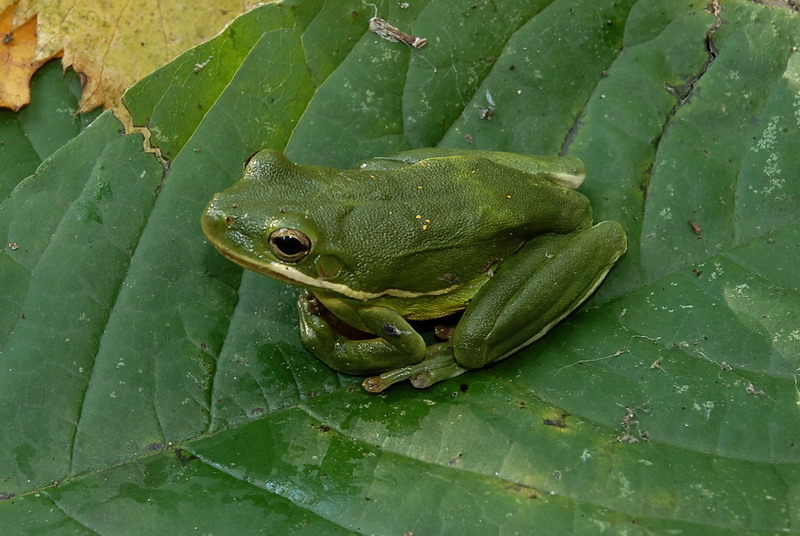 | |
| And a green tree frog in the northern reaches of its range. |


